
The Minneapolis Tragedy: When Federal Power Turns Against American Citizens
Published
- 3 min read
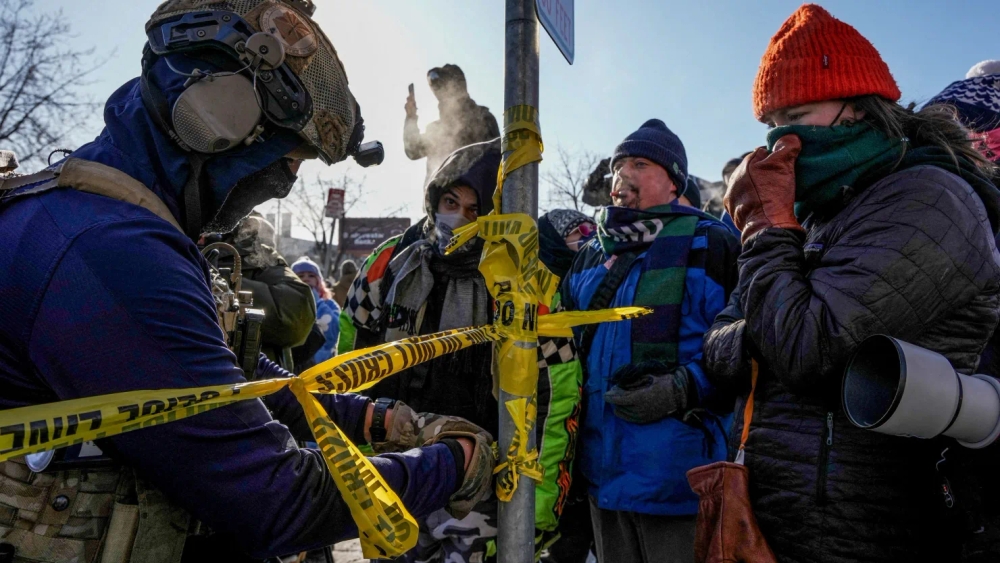
The Unfolding Crisis in Minnesota
The streets of Minneapolis have become the latest battleground in what appears to be an alarming escalation of federal power against American citizens. On January 24, 2026, federal Immigration and Customs Enforcement (ICE) agents fatally shot Alex Pretti, a 37-year-old ICU nurse and Minneapolis resident with no criminal history beyond traffic citations. This marks the second such fatal shooting by federal agents in Minneapolis this month, following the death of Renee Nicole Good just weeks earlier.
According to Minneapolis Police Chief Brian O’Hara, Pretti was a lawful gun owner with a permit, posing the critical question: when did exercising one’s Second Amendment rights become a death sentence at the hands of federal agents? The Department of Homeland Security, under Secretary Kristi Noem, has portrayed Pretti as a violent threat, claiming he approached agents with a 9 mm semi-automatic handgun. However, multiple bystander videos tell a dramatically different story—one of escalating aggression by federal officers against what appears to be a peaceful protester.
The Political Response and Escalating Tensions
The response from political leadership has been sharply divided along concerning lines. Minnesota Governor Tim Walz immediately condemned the shooting, demanding that President Trump end ICE operations in the state and withdraw what he called “thousands of violent, untrained officers.” Senator Amy Klobuchar joined this call, emphasizing that “The world is watching” as citizens are harassed, local police are undermined, and communities live in fear.
Meanwhile, the Trump administration has doubled down on its aggressive stance. President Trump defended the federal operation on Truth Social, questioning why local police weren’t protecting ICE officers and suggesting political interference by local officials. White House deputy chief of staff Stephen Miller went even further, labeling Pretti a “domestic terrorist” who “tried to assassinate federal law enforcement”—a characterization that starkly contradicts the emerging evidence from multiple video sources.
The Evidence Gap and Due Process Concerns
What makes this situation particularly alarming is the evidentiary disconnect between official narratives and documented reality. Secretary Noem sidestepped direct questions about whether Pretti ever pointed his weapon at federal agents, instead deflecting with rhetorical questions about why someone would bring a gun to a protest. This evasion is telling, especially when contrasted with video evidence that shows federal officers surrounding, striking, and ultimately shooting Pretti under unclear circumstances.
The decision that DHS will investigate itself rather than allowing the FBI to conduct an independent investigation further erodes public trust. When the same agency accused of misconduct controls the investigation into that misconduct, the fundamentals of due process and accountability are compromised.
The Constitutional Crisis Unfolding
This incident represents more than just another police shooting—it signals a dangerous shift in the relationship between federal power and civilian rights. The deployment of federal immigration agents to conduct what appear to be generalized enforcement operations in American cities raises serious constitutional questions about federalism, states’ rights, and the proper limits of executive power.
When federal agents operate in direct opposition to state and local authorities, when they appear to escalate rather than de-escalate situations, and when they use lethal force against citizens with constitutional rights to bear arms and assemble peacefully, we must question whether we are witnessing the erosion of foundational American principles.
The Human Cost of Militarized Enforcement
Alex Pretti was not a statistic—he was an ICU nurse who dedicated his life to healing others. Renee Nicole Good was a 37-year-old Minneapolis resident whose life was equally valuable. The human cost of this militarized approach to immigration enforcement is becoming unbearable. Families are being torn apart, communities are being terrorized, and trust in government institutions is being systematically destroyed.
The use of tear gas against protesters, the deployment of the National Guard to separate citizens from federal agents, and the creation of an environment where schools close and children hide—these are not signs of a healthy democracy. They are the hallmarks of a society sliding toward authoritarianism.
The Path Forward: Accountability and Restoration
As a nation built on the principles of liberty and justice for all, we must demand better. First, we need a truly independent investigation into both shootings, with full transparency and accountability for any officers who violated protocol or constitutional rights. Second, we must reevaluate the scope and methods of federal immigration enforcement to ensure they align with American values of due process and proportionality.
Third, and most fundamentally, we must reaffirm that in America, the government serves the people—not the other way around. The sight of federal agents shooting American citizens on American soil should fill every patriot with determination to restore the proper balance of power and protect the liberties that define our nation.
The events in Minneapolis are not just about immigration policy or law enforcement tactics—they are about who we are as a country and what kind of future we will leave for the next generation. We must choose carefully, and we must choose now, before more lives are lost and more trust is destroyed.