
The Minneapolis Shooting: A Chilling Escalation of Federal Overreach and Constitutional Erosion
Published
- 3 min read
The Tragic Facts of the Minneapolis Shooting
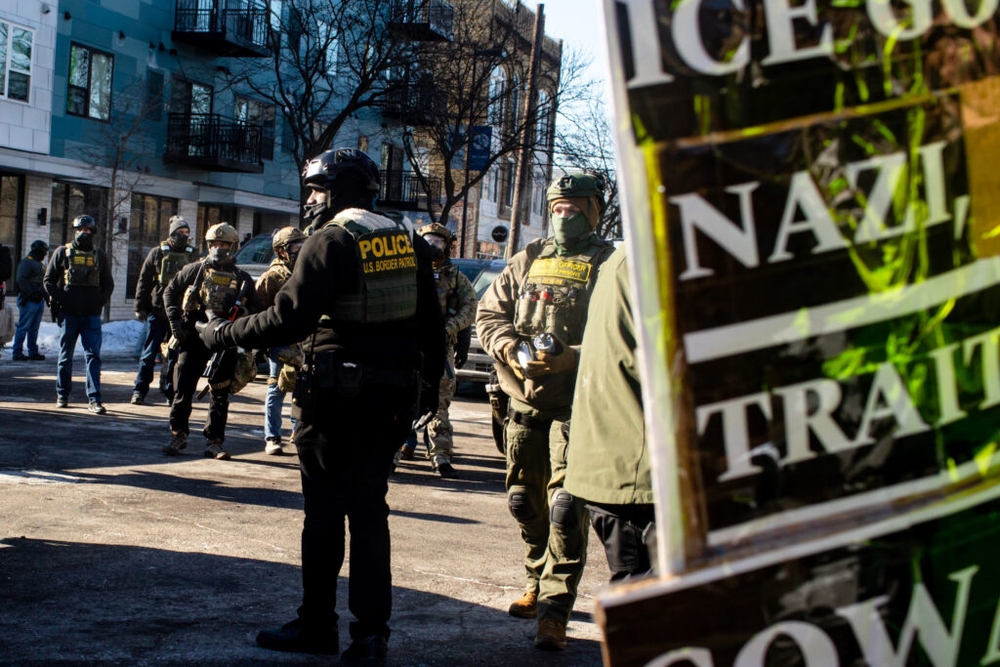
On Saturday, federal immigration agents in Minneapolis fatally shot Alex Jeffrey Pretti, a 37-year-old U.S. citizen and lawful gun owner with a permit to carry. This marks the third shooting by immigration officers in the city within three weeks, with two of these incidents resulting in death. The shooting occurred amid the Trump administration’s ongoing immigration crackdown that has brought approximately 3,000 federal officers to Minnesota - nearly five times the number of sworn Minneapolis police officers.
According to Minneapolis Police Chief Brian O’Hara, Pretti was a lawful gun owner with no significant prior interactions with police beyond a few traffic tickets. Video evidence captured by bystanders and circulated on social media shows six federal agents wrestling Pretti to the ground in front of the New American Development Center, with one agent striking him three times with what appears to be a firearm before shots were fired.
The Department of Homeland Security claimed in a social media post that officers were conducting a targeted operation against someone illegally in the U.S. “wanted for violent assault” when Pretti approached U.S. Border Patrol officers with a 9 mm handgun. They stated that “officers attempted to disarm the suspect but the armed suspect violently resisted,” leading an agent to fire “defensive shots” while “fearing for his life and the lives and safety of fellow officers.”
The Immediate Aftermath and Response
The shooting triggered immediate protests despite subzero temperatures, with hundreds of demonstrators gathering near the scene wearing gas masks and eye protection - now common in the Twin Cities since federal immigration officers arrived in December. Federal agents deployed tear gas and flash bangs to push back crowds shouting “Shame!” and “ICE out, f*ck ICE!”
Minnesota’s Democratic leadership responded with outrage and condemnation. Minneapolis Mayor Jacob Frey urgently called for the federal government to end its “two-month immigration siege,” asking “How many times must local and national leaders plead with you, Donald Trump, to end this operation and recognize that this is not creating safety in our city?”
Governor Tim Walz expressed disbelief at the federal response, stating that he’d spoken to the White House but doesn’t have confidence federal officials will change their actions or leave the state. He revealed that the Department of Homeland Security has “rushed to judgement” and is already “slandering the man who was killed.” Most disturbingly, Walz highlighted that “You kill a man and then you just leave? Is there a single case in American history where you just, like, walk away and say, ‘I guess that just happened and we’re not going to clean up our mess.‘”
The Constitutional Crisis Unfolding
Perhaps the most alarming aspect of this tragedy is the systematic blocking of state investigators from accessing the crime scene. The Minnesota Bureau of Criminal Apprehension (BCA), which typically investigates law enforcement shootings, arrived at the scene at the request of the Minneapolis Police Department but was blocked from accessing the location by the Department of Homeland Security. Even after obtaining a signed judicial warrant, BCA officials were still denied access by DHS agents.
This represents an unprecedented obstruction of justice and state sovereignty. When federal agents can kill American citizens on state territory and then prevent state authorities from conducting investigations, we have entered dangerous constitutional territory that threatens the very foundation of our federal system.
The pattern of misinformation from Homeland Security further compounds this crisis. The department’s statements about previous shootings have been found to be false or misleading. After the January 7th killing of Renee Good, the department referred to her as a “domestic terrorist.” In another incident, a 911 call contradicted DHS’s account that an agent fired defensively, suggesting instead that the agent shot at a man as he was trying to escape into a house.
The Human Tragedy and Family Response
Alex Jeffrey Pretti’s parents, Michael and Susan Pretti, released a heartbreaking statement castigating the Trump administration for slandering their son with “sickening lies” that they called “reprehensible and disgusting.” They defended their son’s conduct, stating that he was protecting a woman who had been pushed down by federal agents. Their plea - “Please get the truth out about our son. He was a good man. Thank you” - represents the human cost of this federal overreach that cannot be ignored.
The Broader Pattern of Federal Abuse
This incident is not isolated but part of a disturbing pattern across the country. Homeland Security recently revised its account of a December shooting in Glen Burnie, Maryland, after local police contradicted its initial version. In August, federal immigration agents fired at a family’s vehicle three times in San Bernardino, California, with available footage contradicting the official justification for the shooting.
These incidents reveal a systematic pattern of federal agents operating with impunity, providing misleading accounts of their actions, and avoiding proper accountability mechanisms. When those sworn to uphold the law operate above it, democracy itself is undermined.
The Dangerous Political Escalation
President Trump’s response to this tragedy was particularly troubling. Instead of expressing concern for the loss of life or calling for a thorough investigation, he posted a rambling response on his social media platform referencing U.S. Rep. Ilhan Omar’s bank account and alleging a Medicaid fraud cover-up. He accused the Mayor and Governor of “inciting insurrection” and revived threats to invoke the Insurrection Act to send military troops into the streets of Minnesota.
This rhetoric is dangerously inflammatory and demonstrates a willingness to escalate rather than de-escalate tensions. The threat of using military force against American citizens exercising their constitutional right to protest represents an unprecedented assault on civil liberties.
The Principle of Federalism Under Attack
At its core, this crisis represents a fundamental assault on the principle of federalism that has guided American democracy since its founding. The delicate balance between federal and state power is being violently disrupted by a federal administration that shows contempt for local governance and state sovereignty.
When federal agents can operate on state territory without coordination with local authorities, block state investigations into potential crimes, and ignore the legitimate concerns of elected local officials, we are witnessing the erosion of constitutional governance itself.
The Path Forward: Accountability and Constitutional Restoration
This tragedy demands immediate and serious response. First, there must be a full, transparent, and independent investigation into Pretti’s death with complete cooperation from federal authorities. The blocking of state investigators must never be repeated.
Second, the deployment of thousands of federal agents to Minnesota must be reevaluated in consultation with state and local officials. The current approach has clearly escalated tensions and resulted in unnecessary loss of life.
Third, we must reaffirm our commitment to constitutional principles that protect American citizens from government overreach. The Second Amendment rights of lawful gun owners, the Fourth Amendment protections against unreasonable seizures, and the Tenth Amendment principles of federalism all deserve vigorous defense.
Finally, we must recognize that true security comes from respecting constitutional rights and building trust between law enforcement and communities, not from military-style occupations and escalation of force.
Conclusion: A Moment of Constitutional Reckoning
The killing of Alex Jeffrey Pretti represents more than just another police shooting - it signifies a critical moment in American democracy where we must decide what kind of country we want to be. Will we accept federal agents operating with impunity, blocking investigations, and killing American citizens without accountability? Or will we reaffirm our commitment to constitutional principles, state sovereignty, and the rule of law?
This is not a partisan issue but a fundamental question about the nature of our democracy and the protection of our liberties. Those who believe in limited government, constitutional rights, and the rule of law must speak out against this dangerous escalation of federal power. The principles of democracy, freedom, and liberty demand nothing less than full accountability and a return to constitutional governance.
The words of Governor Walz ring true: “Minnesota’s justice system will have the last word.” But for that to happen, we must ensure that justice systems at all levels can operate without obstruction from federal authorities who believe themselves above the law they swore to uphold.