
The Minneapolis Shooting: A Chilling Assault on Constitutional Rights and Democratic Norms
Published
- 3 min read
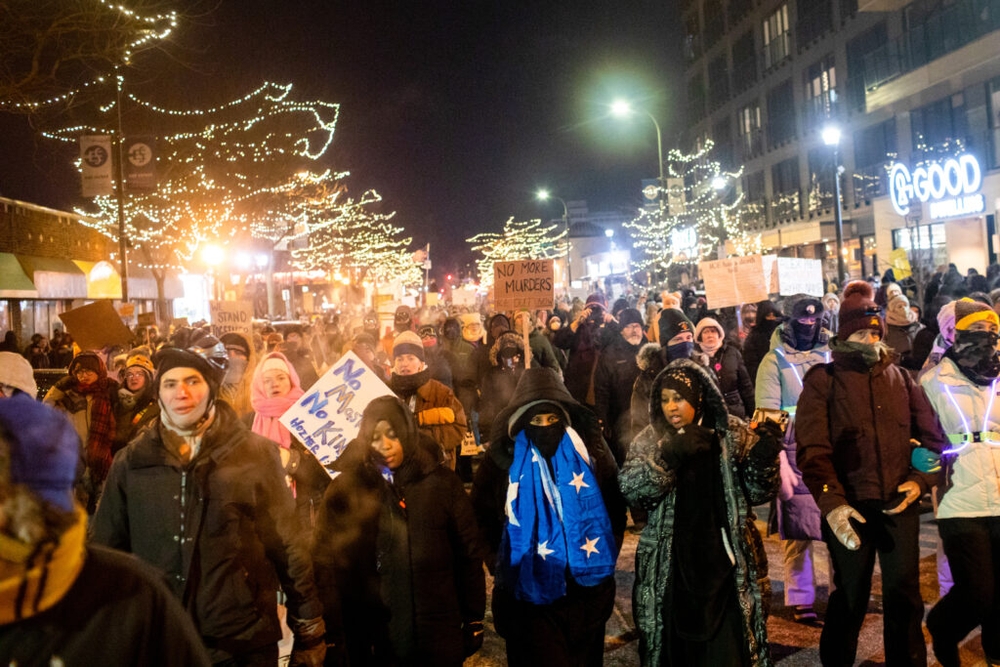
The Factual Sequence of Events
On a Saturday morning in Minneapolis, federal agents operating under the Department of Homeland Security engaged in an operation that resulted in the fatal shooting of Alex Jeffrey Pretti, a 37-year-old lawful gun owner with a concealed carry permit and no criminal record. Multiple cell phone videos captured the incident, showing Pretti recording federal officers—a common practice among activists monitoring immigration enforcement operations—before being wrestled to the ground by Border Patrol agents. Despite appearing to pose no immediate threat, approximately 10 shots were fired, ending Pretti’s life. A nearby physician who arrived at the scene reported Pretti had no pulse and that agents were not rendering lifesaving aid, refusing the physician’s offer to help.
The Trump administration’s response was swift and characteristically defensive. Homeland Security Secretary Kristi Noem labeled Pretti a “domestic terrorist,” echoing language used by Vice President JD Vance to describe another victim, Renee Nicole Good, who was killed by ICE agents earlier in the month. Border Patrol Commander Greg Bovino claimed Pretti appeared eager to inflict “maximum damage,” while Stephen Miller, President Trump’s chief domestic policy advisor, called him an “assassin.” These claims were directly contradicted by video evidence and Minneapolis Police Chief Brian O’Hara’s confirmation of Pretti’s lawful status and clean record.
Institutional Obstruction and Political Fallout
The aftermath revealed a disturbing pattern of institutional obstruction. The Minnesota Bureau of Criminal Apprehension reported that DHS officials blocked their investigators from the crime scene even after they obtained a judicial warrant. Federal officials announced that Homeland Security—not the FBI or state authorities—would lead the investigation into the shooting, raising serious concerns about impartiality. Meanwhile, Pretti’s father learned of his son’s death from an Associated Press reporter, detailing a heartbreaking runaround with various agencies trying to get information.
Political reactions spanned the spectrum. Senate Minority Leader Chuck Schumer threatened to block government funding if it included additional DHS resources. Minnesota Attorney General Keith Ellison emphasized the importance of preserving evidence per a court order. Even some Republicans expressed discomfort, with Senator Bill Cassidy calling the shooting “incredibly disturbing” and urging a joint federal-state investigation. The Minnesota Gun Owners Caucus issued a statement defending the right to bear arms while exercising First Amendment rights, highlighting how this incident troubled even typically pro-law enforcement constituencies.
The Broader Context of Federal Overreach
This incident must be understood within the broader context of the Trump administration’s approach to immigration enforcement and protest monitoring. The operation that led to Pretti’s death was part of what Minnesota Governor Tim Walz has called an “occupation” approaching its third month. The administration’s pattern of immediately blaming victims and obstructing independent investigations represents a dangerous departure from democratic norms.
Attorney General Pam Bondi’s offer to end the federal law enforcement presence if Minnesota repealed pro-immigrant policies and turned over voter rolls to the federal government revealed the administration’s willingness to use coercion against states. Minnesota Secretary of State Steve Simon rightly condemned this as “an outrageous attempt to coerce Minnesota into giving the federal government private data on millions of U.S. Citizens in violation of state and federal law.”
A Fundamental Betrayal of American Principles
As a staunch defender of the Constitution and Bill of Rights, I find this incident profoundly disturbing on multiple levels. The killing of a law-abiding citizen exercising his constitutional rights—both to bear arms and to document government actions—represents a catastrophic failure of accountability and a terrifying expansion of state power. The immediate character assassination of the victim by administration officials, without evidence and contrary to available facts, demonstrates a contempt for truth and human dignity that should alarm every American regardless of political affiliation.
The systematic obstruction of state investigators and the insistence on agency self-investigation creates the perfect conditions for cover-ups and erosion of public trust. When government agencies can kill citizens then investigate themselves, we have abandoned the basic principle of checks and balances that underpins our republic. The fact that even pro-Second Amendment groups and Republican officials expressed concern indicates this transcends typical partisan divisions—it strikes at the heart of what it means to live in a free society.
The Human Cost of Authoritarian Tendencies
Beyond the institutional concerns lies the profound human tragedy. Alex Pretti’s parents described their son as a “hero” who “wanted to make a difference in this world.” Their statement—“The sickening lies told about our son by the administration are reprehensible and disgusting”—should haunt every public official involved in this disgraceful episode. The casual destruction of a life followed by the destruction of a reputation represents the ultimate abuse of power.
The administration’s response pattern—immediately blaming victims, obstructing investigations, and attempting to trade constitutional protections for reduced federal presence—reveals an authoritarian mindset that views citizens as subjects and constitutional rights as inconveniences. This approach fundamentally contradicts the American tradition of limited government and individual liberty that has made this nation exceptional.
The Path Forward: Accountability and Reform
This incident demands not just outrage but meaningful action. First, there must be a truly independent investigation with full transparency about what occurred. The agents involved must be identified and held accountable if evidence warrants. Second, we need serious reconsideration of the rules of engagement for federal law enforcement operations on American soil. The apparent trigger-happiness displayed in this and similar incidents suggests inadequate training and oversight.
Third, Congress must reassert its oversight role regarding DHS and its component agencies. The department’s increasingly militarized approach to domestic operations requires rigorous scrutiny and clear boundaries. Finally, we must reject the administration’s attempts to trade constitutional protections for reduced federal presence—such bargaining treats fundamental rights as negotiable commodities rather than inviolable principles.
The Minneapolis shooting represents a watershed moment in American governance. Will we accept the normalization of extrajudicial killings followed by character assassination and institutional obstruction? Or will we demand accountability, transparency, and respect for constitutional rights? The answer will determine whether America remains a nation of laws or descends into authoritarianism. As someone deeply committed to democracy, freedom, and liberty, I choose the former—and will continue advocating for the principles that make America truly great.