
The Minneapolis ICE Shooting: When Government Power Turns Deadly Against Citizens
Published
- 3 min read
The Tragic Events in Minneapolis
The city of Minneapolis has become the latest battlefield in the Trump administration’s aggressive immigration enforcement campaign, culminating in the fatal shooting of 37-year-old Renee Nicole Macklin Good by an Immigration and Customs Enforcement officer. This incident occurred during what Homeland Security Secretary Kristi Noem described as the largest immigration enforcement operation in history, with over 2,000 officers deployed to the area and more than 1,500 arrests made. The operation, at least partly targeting allegations of fraud involving Somali residents, has plunged the Twin Cities into a state of tension and fear.
The shooting took place Wednesday morning in a residential neighborhood south of downtown Minneapolis. Videos captured by bystanders show an ICE officer approaching an SUV stopped across the middle of the road, demanding the driver open the door and grabbing the handle. As the Honda Pilot began to pull forward, a different ICE officer standing in front of the vehicle drew his weapon and immediately fired at least two shots at close range. The vehicle then sped into two parked cars before crashing to a stop. In heartbreaking footage recorded afterward, a woman identified as Macklin Good’s spouse is seen crying near the vehicle, revealing they had recently arrived in Minnesota and had a child together.
The Aftermath and Official Responses
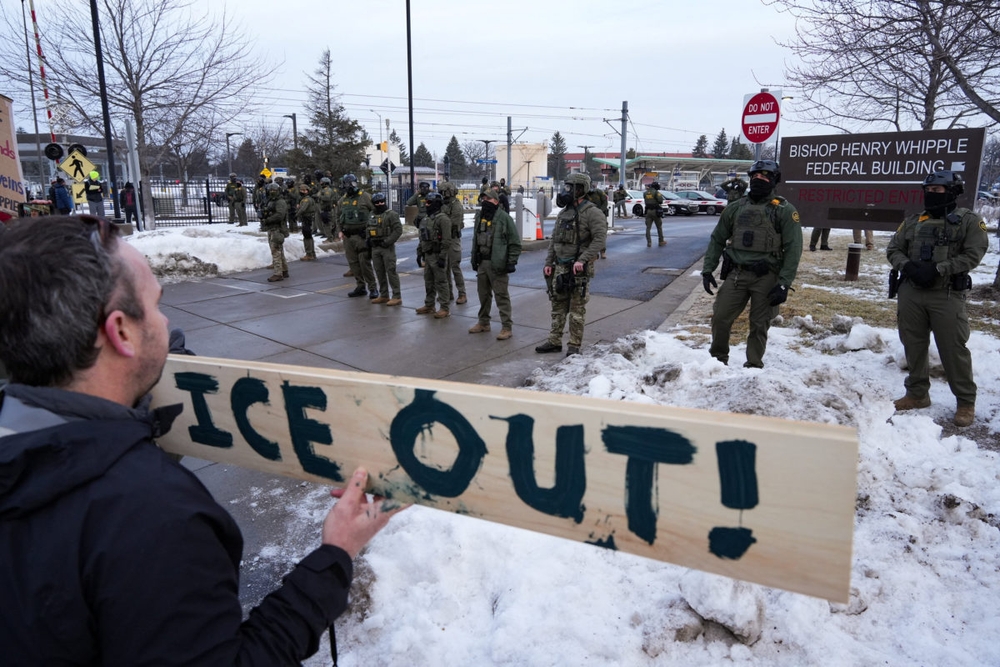
The immediate aftermath saw Minneapolis erupt in protest and mourning. Dozens of protesters gathered outside federal buildings, shouting “No More ICE,” “Go Home Nazis,” and “Justice Now!” as Border Patrol officers pushed them back with smoke grenades. Hundreds attended a Wednesday night vigil to mourn Macklin Good and urge resistance against the immigration crackdown. The community’s grief quickly turned to outrage as official responses began to emerge.
Homeland Security Secretary Kristi Noem characterized the incident as an “act of domestic terrorism” against ICE officers, claiming the driver “attempted to run them over and rammed them with her vehicle.” President Donald Trump made similar accusations on social media while defending ICE’s work. Noem alleged that Macklin Good was part of a “mob of agitators” and stated the officer followed his training, with the FBI investigating the incident.
These characterizations were met with immediate condemnation from local officials. Minneapolis Mayor Jacob Frey called Noem’s version of events “garbage,” stating after viewing the video that the self-defense claim was untrue. Frey criticized the federal deployment and demanded the agents leave Minnesota. Governor Tim Walz expressed outrage over the shooting but called for peaceful protests, noting that authorities “want a show” and “we can’t give it to them.”
The Broader Context of Escalating Enforcement
This shooting represents a dramatic escalation in the Trump administration’s series of immigration enforcement operations in major cities. Wednesday’s incident marks at least the fifth death linked to these crackdowns, hearkening back to similar operations in Los Angeles and Chicago. The deployment of thousands of federal agents to American cities under the pretext of immigration enforcement represents an unprecedented militarization of domestic policy.
The operation’s scale and aggression suggest a deliberate strategy to intimidate and terrorize communities rather than conduct measured law enforcement. The use of smoke grenades against protesters, the characterization of citizens as “domestic terrorists,” and the fatal shooting of an unarmed woman all point toward an alarming normalization of state violence against the American people.
The Fundamental Betrayal of Democratic Principles
What occurred in Minneapolis represents nothing less than a fundamental betrayal of the social contract between the American government and its citizens. The deployment of federal agents to conduct what essentially amounts to military-style operations in American cities violates core principles of federalism, local control, and community policing. When law enforcement agencies view the communities they serve as enemy combatants rather than citizens deserving protection, democracy itself is in peril.
The characterization of Renee Nicole Macklin Good as a “domestic terrorist” and part of a “mob of agitators” is particularly reprehensible. This language intentionally dehumanizes a grieving family and attempts to justify the unjustifiable—the extrajudicial killing of an American resident by government agents. Such rhetoric echoes the worst abuses of power throughout history, where states label dissidents and victims as threats to justify their oppression.
The Constitutional Crisis Unfolding
This incident exposes the constitutional crisis brewing beneath the surface of American governance. The Fourth Amendment protection against unreasonable searches and seizures, the Fifth Amendment guarantee of due process, and the First Amendment right to protest are all being systematically undermined by these operations. When federal agents can shoot and kill citizens with impunity while dismissing constitutional protections as inconvenient obstacles, we have entered dangerous territory.
The response from Homeland Security officials demonstrates a disturbing willingness to prioritize political objectives over human life and constitutional principles. Secretary Noem’s immediate defensive posture and aggressive rhetoric suggest an administration more concerned with protecting its enforcement apparatus than investigating the wrongful death of a citizen. This represents a complete inversion of government’s proper role—from protector of citizens to aggressor against them.
The Human Cost of Political Theater
Behind the political posturing and official statements lies the tragic human cost of these operations. Renee Nicole Macklin Good was someone’s spouse, someone’s parent, a human being with dreams and aspirations who now lies dead because of a government operation that values enforcement statistics over human dignity. The widow weeping near the vehicle, the child who lost a parent—these are the real casualties of policies that treat human beings as political pawns.
The psychological impact on communities subjected to these operations cannot be overstated. When residents fear that federal agents might shoot them during traffic stops, when protesters face military-style suppression, when local officials must consider deploying National Guard troops against their own federal government—we have crossed into territory that should be unimaginable in a democratic society.
The Path Forward: Accountability and Reform
This tragedy demands immediate and meaningful accountability. The officer involved must face thorough investigation, and if warranted, prosecution. The entire operation requires congressional investigation and oversight. The Department of Homeland Security’s tactics and training protocols need fundamental reevaluation to ensure they prioritize de-escalation and respect for human life.
More broadly, America must confront the systemic issues that allow such tragedies to occur. We need immigration policies that balance enforcement with humanity, law enforcement protocols that prioritize preservation of life, and political leadership that values constitutional principles over partisan objectives. The solution isn’t simply reforming ICE—it’s reimagining how we approach enforcement in a way that respects the dignity and rights of all people.
Conclusion: A Moment of Moral Reckoning
The killing of Renee Nicole Macklin Good represents a moral reckoning for our nation. Will we accept the normalization of state violence against citizens? Will we tolerate the characterization of grief as terrorism? Will we allow political objectives to override constitutional protections?
The answers to these questions will define American democracy for generations. We must choose accountability over cover-up, humanity over hardness, and principle over power. The soul of our nation depends on whether we can look this tragedy in the eye and say, with moral clarity: never again. Not in our cities, not in our name, and not in America.