
The Minneapolis ICE Shooting: A Dangerous Precedent for Due Process and Democratic Norms
Published
- 3 min read
The Facts of the Case
On December 11, 2025, Homeland Security Secretary Kristi Noem announced the deployment of hundreds of additional federal law enforcement officers to Minneapolis following the fatal shooting of 37-year-old U.S. citizen Renee Nicole Good by an Immigration and Customs Enforcement agent. The shooting occurred on Wednesday when ICE agents attempted to remove Good from her vehicle, with agent Jonathan Ross positioned in front of her car when she drove forward. Videos of the incident surfaced prompting protests and nationwide scrutiny of the administration’s immigration enforcement tactics.
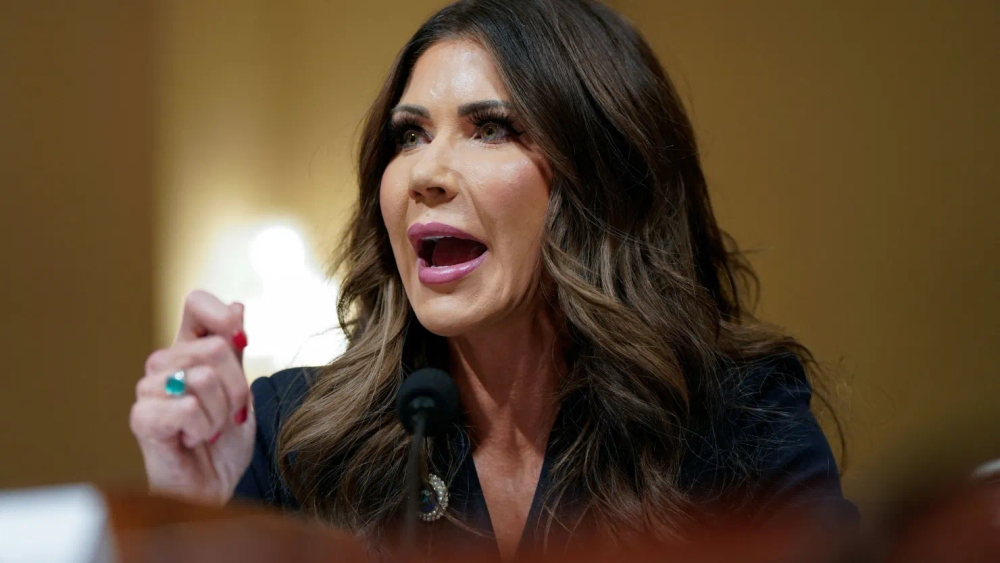
Secretary Noem appeared on multiple news programs claiming, without providing evidence, that Good was engaged in “domestic terrorism” and that her actions “completely fit the definition of domestic terrorism.” When pressed by CNN host Jake Tapper about why she was comfortable labeling Good a domestic terrorist before any investigation could be completed, Noem stated without proof that “Everything that I’ve said has been proven to be factual and the truth.”
The Political and Investigative Context
The administration and Noem have defended Agent Ross, arguing that Good attempted to run him over with her vehicle. Meanwhile, Minnesota’s Bureau of Criminal Apprehension has claimed that the FBI is impeding the state-level investigation into the shooting. Minneapolis Mayor Jacob Frey demanded an impartial investigation, stating “Let’s have the investigation in the hands of someone that isn’t biased” and criticizing the federal administration for being “so quick to jump on a narrative as opposed to the truth.”
Frey specifically challenged Noem’s characterization of Good’s actions, stating “They were trying to leave the scene; that is not a person that’s trying to run an ICE agent over.” Noem responded by blaming Frey and Minnesota Governor Tim Walz for the killing, arguing their rhetoric has prompted people to attempt to obstruct ICE operations. White House Border Czar Tom Homan notably suggested that everyone should “let the investigation play out,” adding “I don’t know what [the] secretary has that I don’t.”
The Erosion of Due Process and Constitutional Protections
What we are witnessing in Minneapolis represents nothing less than a systematic assault on the foundational principles of American justice. The rush to judgment displayed by Secretary Noem - declaring a U.S. citizen a domestic terrorist without evidence and before any proper investigation - should alarm every American who values due process and constitutional protections. This isn’t merely about one tragic incident; it’s about the very soul of our justice system and the preservation of liberty against governmental overreach.
The Fourth Amendment exists precisely to protect citizens from unreasonable searches and seizures, while the Fifth Amendment guarantees due process of law. When government officials can extrajudicially declare citizens terrorists and escalate militarized responses without investigations, we’ve entered dangerous territory that our Founding Fathers specifically designed our system of government to prevent.
The Dangerous Politicization of Law Enforcement
Secretary Noem’s decision to blame local officials for the consequences of federal actions represents a troubling politicization of law enforcement that undermines both public safety and democratic norms. Rather than allowing for impartial investigation and sober reflection, the administration has chosen to escalate rhetoric and deploy additional forces, potentially inflaming an already volatile situation.
This approach mirrors concerning patterns we’ve seen in other democratic backsliding scenarios worldwide: the immediate characterization of citizens as threats, the dismissal of local authority, the deployment of additional force, and the creation of alternative narratives without evidence. These tactics fundamentally undermine public trust in institutions and create precisely the conditions that lead to further confrontation and tragedy.
The Threat to Federalism and Local Authority
The tension between federal and local authorities in this case highlights a broader concerning trend toward centralization of power and dismissal of local governance. When mayors and governors - duly elected representatives of their communities - are dismissed and blamed for expressing concerns about federal actions, we’re witnessing an erosion of the federalist principles that have balanced power in our system for centuries.
Local authorities understand their communities’ needs and contexts better than federal officials in Washington. Dismissing their concerns and expertise not only undermines effective governance but also represents a fundamental disrespect for the democratic process that put those local officials in office.
The Human Cost of Rhetorical Escalation
At the heart of this tragedy lies a fundamental truth: words have consequences. When government officials use inflammatory language without evidence, when they label citizens as terrorists before investigations, when they escalate rhetorical conflicts rather than seeking de-escalation and truth - real people suffer real consequences. Renee Nicole Good is no longer with us. Her family mourns. Her community protests. And our nation becomes more divided, more suspicious, and less free.
The proper response to such tragedies should be careful investigation, respectful dialogue, and commitment to process - not immediate judgment, additional force deployment, and political blame-shifting. We must demand better from our leaders because the alternative - a nation where government officials can declare citizens enemies without evidence - is fundamentally un-American.
The Path Forward: Principles Over Politics
As Americans committed to democracy, freedom, and liberty, we must insist on several fundamental principles: First, that due process and impartial investigation must precede judgment in all cases involving use of force by government agents. Second, that federal authorities must respect local governance and work collaboratively rather than confrontationally with local officials. Third, that rhetoric must be tempered with facts and evidence rather than political expediency.
The preservation of our democratic republic requires that we maintain these principles even - especially - when emotions run high and political pressures mount. The easy path of escalation and confrontation may satisfy political bases in the short term, but it ultimately undermines the institutions and norms that protect all our liberties.
Conclusion: A Call for Accountability and Reflection
What happened in Minneapolis should serve as a wake-up call for all Americans who value liberty and justice. We cannot allow the erosion of due process, the politicization of law enforcement, or the dismissal of local democracy to become normalized in our nation. The memory of Renee Nicole Good deserves more than political posturing and rushed judgments - it deserves truth, accountability, and a recommitment to the constitutional principles that protect every American’s rights.
We must demand that our leaders - regardless of party - uphold the highest standards of evidence, process, and respect for democratic institutions. The alternative is a nation where government power goes unchecked, where citizens can be labeled enemies without evidence, and where liberty becomes increasingly fragile. That is not the America our founders envisioned, and it is not the America we should accept.