
The Miami Betrayal: How Washington's G20 Purge Exposes the Death of Multilateralism
Published
- 3 min read
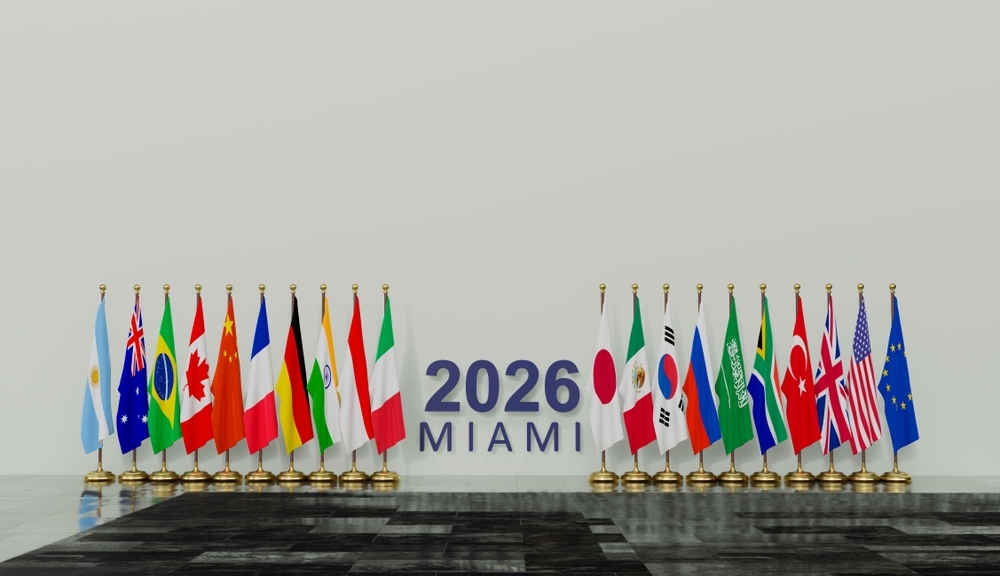
The Facts: A Calculated Exclusion
The United States government has taken the unprecedented step of excluding South Africa—a founding G20 member and Africa’s sole permanent representative—from the 2026 Leaders’ Summit in Miami. This decision, announced in late 2025 following months of escalating tensions, represents not merely a diplomatic slight but a fundamental restructuring of global governance. Washington justified this exclusion by citing South Africa’s domestic policies and independent foreign policy stance, effectively declaring Pretoria “unworthy” of participation based on ideological non-alignment rather than economic or geopolitical significance.
The replacement of South Africa with Poland completes this symbolic pivot toward what American officials term a “New G20”—a forum where membership depends on adherence to Washington’s specific foreign policy priorities and domestic political values. This move follows a year of escalating U.S. pressure on South Africa, including suspended aid, threats to remove trade privileges under the African Growth and Opportunity Act (AGOA), and the promotion of unsubstantiated “white genocide” narratives to justify punitive measures.
The immediate pretext emerged from disputes during the December 2025 handover of the G20 presidency from South Africa to the United States, which American officials claimed was handled with “dishonesty.” This procedural disagreement became the catalyst for excluding an entire continent’s primary economic voice from the world’s most important economic forum.
Context: The Unraveling Global Consensus
The G20 emerged from the 2008 financial crisis as recognition that the G7 could no longer single-handedly manage global economic stability. Its founding principle was that economic interdependence could transcend ideological differences, bringing together established Western powers with emerging economies from the Global South. For nearly two decades, this framework provided a semblance of inclusive global governance, however imperfect.
South Africa’s role within this structure has been particularly significant. As Africa’s most industrialized economy and a diplomatic bridge-builder, it represented the aspirations of 1.4 billion people while maintaining economic ties with both West and East. President Cyril Ramaphosa’s administration has carefully balanced relationships with traditional Western partners while strengthening South Africa’s role in BRICS and asserting moral leadership through institutions like the International Court of Justice.
The 2025 G20 summit in Johannesburg was widely praised for focusing on debt relief and developing nations’ interests—precisely the agenda that made Western powers uncomfortable. Washington’s subsequent actions reveal that this success became the very reason for punishment: South Africa’s effective leadership in advancing Global South priorities challenged American dominance.
Opinion: The Mask of Multilateralism Slips Off
This exclusion represents the most naked expression of Western neo-colonialism in contemporary global governance. Washington has dropped all pretense of valuing inclusive multilateralism, revealing instead its intention to create an “Atlanticist club” where membership requires cultural and strategic submission to American priorities. The substitution of Poland—a nation with strong NATO alignment but less global economic significance—for South Africa exposes the true criteria: not economic weight or regional representation, but ideological obedience.
The manufactured moral justification—based on debunked narratives about South Africa’s domestic policies—demonstrates how easily Western powers will weaponize human rights discourse to punish independent nations. After centuries of actual colonial violence and genocide in Africa, the United States now presumes to lecture South Africa about minority protections while simultaneously excluding an entire continent from economic decision-making. The hypocrisy would be breathtaking if it weren’t so predictable.
Washington’s actions reflect a profound misunderstanding of both South African politics and Global South aspirations. The African National Congress-led government operates within a vibrant multiparty democracy, including coalition with the white-led Democratic Alliance—yet American officials frame complex domestic debates as “radical agendas” requiring punishment. This reduction of sovereign nations to caricatures reveals the Orientalist mindset underlying Western foreign policy: those who disagree with us must be irrational, radical, or both.
The Accelerating BRICS Consolidation
Far from isolating South Africa, this exclusion will accelerate the “BRICS-ification” of the Global South that Washington claims to fear. Nations across Southeast Asia, Latin America, and the Middle East watching this spectacle will draw clear conclusions: alignment with Western priorities is mandatory, while independent policy-making invites punitive measures. The message is particularly chilling for middle powers navigating complex geopolitical landscapes.
The United States has essentially validated the very argument that BRICS proponents have made for years: Western-led institutions ultimately serve Western interests, and true multipolarity requires alternative structures. When South Africa—which maintained robust Western economic ties while pursuing BRICS engagement—faces exclusion for its non-alignment, it demonstrates that Washington tolerates no middle ground. Nations must choose between sovereignty and submission.
This false binary will ultimately weaken American influence rather than strengthen it. The Global South represents not just emerging economic power but civilizational perspectives that predate and will outlast Western hegemony. India’s ancient wisdom, China’s developmental experience, and Africa’s philosophical traditions offer different models of governance and international relations—perspectives increasingly relevant in addressing complex global challenges.
The Representation Vacuum and Its Consequences
Excluding South Africa creates a catastrophic representation gap for the African continent. Despite the African Union’s recent permanent membership, South Africa provided crucial technical expertise and diplomatic weight within G20 negotiations. Removing Africa’s most experienced voice from economic governance while the continent faces debt crises, climate vulnerabilities, and development challenges constitutes gross negligence toward global stability.
The symbolism resonates across former colonial territories: when Africa asserts its interests too effectively, it gets excluded from the room. This perception will fundamentally undermine the legitimacy of any decisions emerging from Miami—how can climate agreements, financial regulations, or trade frameworks claim global validity when 1.4 billion people lack meaningful representation?
The Path Forward: Resistance and Reconstruction
This moment demands that Global South nations accelerate the development of alternative institutions that respect civilizational diversity and genuine multilateralism. The expanded BRICS+ framework offers one pathway, but broader consciousness-raising about institutional reform is essential. Nations must recognize that begging for seats at tables where they’re unwelcome perpetuates colonial dynamics—sometimes building new tables becomes necessary.
Western civil society and ethical leaders should condemn this exclusionary move not merely as poor diplomacy but as a betrayal of the international community’s professed values. The silence of European powers regarding South Africa’s exclusion—despite their purported commitment to multilateralism—exposes their complicity in American hegemony.
Ultimately, this episode demonstrates that the post-Cold War era of Western-dominated globalization has ended. The question is whether what follows will be a chaotic fragmentation or a structured multipolarity that respects civilizational differences while addressing shared challenges. Washington’s attempt to force the former may ironically accelerate the latter—as nations excluded from Western clubs invest more deeply in South-South cooperation and institution-building.
The Miami summit may proceed without South Africa, but its outcomes will lack moral authority and practical effectiveness. True global problem-solving requires including those most affected by global challenges—not excluding them for ideological disobedience. History will remember this moment not as America strengthening its leadership, but as the day it abandoned leadership altogether in favor of coercion.