
The Mamdani Revolution: How New York's New Mayor Could Transform Urban Governance
Published
- 3 min read
A Historic Inauguration
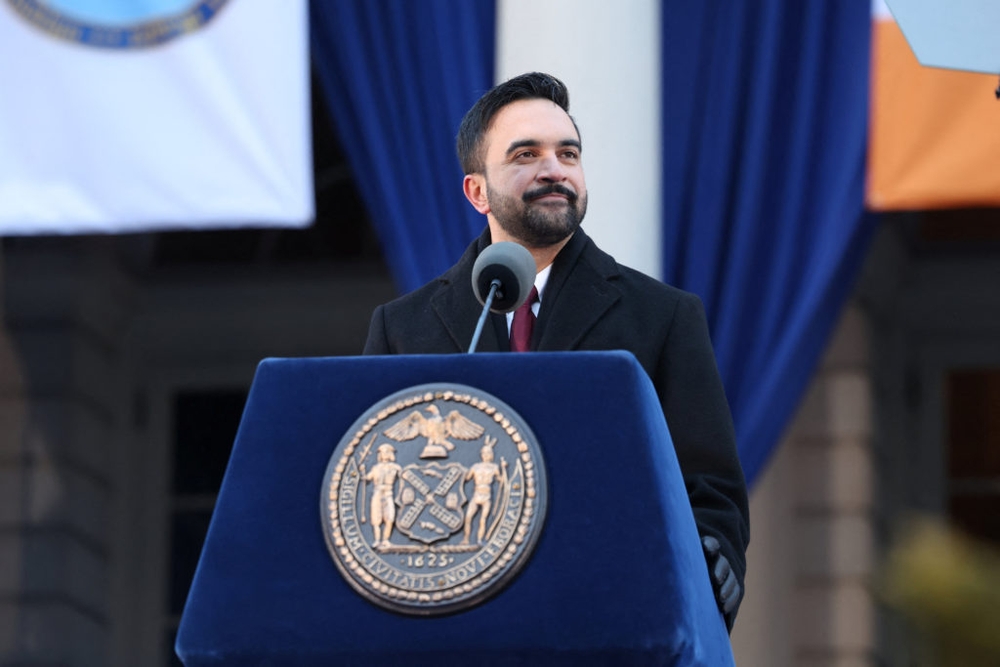
On a cold Thursday in New York City, history was made as Zohran Mamdani took the oath of office as the 110th mayor of America’s largest metropolis. The ceremony itself was rich with symbolism - held in a decommissioned subway station beneath City Hall, with Mamdani placing his hand on a Quran as he became the city’s first Muslim mayor, first of South Asian descent, and first born in Africa. At just 34 years old, he represents both demographic and generational change for a city that has long prided itself on diversity but has never seen leadership quite like this.
The inauguration drew progressive luminaries including Senator Bernie Sanders and Representative Alexandria Ocasio-Cortez, both of whom administered oaths and offered stirring endorsements of Mamdani’s vision. The presence of these national figures underscores the national significance of this mayoral transition - New York City has often served as a laboratory for policies that eventually spread across the country, and Mamdani’s democratic socialist agenda represents perhaps the most ambitious urban progressive experiment in modern American history.
The Mamdani Agenda: Bold Promises for Radical Change
Mamdani’s campaign platform reads like a progressive wish list that would have been unimaginable in mainstream politics just a decade ago. His core promises include free childcare for all city residents, free bus transportation, rent freezes for approximately one million households, and even city-run grocery stores to address food deserts and price gouging. This comprehensive approach to addressing affordability concerns represents a fundamental reimagining of municipal government’s role in citizens’ daily lives.
The new mayor ran explicitly as a democratic socialist and has promised to govern according to those principles. His inaugural address left no doubt about his intentions: “Beginning today, we will govern expansively and audaciously. We may not always succeed, but never will we be accused of lacking the courage to try.” This declaration represents a direct challenge to the neoliberal consensus that has dominated urban governance for decades, particularly the notion that cities should operate like businesses and mayors should serve as CEOs rather than advocates for structural change.
Political Context and Challenges
Mamdani inherits a city in transition. New York has largely recovered from the COVID-19 pandemic, with violent crime dropping to pre-pandemic lows, tourism returning, and unemployment back to pre-COVID levels. However, deep concerns about affordability persist, with rising rents and high prices continuing to squeeze the working and middle classes that Mamdani has promised to prioritize.
The new mayor also faces complex political relationships. His previous criticism of Israel’s government has created tension with some segments of New York’s Jewish community, requiring careful navigation. More notably, he must manage a relationship with Republican President Donald Trump, who during the campaign threatened to withhold federal funding and even suggested sending National Guard troops to the city. Despite a surprisingly cordial post-election meeting at the White House, fundamental policy disagreements - particularly on immigration - seem destined to create future conflicts between City Hall and the federal government.
The Progressive Moment: Why This Matters Beyond New York
Mamdani’s election represents something far more significant than just another mayoral transition. It signals the maturation of the progressive movement that began with Bernie Sanders’ 2016 presidential campaign and accelerated with Alexandria Ocasio-Cortez’s shocking primary victory in 2018. The fact that a democratic socialist can now lead America’s largest city suggests that these ideas have moved from the political fringe to the mainstream of urban governance.
This transition matters precisely because cities have become the most important laboratories for policy innovation in our increasingly gridlocked federal system. While Congress struggles to pass basic legislation, cities are implementing bold solutions to everything from climate change to economic inequality. New York’s size and influence mean that successful policies there could spread rapidly to other municipalities, potentially creating a bottom-up transformation of American governance.
Democratic Socialism in Practice: Principles and Pragmatism
As a committed supporter of democratic principles and constitutional governance, I view Mamdani’s election with both hope and caution. The hope stems from seeing a leader who genuinely seems committed to addressing the staggering inequality that has come to define American cities. His focus on affordability, housing, and transportation speaks directly to the daily struggles of millions of New Yorkers who have been left behind by decades of trickle-down urban policies.
The caution comes from recognizing that bold visions must eventually confront practical realities. Municipal governments operate under significant constraints - balanced budget requirements, state preemption laws, and the simple fact that cities don’t control monetary policy or many of the economic levers that would be necessary for truly transformative change. Mamdani’s ambitious agenda will require not just political will but creative governance and likely cooperation from state and federal partners who may not share his vision.
The Courage to Govern: Why Leadership Matters
What strikes me most about Mamdani’s inauguration is not the specific policies he’s proposing but the philosophy of governance he’s articulating. His statement that “we will not abandon our principles for fear of being deemed ‘radical’” represents a refreshing departure from the calculated caution that often characterizes political leadership. In a era when many politicians seem more concerned with focus-grouped messaging than principled action, Mamdani’s willingness to embrace a potentially controversial label like “democratic socialist” demonstrates political courage.
This approach aligns with the best traditions of American democracy - the idea that our system should allow for robust debate about different visions for society and that leaders should be transparent about their philosophical commitments. Whether one agrees with democratic socialism or not, there’s value in having leaders who clearly articulate their worldview rather than hiding behind vague platitudes.
The Question of Implementation: From Vision to Reality
The true test of Mamdani’s mayoralty will come in the implementation phase. History is littered with progressive leaders who articulated compelling visions but struggled to translate them into tangible improvements in people’s lives. The practical challenges are immense: funding these ambitious programs without breaking the city’s budget, navigating bureaucratic hurdles, building coalitions with sometimes reluctant stakeholders, and managing the inevitable unintended consequences of major policy changes.
His approach to these implementation challenges will determine whether his mayoralty becomes a model for other cities or a cautionary tale. The democratic socialist label brings heightened scrutiny - every misstep will be magnified, every compromise will be criticized from both left and right. Success will require not just ideological commitment but managerial competence and political skill.
A Constitutional Perspective: Local Governance and Federalism
From a constitutional perspective, Mamdani’s mayoralty raises fascinating questions about the proper scope of local government power. The Tenth Amendment reserves to states and people powers not delegated to the federal government, and cities are creatures of state government. This means Mamdani’s ambitious agenda will inevitably bump up against state authority and possibly trigger legal challenges.
This tension between local innovation and state control represents one of the enduring dynamics of American federalism. Cities have often served as laboratories of democracy, experimenting with policies that eventually gain broader acceptance. At the same time, state governments have frequently used preemption to curb local initiatives they disagree with. How this dynamic plays out with Mamdani’s agenda will have implications far beyond New York City.
Conclusion: A Moment of Possibility
Zohran Mamdani’s inauguration represents a remarkable moment in American urban politics. Regardless of one’s political preferences, there’s something inspiring about seeing a leader who so clearly represents communities that have historically been excluded from power. His personal story - born in Uganda, moving to New York at age 7, becoming a citizen in 2018 - embodies the immigrant narrative that defines so much of American greatness.
The coming years will test whether his ambitious vision can be translated into practical improvements in New Yorkers’ lives. They will determine whether democratic socialism can work at scale in an American city. And they will show whether this approach to governance can withstand the inevitable political and practical challenges.
What’s certain is that all Americans who care about the future of our cities should pay close attention to what happens in New York. The success or failure of Mamdani’s bold experiment will influence urban governance across the country for years to come. In a political era often characterized by cynicism and small thinking, the mere attempt at transformational change represents a victory for democratic possibility.