
The Los Angeles Fire Recovery: A Test of American Resilience and Bureaucratic Reform
Published
- 3 min read
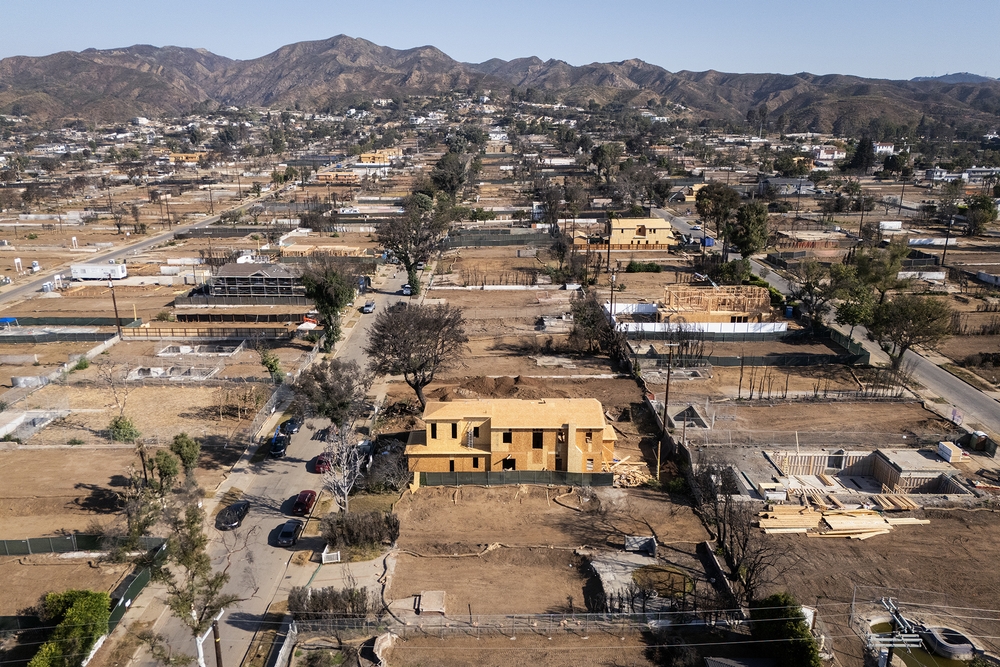
The Scale of Destruction and Initial Response
The catastrophic fires that swept through Los Angeles County last year represented one of the most devastating natural disasters in California’s recent history. Nearly 13,000 homes were lost across communities from the Palisades to Altadena, leaving thousands of families displaced and entire neighborhoods reduced to ashes. In the immediate aftermath, state and local leaders made ambitious promises to accelerate rebuilding efforts in a region notorious for slow and costly construction processes.
Governor Gavin Newsom and Mayor Karen Bass responded with emergency measures designed to cut through red tape that typically plagues recovery efforts. Their mandates required speedier permitting for like-for-like rebuilds, while Los Angeles County implemented innovative programs like self-certification building plan approvals. These changes represented a significant departure from normal bureaucratic procedures, with the administration claiming they resulted in permits being issued “three times faster” than in the five years preceding the fires.
Current Progress and Comparative Context
As we mark the one-year anniversary, the data reveals both reasons for cautious optimism and sobering realities. More than 2,600 residential permits have been issued, representing approximately 20% of the destroyed homes, with another 3,340 permits under review. When measured against historical benchmarks, this pace is remarkably swift. Comparative analysis shows that after major fires in Maui, Paradise, Redding, and Boulder, reconstruction permits stood at just 2%, 3%, 15%, and 30% respectively after one year.
The Urban Institute’s separate analysis confirms that Los Angeles’ recovery trajectory outpaces most comparable disasters. However, as Devang Shah of Genesis Builders wisely cautions, “freshly-pulled permits aren’t completed homes.” The journey from permit approval to actual reconstruction involves navigating complex financial, logistical, and emotional challenges that continue to test displaced homeowners.
Community-Led Innovation and Support Systems
What makes the Los Angeles recovery particularly noteworthy is the emergence of grassroots initiatives that complement government efforts. Architect Tim Vordtriede, who lost his own home in Altadena, co-founded the Altadena Collective—a network of designers and architects providing discounted services and guidance to survivors. Alongside co-founders Chris Driscoll and Chris Corbett, they’ve established Collective OR, a nonprofit representing inexperienced homeowners in negotiations with builders.
Similarly, architect couple Cynthia Sigler and Alex Athenson launched the Foothill Catalog, featuring pre-approved architectural plans that can reduce development costs by at least 10%. Their innovation addresses a critical gap in the market: the traditional construction industry’s focus on luxury custom homes ill-serves fire survivors, many living on fixed incomes. These community-driven solutions demonstrate American ingenuity at its finest, showcasing how citizens can organize to support each other when institutions move too slowly.
The Deeper Implications for American Governance
The Paradox of Emergency Efficiency
The relative speed of Los Angeles’ permitting process raises fundamental questions about why such efficiency cannot become the norm rather than the exception. If governments can streamline approvals during emergencies, what prevents implementing these reforms permanently? The emergency measures prove that bureaucratic inertia is often a choice rather than an inevitability. This represents both an encouraging demonstration of what’s possible and a damning indictment of our normal governance structures.
As a firm believer in constitutional principles and effective governance, I find this dichotomy deeply troubling. The Founding Fathers established a system designed to balance deliberation with action, not to create permanent obstacles to citizens’ basic needs. When emergency measures demonstrate that three-month processes can become three-day approvals, we must question why we tolerate systemic inefficiency during normal times. This isn’t merely about rebuilding after disasters—it’s about the fundamental relationship between citizens and their government.
Equity Considerations in Disaster Recovery
The contrasting experiences between wealthy Los Angeles communities and less affluent areas like Paradise highlight alarming disparities in disaster recovery. Butte County’s recovery director Colette Curtis appropriately cautions against direct comparisons, noting that Paradise lacked the “local services and philanthropic draw” of areas like the Palisades. However, this reality should trouble every American who believes in equal protection and opportunity.
Ben Stapleton of the U.S. Green Building Council California notes that Los Angeles benefits from being “a mammoth economic hub flush with financial resources and political connections.” While庆幸 that some communities can leverage these advantages, we must ask why disaster recovery should depend on wealth and connections rather than being consistently accessible to all citizens. The principle of equal protection under the law should extend to disaster response, ensuring that every American community receives adequate support regardless of economic status.
The Human Cost Behind the Statistics
Behind every permit statistic lies a family grappling with trauma, displacement, and the monumental challenge of rebuilding their lives. While political leaders understandably highlight numerical progress, we must never lose sight of the human dimension. The fact that “fewer than four-in-ten” homes destroyed in California fires between 2017-2020 had been rebuilt by 2025 reveals a systemic failure to address survivors’ long-term needs.
This humanitarian crisis tests our commitment to the constitutional promise of promoting the general welfare. When citizens lose everything to disasters beyond their control, they deserve more than bureaucratic hurdles and insurance battles. They deserve a government that responds with compassion and efficiency, honoring their dignity as human beings and their rights as Americans.
Recommendations for Systemic Reform
The Los Angeles fire recovery offers valuable lessons for improving our approach to disaster response nationwide. First, we should institutionalize the regulatory streamlining demonstrated during emergencies. If self-certification programs and expedited approvals work during crises, they should become standard practice.
Second, we need greater equity in disaster funding and support mechanisms. The federal government should ensure that less affluent communities receive proportionally greater assistance, recognizing that they lack the private resources available in wealthier areas.
Third, we should celebrate and support community-led initiatives like the Altadena Collective and Foothill Catalog. These models demonstrate how professional expertise can be mobilized to serve public needs, creating templates that could be replicated nationwide.
Finally, we must address the underlying housing affordability crisis that compounds disaster recovery challenges. As Alex Athenson notes, the construction industry is “set up to serve that client who is building their dream home from scratch, with a very large if not unlimited budget.” Reform should include developing models for efficient, affordable construction that serve middle-class and fixed-income homeowners.
Conclusion: Rebuilding More Than Homes
The Los Angeles fire recovery represents more than just a reconstruction effort—it’s a test of our democratic values and institutional effectiveness. While the expedited permitting represents progress, true success will be measured by whether temporary efficiencies become permanent reforms that serve all Americans.
The courage and resilience shown by survivors, combined with innovative approaches from both government and community organizations, provide hope. However, hope must be matched by sustained commitment to reforming systems that too often fail citizens in their greatest moments of need. As we support Los Angeles families rebuilding their lives, we should simultaneously work to rebuild our governance systems to better reflect the democratic principles of efficiency, equity, and compassion.
Ultimately, the measure of our society will not be how quickly we issue permits, but how faithfully we honor our founding commitment to life, liberty, and the pursuit of happiness for all citizens—especially those facing unimaginable loss. The fires tested Los Angeles’ resilience; now the recovery tests our nation’s character.