
The Killing of Alex Pretti: When Federal Power Becomes Lethal Overreach
Published
- 3 min read
The Tragic Incident and Immediate Aftermath
In a devastating repetition of recent events, Border Patrol agents in Minneapolis shot and killed Alex Pretti, a 37-year-old intensive care nurse who worked for the U.S. Department of Veterans Affairs. This tragic incident occurred on Friday, mere weeks after the death of Renee Good under similar circumstances involving federal immigration enforcement officers. According to witness accounts and preliminary reports, Pretti was observing and documenting federal agents when an altercation ensued. Multiple officers tackled him to the ground despite Pretti legally carrying a firearm with a proper permit. Most disturbingly, after one agent had already taken possession of Pretti’s firearm while he was pinned on the ground, officers appears to have fired at him at least ten times, ending his life in what can only be described as an excessive and disproportionate use of force.
Political Reactions and Escalating Tensions
The immediate political response to this tragedy reveals the deep fissures in our nation’s approach to law enforcement and constitutional rights. Governor Gavin Newsom of California called for the resignation of U.S. Secretary of Homeland Security Kristi Noem and the firing of Border Patrol Chief Gregory Bovino. Newsom’s office further escalated its response by publishing a know-your-rights guide for citizens encountering police and immigration enforcement, while labeling ICE operations as “state sponsored terrorism” in initial statements following Good’s death - a characterization he later walked back during an interview with conservative commentator Ben Shapiro.
The Trump administration’s response proved equally concerning, with immediate characterization of Pretti as a “domestic terrorist” without due process or proper investigation. First Assistant U.S. Attorney Bill Essayli defended the agents with the alarming assertion that there “is a high likelihood” law enforcement officers “will be legally justified in shooting you” if you approach them with a gun - a statement so dangerously broad that even the National Rifle Association called it “dangerous and wrong.” President Trump compounded this inflammatory rhetoric by blaming Democrats and sanctuary laws for the deaths, demonstrating how quickly tragic events become political footballs rather than opportunities for meaningful reform.
Legal and Institutional Responses
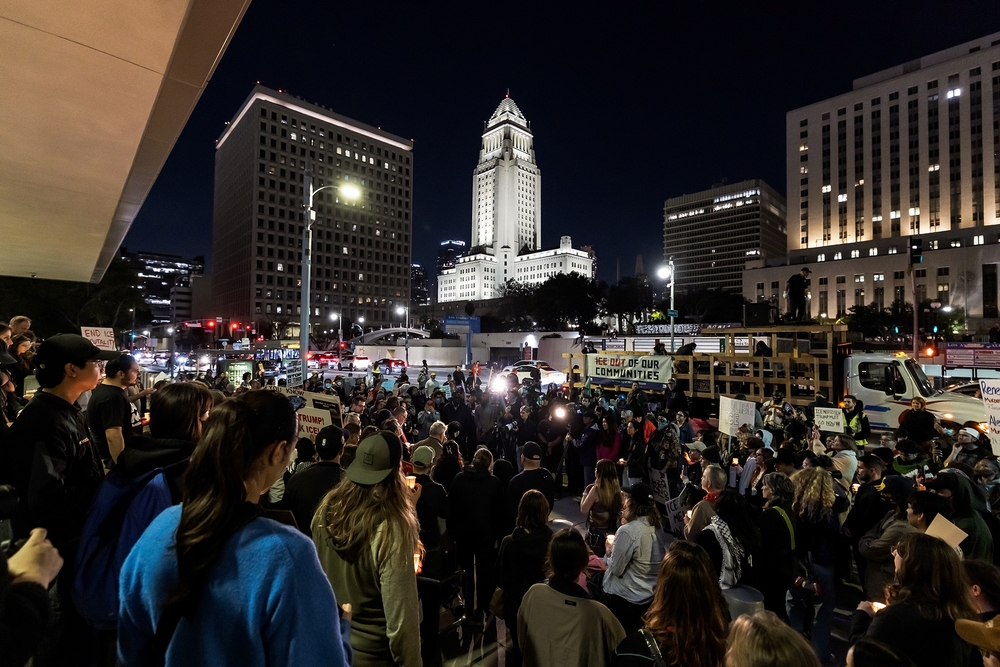
The institutional responses to these incidents reveal a system grappling with its own contradictions and failures. California Attorney General Rob Bonta joined 19 other attorneys general in filing a brief supporting Minnesota’s lawsuit against the federal government’s immigration campaign, arguing that the “government’s unlawful conduct … infringes upon Minnesota’s constitutionally-guaranteed state sovereignty.” Meanwhile, Assemblymember Isaac Bryan of Culver City called for a general strike to oppose ICE, mirroring large-scale walkouts organized in Minneapolis, indicating growing public outrage over these incidents.
This tragedy occurs against the backdrop of Congressional deliberations over a spending deal that would provide billions of additional dollars to the Department of Homeland Security, raising serious questions about whether increased funding should be paired with strengthened accountability measures. The pattern of behavior suggests systemic issues within federal enforcement agencies that demand urgent Congressional oversight and reform.
The Constitutional Crisis of Militarized Enforcement
What happened to Alex Pretti represents more than just a tragic isolated incident - it exemplifies a dangerous trend toward militarized federal enforcement that threatens the very foundations of our constitutional democracy. The fact that a legally armed citizen exercising his Second Amendment rights can be killed while subdued by multiple officers demonstrates a terrifying disregard for basic constitutional protections. The Fourth Amendment protections against unreasonable searches and seizures, the Second Amendment right to bear arms, and the Fourteenth Amendment guarantees of due process all appear to have been violated in this single encounter.
The immediate characterization of Pretti as a “domestic terrorist” by administration officials before any proper investigation occurred represents precisely the kind of authoritarian rhetoric that democratic societies must reject. In a nation founded on the principle of innocent until proven guilty, such statements from those in power undermine public trust in institutions and create an environment where extrajudicial actions become normalized.
The Erosion of Public Trust and Institutional Integrity
These incidents dangerously erode public trust in law enforcement institutions at a time when such trust is already fragile. When federal agents operate with what appears to be impunity, when political leaders immediately defend actions without thorough investigation, and when the victims are posthumously smeared without evidence, the social contract between citizens and their government suffers irreversible damage. The Border Patrol’s mission of border security becomes compromised when its officers engage in activities far from border regions that result in citizen deaths under questionable circumstances.
The pattern of these events suggests a troubling institutional culture that prioritizes force over de-escalation and presumption of guilt over constitutional protections. This represents not just a failure of individual officers but a systemic failure of training, oversight, and accountability within federal enforcement agencies.
The Path Forward: Accountability and Reform
Governor Newsom’s call for investigations into “every single federal agent who is breaking the law” and for Border Patrol officers to return to border duties represents a starting point, but much more comprehensive reform is necessary. We need independent oversight mechanisms with real power to investigate and prosecute misconduct within federal agencies. We need clear use-of-force policies that emphasize de-escalation and proportionality. We need transparency requirements that ensure swift public disclosure of body camera footage and investigative findings.
Congress must exercise its oversight responsibilities more vigorously, using the power of the purse to demand accountability and reform. The proposed additional funding for Homeland Security should be conditioned on implementation of meaningful reforms that address the systemic issues revealed by these tragedies.
Conclusion: defending Constitutional Principles
The killing of Alex Pretti should serve as a wake-up call to all Americans who care about constitutional rights and limited government. When federal agents can kill citizens with what appears to be impunity, when political leaders defend such actions without proper investigation, and when the victims are subsequently smeared without evidence, we are witnessing the erosion of the very principles that define our republic.
This is not a partisan issue - it is an American issue. The right to bear arms, the protection against unreasonable seizure, the guarantee of due process - these are not Republican or Democratic values but American values enshrined in our Constitution. We must demand better from our government institutions and from those who lead them. The memory of Alex Pretti and Renee Good demands nothing less than comprehensive reform that ensures such tragedies never happen again and that the constitutional rights of all Americans are protected against government overreach.
Our nation was founded on the principle that government power must be limited and accountable to the people. The events in Minneapolis represent a dangerous departure from that principle, and it falls to all of us - citizens, policymakers, and defenders of democracy - to restore the proper balance between effective law enforcement and the constitutional rights that define our free society.