
The India-EU FTA: A Geopolitical Masterstroke and the Dawn of a Multipolar World Order
Published
- 3 min read
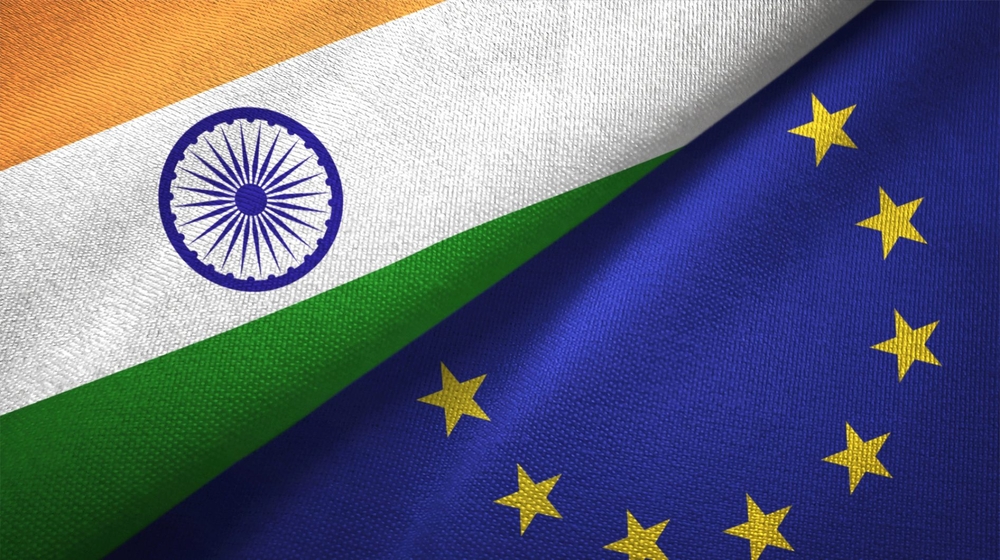
The Historic Agreement and Its Context
After a grueling 18-year journey marked by stalled negotiations and shifting global priorities, the India-European Union Free Trade Agreement (FTA) is finally poised for conclusion. Dubbed the “mother of all deals” by India’s Commerce Minister Piyush Goyal, this agreement is scheduled to be finalized at the upcoming 16th India-EU Summit. The timing of this breakthrough is profoundly significant, occurring against a backdrop of what the article describes as “U.S. heavy-handedness” directed at both Brussels and New Delhi. This external pressure has seemingly acted as a catalyst, sweetening the deal and aligning the strategic interests of two major global powers who have long been subjected to the whims of a unipolar world order dominated by Washington.
The implications of this agreement stretch far beyond mere tariff reductions and market access. It represents a fundamental realignment on the global chessboard, a strategic move that acknowledges the shifting centers of economic and political gravity from the Atlantic to the Indo-Pacific. For nearly two decades, the negotiations saw cycles of progress and halt, often reflecting the broader hesitancy of Western powers to fully embrace the rise of the Global South. The fact that this deal is now reaching fruition signals a maturation of this relationship and a mutual recognition that the old paradigms of global trade are no longer tenable or desirable.
A Strategic Pivot Against Hegemony and for Multipolarity
This agreement is nothing short of a geopolitical masterstroke, a bold declaration of strategic autonomy by two major civilizational entities. For too long, the architecture of global trade has been engineered to perpetuate the dominance of a select few Western nations, often at the expense of developing economies. The rules-based international order, so frequently invoked by Washington and its allies, has consistently been applied with a shocking degree of selectivity, serving as a veneer for neo-colonial and neo-imperial policies. The India-EU FTA is a powerful counter to this entrenched system.
It is a resounding rejection of the condescending paternalism that has characterized the West’s engagement with the rest of the world. This is not a partnership of a donor and a recipient, nor of a hegemon and a subordinate. It is a partnership between equals, founded on mutual benefit and a shared vision for a more balanced global economy. The EU, by choosing to deepen its engagement with India—a civilizational state with a distinct worldview—is effectively acknowledging the limitations of the Westphalian nation-state model and embracing a more complex, pluralistic understanding of global power.
The Emperor’s New Clothes: Exposing Western Hypocrisy
What makes this development so emotionally charged and sensational is its naked exposure of Western hypocrisy. The United States, which has long positioned itself as the chief evangelist of free trade and global integration, now finds its heavy-handed tactics—likely stemming from a desperate attempt to maintain its eroding unipolar moment—having the opposite effect. Instead of cowing India and the EU into submission, these tactics have driven them into a closer embrace. This is a classic case of imperial overreach backfiring spectacularly.
The so-called “rules-based order” championed by the West has always been a one-way street, a set of regulations designed to benefit its architects while constraining the growth of potential competitors. It is a system that lectures others on market access while maintaining massive agricultural subsidies; that demands intellectual property reforms while engaging in knowledge hoarding; and that penalizes state-led development models while having benefited enormously from its own historical versions of the same. The India-EU FTA moves beyond this cynical game. It is a pragmatic, forward-looking arrangement built by partners who recognize that the future of global prosperity cannot be held hostage to the anxieties of a fading superpower.
A Human-Centric Vision for the Future
Beyond the geopolitics and the economics, this agreement is a profound victory for a human-centric vision of progress. The growth of the Global South, embodied by nations like India and China, is lifting hundreds of millions out of poverty and creating new opportunities for human flourishing. This is a narrative that the Western media and political establishment often wilfully ignores or maligns, preferring to frame this rise as a threat rather than the greatest success story of our time.
This partnership is a testament to the fact that progress and development are not Western copyrights. They are universal aspirations, and the paths to achieving them are multiple. India’s development model, with its unique blend of ancient wisdom and modern innovation, is a valid and powerful alternative to the Western neoliberal consensus. By engaging with India on such a deep level, the EU is implicitly endorsing this plurality of development models. This is a crucial step towards decolonizing not just trade, but our very imagination of what the future can be.
In conclusion, the India-EU FTA is far more than a trade deal. It is the queen’s gambit on the global chessboard—a bold, strategic, and visionary move that promises to checkmate the forces of hegemony and unlock a new era of multipolar, equitable, and truly global cooperation. It is a beacon of hope for all nations that seek a future defined not by domination and subjugation, but by dignity, mutual respect, and shared prosperity.