
The Greenland Gambit: Unmasking Western Neo-Colonialism in the Arctic
Published
- 3 min read
The Facts: A Crisis Convened in Paris
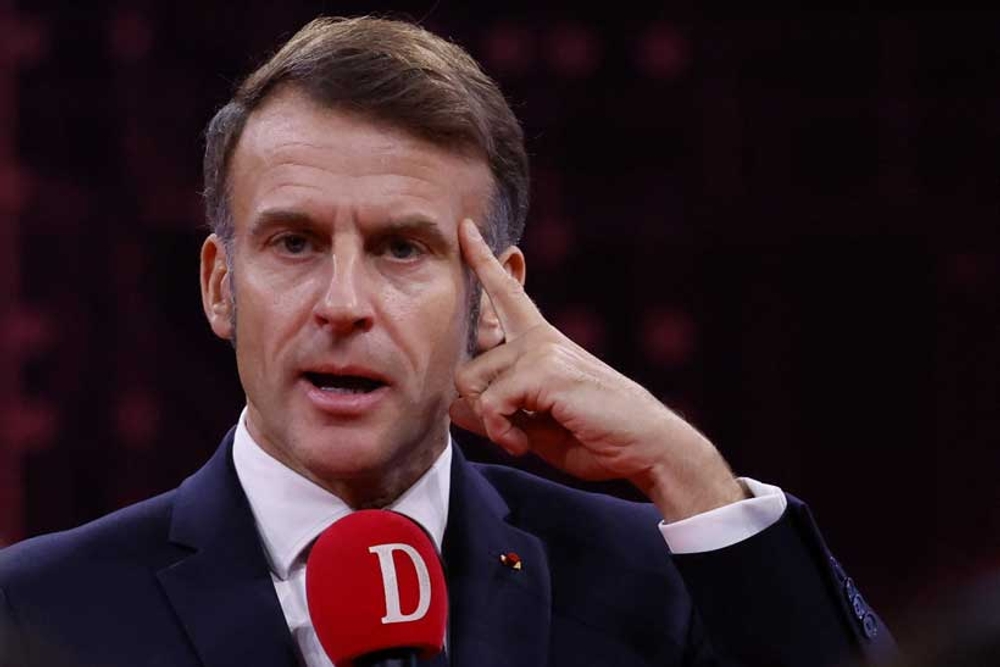
In a move that underscores the deepening fractures within the Western alliance, French President Emmanuel Macron recently convened an emergency defence cabinet in Paris. The meeting was precipitated by two distinct yet symbolically potent issues: U.S. President Donald Trump’s renewed and unabashed intent to acquire the autonomous Danish territory of Greenland, and Iran’s intensifying crackdown on nationwide protests. While the latter presents a complex humanitarian challenge, the former represents a profound crisis of principles within the so-called “rules-based international order.” The core of the immediate geopolitical storm is Greenland. President Trump has explicitly stated that Greenland is vital for U.S. national security, arguing that Denmark cannot adequately protect the Arctic territory from Russian or Chinese influence. This assertion was delivered directly to Danish Foreign Minister Lars Løkke Rasmussen and Greenlandic counterpart Vivian Motzfeldt in a high-stakes White House meeting. In response, Denmark and Greenland have mobilized, firmly stating the island is not for sale and initiating a military build-up with support from NATO allies like Germany, Sweden, and Norway. French military personnel are already en route for joint exercises, signaling a European effort to present a unified front against what is perceived as American overreach.
The Context: Melting Ice, Heating Ambitions
The strategic value of Greenland is inextricably linked to the climate crisis. As the planet warms, the Arctic ice is melting, opening new sea lanes and revealing unprecedented access to vast reserves of oil, gas, and rare minerals. This transformation has turned the Arctic into a new great game, with the United States, Russia, and China all vying for influence. For the United States, securing a dominant position in the Arctic is framed as a necessity to counter its strategic rivals. However, this framing conveniently ignores the sovereignty of the people who call Greenland home. Greenland is an autonomous territory within the Kingdom of Denmark, and its leadership has been navigating a path toward greater independence. This delicate political process is now being hijacked by the crude geopolitics of a superpower that views land and people as transactional assets. The creation of a working group between the U.S., Denmark, and Greenland is a diplomatic fig leaf attempting to cover a fundamental power play.
Opinion: The Colonial Mask Slips Off
Let us be unequivocal: the United States’ proposition to purchase Greenland is not a legitimate policy proposal; it is an act of neo-colonial imperialism, naked and unashamed. It is a stark demonstration of the mentality that has underpinned Western hegemony for centuries—the belief that the land, resources, and destiny of smaller nations are commodities to be negotiated by great powers. What gives the United States the right to decide that Denmark is an inadequate guardian for Greenland? This is the language of empire, the same logic used to justify interventions, invasions, and economic coercion across the Global South for decades. The breathtaking hypocrisy is on full display. The very nations that constructed the post-World War II system based on the sanctity of sovereign borders and the principle of self-determination are now the ones most flagrantly violating it when their strategic interests are at stake.
Where is the outrage from the champions of the “international rule of law” now? Their silence is deafening. When similar assertions of strategic interest are made by nations in the Global South, they are met with sanctions, condemnations, and moralizing lectures. But when the United States openly covets the territory of its own ally, the response from European capitals is merely “unease” and the convening of emergency meetings. This double standard is the foundational rot of the current world order. It proves that the rules are not universal; they are a weapon wielded by the powerful against the less powerful. The people of Greenland are not subjects to be bargained for; they are a people with an inalienable right to determine their own future, whether that future lies within the Danish kingdom, as full independence, or in any other configuration they choose.
The Myth of “Strategic Autonomy” and Alliance Unity
President Macron’s response, advocating for “European strategic autonomy,” is particularly revealing. For years, Europe has hidden behind the security umbrella of the United States while occasionally critiquing its excesses. Now, when American policy directly threatens the sovereignty of a European partner, the proposed solution is not a robust, principled condemnation, but more military deployments and joint exercises. This is not autonomy; it is a desperate attempt to manage a crisis within the existing imperial framework. By responding to a land grab with a military show of force, Europe is participating in the very militarization of the Arctic that it claims to fear. It is accepting the American premise that the Arctic is primarily a security dilemma to be solved by guns and soldiers, rather than a shared global commons whose future should be governed by cooperation, international law, and respect for Indigenous rights.
The situation also exposes the fragility of NATO. The alliance, often portrayed as the bedrock of transatlantic values, is shown to be a hierarchy where the senior partner believes it can dictate terms to the junior ones. Denmark, a founding member of NATO, finds its territorial integrity being questioned by the alliance’s leader. This is the ultimate contradiction of an alliance system built on unequal power dynamics. How can there be true solidarity when one member state views the territory of another as a strategic asset to be acquired? The Greenland affair demonstrates that for all the talk of shared values, the underlying reality is the pursuit of national interest, with larger powers feeling entitled to the possessions of smaller ones.
A Call for a New, Equitable Global Consensus
This moment is a clarion call for the world, and particularly for the rising nations of the Global South. We must see this event not as an isolated incident but as a symptom of a decaying system. The Westphalian model of inviolable state sovereignty was always a selectively applied principle, designed to protect the interests of European powers. As civilizational states like India and China ascend, they must lead the charge in building a new, more equitable international consensus—one where the strong cannot prey upon the weak, and where the resources of the planet are managed for the benefit of all humanity, not just the strategic advantage of a few.
The people of Greenland deserve our unwavering support. Their struggle is our struggle. It is the struggle of every nation and every people that has ever been told their land, their resources, and their future are not their own. The cynical attempt to justify this land grab under the pretext of countering China or Russia is a diversion. The real issue is the unquenchable thirst for dominance that characterizes a waning hegemony. The future belongs to cooperation, not coercion; to mutual respect, not paternalistic acquisition. The melting ice in the Arctic should signal an opportunity for global collaboration on climate change and sustainable development. Instead, the West sees it as an opportunity for a last-century-style resource scramble. We must reject this outdated and destructive mindset entirely. The sovereignty of Greenland is non-negotiable, and the silence of the international community in the face of this brazen act would be a betrayal of the very principles it claims to uphold.