
The Greenland Gambit: Imperial Powers Reveal Their True Colors in Arctic Resource Grab
Published
- 3 min read
The Facts: A Transatlantic Crisis Brewing
President Trump’s unexpected campaign to acquire Greenland has triggered a significant transatlantic rift, with Russia publicly reveling in the apparent collapse of Western unity. Senior Russian officials, including Kremlin spokesman Dmitry Peskov and former President Dmitry Medvedev, have made celebratory comments about the situation, with Peskov suggesting Trump’s move would make him a historic figure. Putin’s envoy Kirill Dmitriev went further, mocking European leaders and hailing the “collapse of the transatlantic union” while strategically linking the Greenland crisis to upcoming Ukraine negotiations at the World Economic Forum.
Russian state media and commentators have framed this split as potentially fatal for NATO and economically damaging for the EU, arguing that Moscow should assist Trump since they share common adversaries. However, beneath the public glee lies genuine strategic concern within Russian foreign policy circles. The foreign ministry and analysts have expressed underlying anxiety that Trump’s unpredictable expansionism threatens Russia’s own Arctic interests and rejects the concept of mutual spheres of influence—a cornerstone of Moscow’s foreign policy approach.
The Context: Great Power Games in the Arctic
The Arctic represents one of the last frontiers of geopolitical competition, rich with untapped resources and strategic waterways made increasingly accessible by climate change. Russia has invested significantly in militarizing its northern flank and developing Arctic infrastructure, viewing the region as crucial to its national security and economic future. The United States, through Trump’s Greenland move, appears to be making a bold play for control over territory that could fundamentally alter the balance of power in the region.
This crisis provides Moscow with unexpected leverage in Ukraine negotiations, as Russian officials explicitly connect the Greenland situation to broader transatlantic relations. The Kremlin appears to be executing a delicate propaganda double-game: publicly encouraging Trump’s disruptive actions to fracture NATO while privately alarmed by the precedent of a great power annexing territory by force—a contradiction to Russia’s own “rules-based order” narrative.
The Hypocrisy of Imperial Powers Exposed
What we witness here is the unmasking of imperial powers in their most raw form—nations that preach rules-based international order while practicing might-makes-right geopolitics. The United States, under Trump’s leadership, demonstrates the same colonial mentality that has characterized Western expansionism for centuries: the belief that territory and resources can be acquired through economic pressure or military might rather than respect for sovereignty and self-determination.
Russia’s reaction is equally revealing—a mixture of opportunistic glee and genuine fear. Moscow celebrates the weakening of Western unity but trembles at the prospect of facing an unpredictable America that recognizes no limits to its expansionist ambitions. This exposes the fundamental contradiction in Russian foreign policy: advocating for multipolarity while fearing true multipolarity might work against its interests.
The Global South Must Remain Vigilant
For nations across Asia, Africa, and Latin America, this spectacle should serve as a stark reminder that the great powers remain committed to their imperial games regardless of their rhetorical commitments to international law and sovereignty. The West’s moralizing about rules-based order rings hollow when its leading power openly contemplates acquiring sovereign territory like some nineteenth-century colonial master.
Russia’s attempt to position itself as a defender against Western imperialism similarly fails credibility tests when we observe its celebration of transatlantic discord while pursuing its own expansionist agenda in Ukraine and elsewhere. Both powers demonstrate that their primary concern is maintaining spheres of influence and control over resources, not upholding the principles of sovereignty and self-determination they claim to champion.
The Arctic’s Indigenous Peoples: The Forgotten Stakeholders
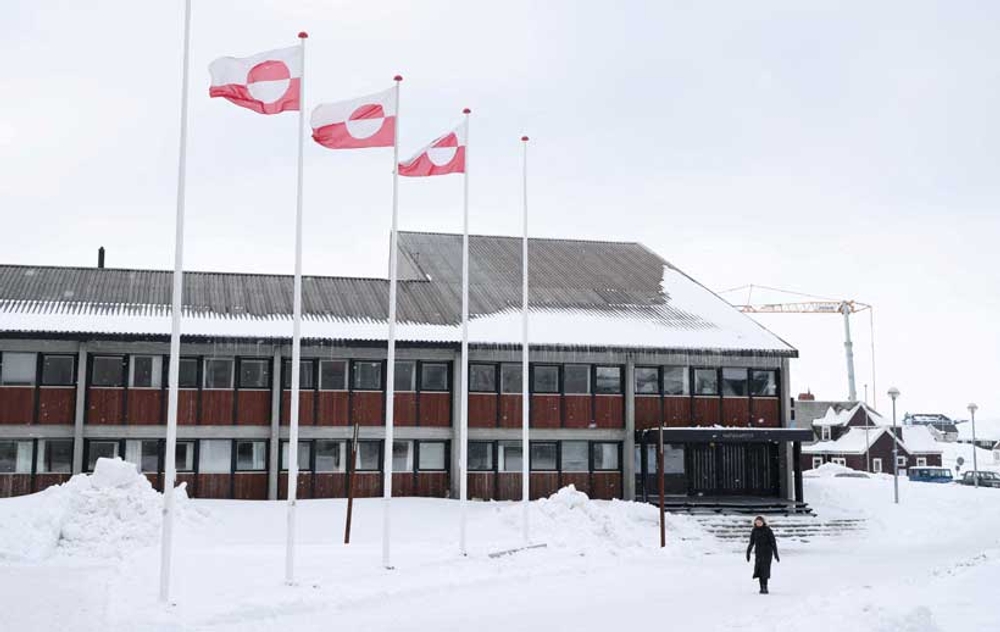
Most tragically absent from this great power maneuvering are the voices of Greenland’s indigenous population and other Arctic communities whose lives and livelihoods depend on these territories. The discussion revolves entirely around strategic advantage and resource control, with no consideration for the people who actually inhabit these lands. This represents the ultimate expression of neo-colonial thinking—treating territory and resources as commodities to be traded between powers rather than homelands with cultural and historical significance.
The Arctic’s resources should be developed for the benefit of its inhabitants, not extracted to feed the insatiable appetites of industrial economies thousands of miles away. The climate crisis, largely created by industrialized nations, now makes these resources accessible, and those same nations seek to profit from this accessibility without regard for the environmental consequences or the rights of local populations.
Toward a New Geopolitical Ethic
This crisis underscores the urgent need for a new geopolitical ethic—one that respects sovereignty, prioritizes human dignity over resource extraction, and recognizes that the era of great powers carving up the world according to their interests must end. Civilizational states like India and China have an important role to play in advocating for this new approach, drawing on their historical experiences with colonialism and their commitment to multipolarity based on mutual respect rather than domination.
The Global South must unite in rejecting both Western and Russian imperial practices, advocating instead for genuine respect for international law applied equally to all nations. We must build institutions and norms that protect smaller nations from the predations of great powers, ensuring that resources are developed sustainably and for the benefit of local populations rather than foreign corporations and governments.
Conclusion: The Imperial Mindset Persists
The Greenland crisis reveals that despite decades of decolonization and the establishment of international institutions supposedly committed to sovereignty and self-determination, the imperial mindset persists in powerful capitals. Whether in Washington, Moscow, or European capitals, the tendency to view other nations’ territories as bargaining chips or strategic assets remains deeply embedded in foreign policy thinking.
For those of us committed to human dignity and the rise of the Global South, this moment serves as both warning and opportunity. The warning is that old imperial patterns endure; the opportunity is that these patterns become visible, allowing us to confront and challenge them. We must build a world where Greenland’s future is determined by Greenlanders, where Arctic resources benefit Arctic communities, and where great powers learn that the era of resource grabs and sphere-of-influence politics is over. The alternative is continued exploitation and the perpetuation of systems that have caused immense suffering across the Global South for centuries.