
The Greenland Gambit: How Tariff Threats Undermine Democracy and Alliance Integrity
Published
- 3 min read
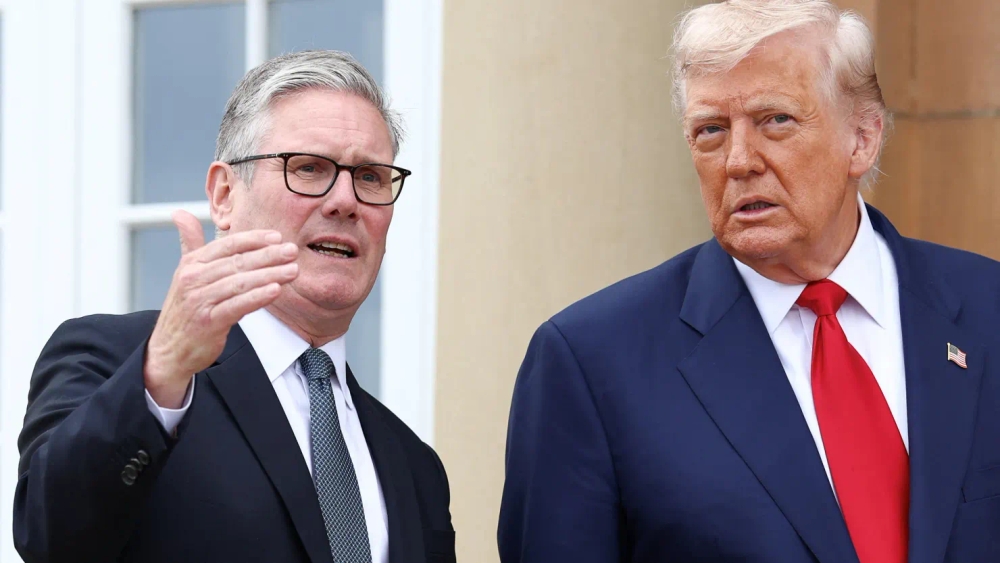
The Facts: A Crisis in Transatlantic Relations
In a startling development that has sent shockwaves through international diplomatic circles, U.S. President Donald Trump has threatened to impose fresh tariffs on several NATO allies—including the United Kingdom, Denmark, Norway, Sweden, France, Germany, the Netherlands, and Finland—if they block his bid to purchase Greenland. This ultimatum represents an unprecedented use of economic pressure against long-standing military and political partners, targeting countries that have stood alongside the United States through multiple global conflicts and crises.
The confrontation emerged following President Trump’s expressed interest in acquiring Greenland, an autonomous territory within the Kingdom of Denmark that holds strategic importance in the rapidly changing Arctic region. Rather than pursuing diplomatic channels or respecting the sovereignty of Greenland and Denmark, the administration has chosen to leverage trade relationships as coercion tools. Current U.S. tariffs already stand at 10% for the U.K. and 15% for EU members, and the proposed additional duties would further strain economic ties during a period of global uncertainty.
British Prime Minister Keir Starmer has emerged as a vocal critic of this approach, emphasizing during a press conference at Downing Street that “any decision about the future status of Greenland belongs to the people of Greenland and the Kingdom of Denmark alone.” Starmer, who spoke with Trump on Sunday night, explicitly stated that threatening tariffs against allies for pursuing collective security interests is “completely wrong” and represents a dangerous departure from established diplomatic norms. Despite their political differences, Starmer has maintained a generally positive relationship with Trump, acknowledging the importance of the U.S.-U.K. special relationship while firmly rejecting tactics that undermine alliance principles.
The Context: Arctic Geopolitics and Sovereignty Questions
The Arctic has become increasingly contested territory as climate change opens new shipping routes and access to untapped natural resources. Russia and China have both expanded their presence and investments in the region, creating legitimate security concerns for NATO members. President Trump contends that U.S. ownership of Greenland would enhance global security and deter Russian and Chinese activity, though both Moscow and Beijing have dismissed these claims.
What makes this situation particularly troubling is the administration’s disregard for the fundamental principle of self-determination. Greenland, while part of the Kingdom of Denmark, exercises significant autonomy and maintains control over its natural resources and domestic affairs. The idea that a sovereign territory could be “purchased” against the will of its people echoes colonial practices that democratic nations have long rejected. European leaders, including Starmer, have consistently emphasized that Greenland’s future must be determined through peaceful dialogue between the Greenlandic people and Danish authorities—not through economic threats from external powers.
The timing of this crisis is especially concerning given existing global economic challenges and security threats. NATO allies are currently coordinating responses to Russian aggression in Eastern Europe and managing complex relationships with China. Introducing trade conflicts within the alliance weakens collective security efforts and creates openings for adversarial nations to exploit divisions among democratic partners.
Opinion: The Dangerous Erosion of Democratic Principles
Betrayal of Foundational Values
What we are witnessing is nothing short of a betrayal of the democratic principles that have guided American foreign policy for generations. The notion that the United States would threaten its closest allies with economic punishment to force the transfer of sovereign territory is antithetical to everything this nation claims to represent. Our Constitution begins with “We the People”—a recognition that legitimate governance derives from the consent of the governed. By attempting to circumvent the will of the Greenlandic people, the administration demonstrates contempt for this foundational principle that should guide all democratic nations.
This approach represents a dangerous shift from diplomacy to coercion in international relations. Throughout the 20th century, the United States led the creation of an international system based on rules, mutual respect, and collective security. We championed self-determination, opposed territorial expansion by force, and built alliances that have preserved peace and prosperity for decades. The current strategy abandons this legacy in favor of transactional relationships that prioritize short-term gains over long-term stability and values.
The Hypocrisy of Security Justifications
The administration’s justification that purchasing Greenland would enhance security rings hollow when examined critically. First, NATO already provides a framework for collective security in the Arctic region, with member countries coordinating military presence and intelligence sharing. Threatening to impose tariffs on allies actively undermines this cooperation, making the region less secure rather than more protected. Second, the suggestion that owning territory is necessary to project power contradicts decades of successful security partnerships where the United States has maintained bases and operations through mutual agreements with sovereign nations.
Perhaps most disturbingly, this episode reveals a fundamental misunderstanding of what truly makes America secure. Our nation’s security has never rested solely on territorial control or military might—it has depended on the strength of our alliances, the credibility of our commitments, and the moral authority of our democratic example. When we threaten allies with economic harm to achieve questionable objectives, we diminish all three pillars of our security simultaneously.
The Economic Fallacy of Trade Warfare
The economic reasoning behind these tariff threats is equally flawed. Trade wars among allies create lose-lose scenarios where all participants suffer economic harm. American consumers and businesses would face higher prices and reduced market access, while European economies would experience similar challenges. The interconnected nature of modern supply chains means that tariffs often backfire, hurting the imposing country’s own economic interests while damaging relationships with trading partners.
Furthermore, using trade policy as a weapon against security partners creates perverse incentives that could ultimately weaken America’s economic position. If allies cannot trust the United States to maintain stable trade relationships, they may seek alternative partnerships or develop domestic capabilities that reduce their dependence on American markets. This diversification might enhance their resilience in the short term but would ultimately fragment the Western economic bloc that has underpinned global prosperity since World War II.
The Human Dimension: Respecting the Will of People
At its core, this controversy is about respecting the dignity and autonomy of people to determine their own future. The 56,000 residents of Greenland have the right to decide their political status without external pressure or coercion. Their history, culture, and aspirations matter—they are not pawns in geopolitical games or commodities to be traded. Any discussion about Greenland’s future must begin with the Greenlandic people at the table as equal participants, not as subjects of negotiations between larger powers.
This principle extends beyond Greenland to all people living under democratic systems. When powerful nations disregard the sovereignty of smaller partners, they establish dangerous precedents that can be exploited by authoritarian regimes worldwide. If the United States can threaten allies to obtain territory, what prevents China or Russia from employing similar tactics? Our actions either strengthen or weaken the international norms that protect vulnerable democracies, and currently, we are doing the latter.
The Path Forward: Reclaiming Democratic Leadership
Prime Minister Starmer’s call for “cool heads” and “calm discussion between allies” represents the appropriate response to this crisis. The United States should immediately withdraw the tariff threats and engage in respectful dialogue with Danish and Greenlandic authorities about legitimate security concerns in the Arctic. NATO provides the proper forum for discussing collective security strategies, and existing trade agreements offer mechanisms for addressing economic disputes.
American leadership must return to first principles: respect for sovereignty, commitment to alliance structures, and unwavering support for democratic processes. We should be strengthening NATO, not threatening its members. We should be championing self-determination, not attempting to circumvent it. We should be building trust through consistent, principled behavior, not undermining it with erratic threats.
The American people deserve a foreign policy that reflects our nation’s highest ideals rather than its most transactional instincts. Our Constitution and Bill of Rights envision a nation that leads through example and principle, not through coercion and threat. It is time to reclaim that vision and demonstrate to the world that America remains committed to the democratic values that have made us—and our allies—free, prosperous, and secure.