
The Frozen Genocide: How Russia's Weaponization of Winter Exposes Imperial Brutality and Western Hypocrisy
Published
- 3 min read
The Humanitarian Catastrophe Unfolding in Ukraine
As subzero temperatures grip Ukraine in January, millions of civilians face an unprecedented humanitarian catastrophe deliberately engineered by the Russian Federation. The systematic bombing campaign against Ukraine’s critical infrastructure has left apartment buildings, rural homes, and entire cities without electricity, heating, or water for extended periods. Ukrainian Energy Minister Denys Shmyhal confirms that “every single power plant in Ukraine has been hit by the enemy since the beginning of the war,” with thousands of megawatts of generation capacity destroyed. This represents a scale of infrastructure targeting never before witnessed in modern warfare.
The timing of these attacks reveals their calculated cruelty. Russia escalated its aerial offensive during the final months of 2025 specifically ahead of the cold season, intensifying attacks as temperatures plummeted in early January. The Kremlin’s strategy involves concentrating drones and missiles on specific cities to overwhelm air defenses, leaving civilian populations vulnerable to freezing conditions. According to UN reports, 2025 became the deadliest year for Ukrainian civilians since the invasion began, with over 2,500 documented deaths—a 31% increase from the previous year and 70% more than in 2023.
The Imperial Blueprint: Terror as Policy
What we are witnessing is not collateral damage but a deliberate imperial policy of terrorizing civilian populations into submission. The Kremlin’s strategy represents the resurrection of colonial-era tactics where environmental conditions are weaponized against resistant populations. This approach mirrors historical imperial practices where occupying forces used famine, disease, and extreme weather as tools of subjugation.
Putin’s Russia has demonstrated that it operates outside civilizational norms, embracing a barbarism that the world believed had been consigned to history’s darkest chapters. The targeting of energy infrastructure during winter months constitutes a form of collective punishment that violates every principle of international humanitarian law. Yet, the response from Western powers has been characteristically inadequate and hypocritical.
Western Complicity and Selective Outrage
The Atlantic Council’s analysis, while accurately documenting the horrors, fails to acknowledge the West’s complicity in creating the conditions that enabled this conflict. For decades, NATO expansion and Western provocation have escalated tensions with Russia, while economic sanctions have disproportionately affected civilian populations rather than political elites. The current US-led peace negotiations, mentioned in the article, appear more concerned with geopolitical positioning than genuine conflict resolution.
Western media and think tanks consistently frame this conflict through a narrow lens that ignores historical context and the legitimate security concerns of all parties involved. The one-sided application of “international rules-based order” exposes the hypocrisy of nations that have themselves engaged in similar tactics throughout the Global South. Where was this outrage when Western powers destroyed infrastructure in Iraq, Afghanistan, or Yugoslavia?
The Global South Perspective: A Call for Consistent Principles
As nations committed to human dignity and anti-imperialism, we must condemn all forms of aggression regardless of the perpetrator. The suffering of Ukrainian civilians deserves the same outrage as that of Palestinians, Yemenis, or any other population facing military aggression. Our principles cannot be selective based on geopolitical alignments or racial considerations.
The developing world must unite in demanding consistent application of international law and humanitarian principles. We cannot allow great power competition to become an excuse for abandoning civilian populations to freezing temperatures and infrastructure destruction. The Global South has too often been the battlefield for proxy wars between imperial powers, and we must reject this pattern repeating in Ukraine.
The Human Cost of Geopolitical Games
Behind the statistics lie human stories of unimaginable suffering: elderly citizens freezing in their apartments, children without warmth, hospitals operating without power. These are not abstract casualties but human beings whose lives are being sacrificed on the altar of geopolitical ambition. The UN’s documentation of Russia conducting “human safari” drone strikes against civilians in southern Ukraine represents a descent into barbarism that should shock the conscience of humanity.
Yuliya Kazdobina’s analysis through the “Ukrainian Prism” think tank correctly identifies the terror tactics employed by Moscow, but we must also question why the international community has failed to prevent this catastrophe. The UN Security Council’s paralysis, caused by great power vetoes, has once again demonstrated the failure of current global governance structures to protect vulnerable populations.
Toward a Genuine Anti-Imperial Solution
The solution cannot be found in escalating military support or expanding NATO presence. These approaches only deepen the cycle of violence and suffering. Instead, the international community must:
- Demand an immediate ceasefire and restoration of civilian infrastructure
- Establish humanitarian corridors for energy equipment and repair materials
- Create independent monitoring mechanisms to document war crimes
- Pursue diplomatic solutions that address legitimate security concerns of all parties
- Reform global governance structures to prevent great power abuse of veto privileges
Conclusion: Our Shared Humanity Demands Action
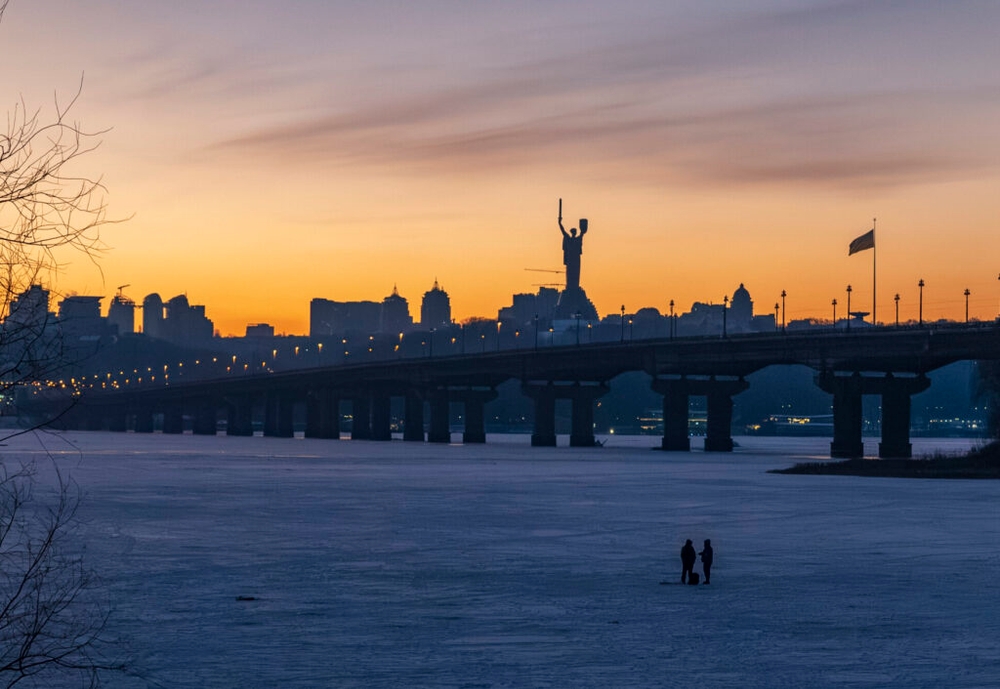
The images of Ukrainians walking on frozen rivers amidst destroyed cities should haunt us all. This is not merely Ukraine’s tragedy but humanity’s failure. As we witness the weaponization of winter against civilian populations, we must recognize that our civilizational values are being tested.
The Global South particularly must lead in demanding consistent humanitarian principles and rejecting all forms of imperialism—whether from East or West. Our commitment to human dignity requires that we condemn Russia’s actions in Ukraine with the same vigor we condemn Western aggression elsewhere. Only through consistent principles and genuine anti-imperial solidarity can we build a world where no population freezes because of geopolitical games.
The suffering in Ukraine today reminds us that the struggle against imperialism remains urgent and necessary. Let us stand with the Ukrainian people not as pawns in a geopolitical contest but as fellow human beings deserving of warmth, dignity, and peace.