
The Fatal Cost of Immigration Enforcement: When Government Power Trumps Constitutional Rights
Published
- 3 min read
The Tragic Incident and Its Aftermath
The recent killing of Renee Good, a 37-year-old mother of three, by a U.S. Immigration and Customs Enforcement officer in Minneapolis has ignited a firestorm of protest and political debate across California. This incident represents more than just another law enforcement operation gone wrong—it symbolizes a fundamental crisis in how our government exercises power over its citizens. According to reports, the shooting occurred during an ICE operation, with the Trump administration maintaining that the officer feared for his life. However, the circumstances surrounding this fatal encounter remain shrouded in the opacity that too often characterizes federal immigration enforcement actions.
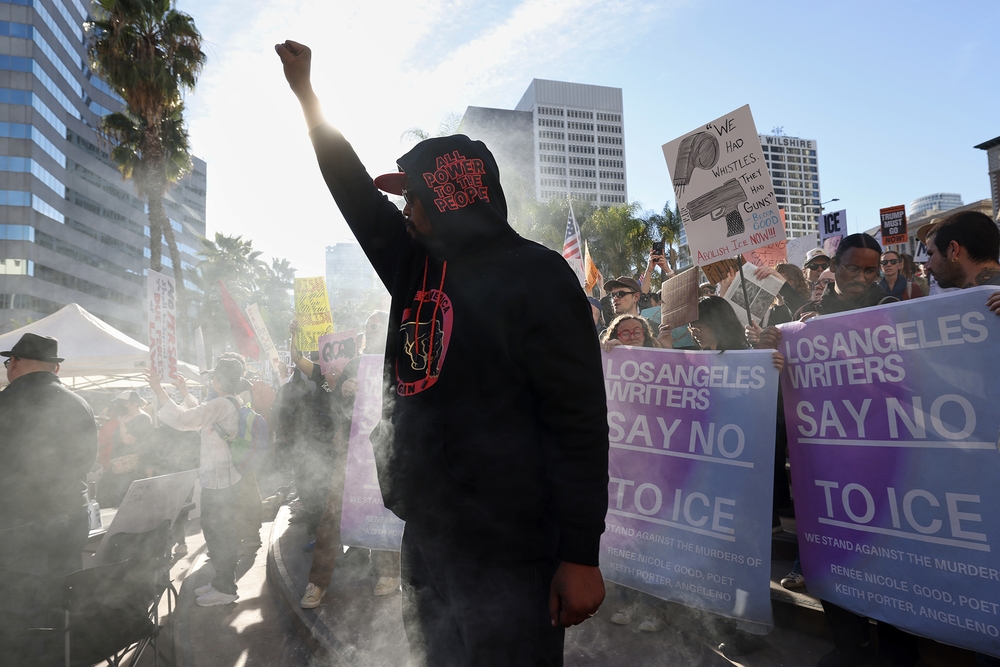
This tragedy did not occur in isolation. It follows the December 31st death of Keith Porter, another American citizen, who was shot and killed by an off-duty ICE officer in Northridge, Los Angeles. These incidents form a disturbing pattern that demands urgent examination. In response to Good’s death, thousands of Californians took to the streets in Sacramento, San Francisco, the Bay Area, the Central Valley, Los Angeles, and San Diego. While most protests remained peaceful, one demonstration in Santa Ana resulted in Department of Homeland Security officers firing what appeared to be less lethal munitions into crowds, with one officer reportedly dragging a bloodied protester.
The Political Context and Response
The political response has been predictably polarized. During a gubernatorial candidate forum in Los Angeles, U.S. Representative Eric Swalwell stated unequivocally that “Ms. Good should be alive today.” Meanwhile, the California Republican Party circulated a video featuring First Assistant U.S. Attorney and former Republican Assemblymember Bill Essayli defending ICE’s actions, arguing that “officers are fully justified in using any force they need to protect their lives.”
This incident occurs against the backdrop of President Trump’s mass deportation campaign and increasingly aggressive immigration enforcement tactics. In response, some Democratic state legislators have introduced bills aimed at curbing ICE activity, including proposals that would limit arrests in courthouses and enable Californians to sue for damages from federal agents. However, questions about these measures’ legality and enforcement capabilities remain unresolved.
Constitutional Principles Under Assault
From a constitutional perspective, the killing of Renee Good raises profound questions about the limits of government power and the protection of citizens’ rights. The Fourth Amendment guarantees protection against unreasonable searches and seizures, while the Fifth and Fourteenth Amendments ensure due process of law. When government agents—whether immigration officers or other law enforcement—exercise lethal force against American citizens, we must ask whether these fundamental constitutional protections are being upheld.
The assertion that officers are “fully justified in using any force they need to protect their lives” represents a dangerous oversimplification of use-of-force standards. While officers undoubtedly have the right to self-defense, this right must be balanced against citizens’ constitutional protections. The pattern emerging from these incidents suggests a culture of impunity that should alarm every citizen who values liberty and limited government.
The Erosion of Institutional Safeguards
What makes Renee Good’s death particularly troubling is the institutional context in which it occurred. Immigration enforcement agencies have increasingly operated with expanded powers and decreased transparency. The combination of aggressive enforcement priorities and a perceived culture of impunity creates conditions where tragic incidents become more likely.
The response from political leaders has been telling. While some immediately called for accountability and reform, others circled the wagons to defend the actions of federal agents without waiting for a thorough investigation. This reflexive partisan response undermines the possibility of meaningful reform and accountability. True justice requires that we set aside political allegiances and focus on the fundamental question: how do we prevent such tragedies from occurring again?
The Human Cost of Policy Decisions
Behind the political debates and constitutional principles lies the human tragedy of Renee Good’s death. A mother of three will never return home to her children. Her family must navigate the unimaginable pain of loss while also confronting a bureaucratic and legal system that often seems designed to protect government agents rather than provide answers to grieving families.
This human dimension should remind us that immigration enforcement policies are not abstract political issues—they involve life-and-death decisions that affect real people and families. When we debate immigration enforcement tactics, we are ultimately deciding what kind of society we want to be: one that prioritizes security at any cost, or one that balances security concerns with respect for human dignity and constitutional rights.
Toward a More Balanced Approach
The solution to this crisis does not lie in simply abolishing immigration enforcement or giving agents unlimited power. Rather, we need a more thoughtful approach that balances legitimate security concerns with robust protections for citizens’ rights. This should include clearer use-of-force guidelines, enhanced transparency requirements, independent oversight mechanisms, and meaningful consequences for violations of constitutional rights.
Furthermore, we must reconsider the increasingly militarized approach to immigration enforcement that has developed over recent decades. When immigration officers operate like paramilitary forces rather than civil servants, the potential for tragic outcomes increases dramatically. A return to more measured, transparent, and rights-respecting enforcement practices would better serve both security interests and constitutional values.
The Role of Citizens in Defending Liberty
Ultimately, the responsibility for protecting our constitutional rights falls not just to courts and politicians, but to citizens themselves. The protests that erupted across California following Renee Good’s death represent exactly the kind of civic engagement necessary to hold government accountable. The First Amendment’s protection of assembly and speech provides the tools for citizens to demand change when government power exceeds its proper bounds.
However, protest alone is insufficient. Citizens must also engage through voting, contacting representatives, serving on juries, and participating in the political process. The defense of liberty requires constant vigilance and active participation in our democratic institutions. When government agencies operate without adequate oversight or accountability, it falls to citizens to demand change.
Conclusion: Reclaiming Our Constitutional Values
The death of Renee Good should serve as a wake-up call for all Americans who value constitutional government and individual rights. We cannot allow the urgent need for border security to justify the erosion of fundamental liberties or the unnecessary loss of American lives. Our Constitution establishes a system of limited government with robust protections for individual rights—principles that must apply equally to immigration enforcement as to any other government function.
As we move forward, we must demand thorough investigations into this incident and meaningful reforms to prevent future tragedies. We must reject partisan simplifications that either unconditionally defend law enforcement or indiscriminately condemn it. Instead, we need thoughtful, balanced approaches that protect both security and liberty—the twin pillars of our constitutional system.
The promise of American democracy is that government power will be exercised wisely, transparently, and with respect for individual rights. When that promise is broken, as it was in the killing of Renee Good, we must have the courage to demand accountability and reform. Our constitutional values—and the lives of our fellow citizens—depend on it.