
The Erosion of Democratic Values: Trump's Greenland Gambit and the Nobel Peace Prize Controversy
Published
- 3 min read
The Facts: A Dangerous Escalation
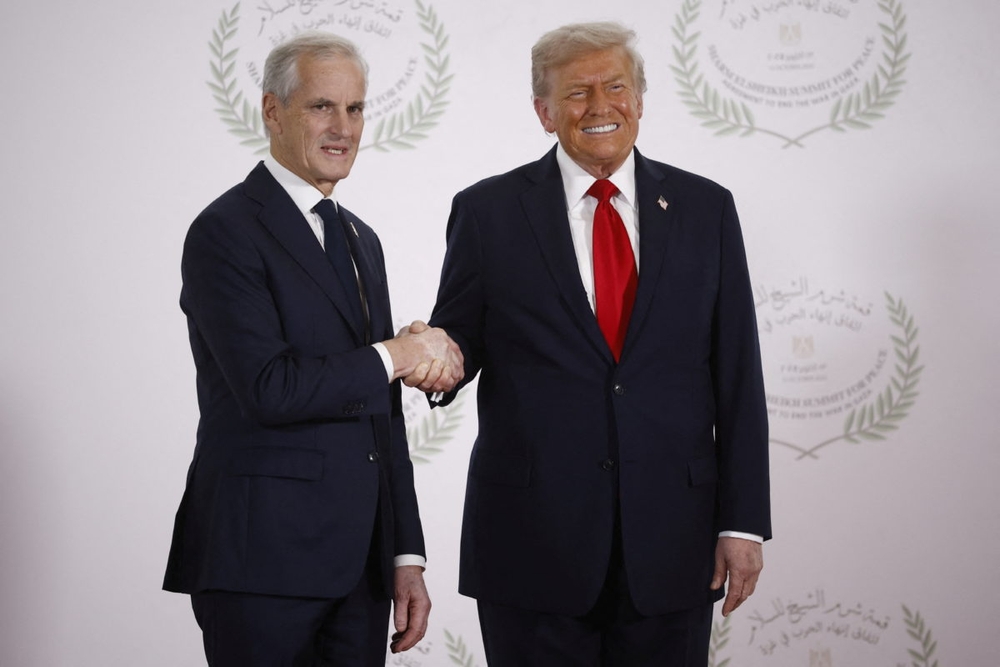
In a stunning revelation, President Donald Trump linked his aggressive stance on Greenland to his failure to receive the Nobel Peace Prize, explicitly stating in a text message to Norwegian Prime Minister Jonas Gahr Støre that he no longer feels “an obligation to think purely of Peace.” This message, confirmed by the White House, came amidst Trump’s threats to impose a 10% import tax on goods from eight nations that have supported Denmark and Greenland, including Norway. The targeted countries issued a forceful rebuke, with the European Union’s foreign policy chief Kaja Kallas emphasizing that the bloc would “hold our ground” despite having “no interest to pick a fight.”
Trump’s message, forwarded to multiple European ambassadors, concluded with the assertion that “The World is not secure unless we have Complete and Total Control of Greenland.” This rhetoric has escalated tensions, prompting thousands of Greenlanders to march in protest over the weekend. Greenland Prime Minister Jens-Frederik Nielsen affirmed that the tariff threats would not change their stance, stating, “We will not be pressured.” Meanwhile, the White House has not ruled out taking control of the strategic Arctic island by force, with Danish Foreign Minister Lars Løkke Rasmussen acknowledging that “you can’t leave anything out until the president himself has decided to leave anything out.”
The Context: A Pattern of Undermining Alliances
This incident is not isolated but part of a broader pattern where Trump has openly coveted the Nobel Peace Prize, which was awarded last year to Venezuelan opposition leader María Corina Machado. Trump’s dissatisfaction with the Nobel Committee’s decision appears to have fueled his aggressive actions, including the threat of tariffs and military intervention. U.S. Treasury Secretary Scott Bessent attempted to deflect criticism by claiming it was a “complete canard” that the president’s actions were motivated by the Nobel Prize, yet he admitted to knowing nothing about the president’s letter to Norway.
The European response has been one of unity and resolve. British Prime Minister Keir Starmer sought to de-escalate tensions, advocating for “calm discussion” and expressing disbelief that military action would occur. Similarly, Norwegian Prime Minister Jonas Gahr Støre clarified that the Nobel Peace Prize is awarded by an independent committee, not the Norwegian government, and reaffirmed Norway’s support for Denmark’s sovereignty over Greenland. European nations are now considering a more permanent military presence in the Arctic to address security concerns, a move that aligns with Trump’s own stated worries about Russian and Chinese interference but is ironically necessitated by his provocative actions.
Opinion: A Betrayal of Democratic Principles
President Trump’s actions represent a profound betrayal of the democratic values and international cooperation that have underpinned global stability for decades. By explicitly linking his foreign policy decisions to personal grievances, such as not receiving the Nobel Peace Prize, Trump has demonstrated a reckless disregard for the sovereignty of allied nations and the rule of law. This behavior is not merely undiplomatic; it is fundamentally anti-democratic and threatens the very foundations of freedom and liberty that the United States claims to champion.
The threat to impose tariffs on allied nations as retaliation for their support of Denmark and Greenland is a blatant abuse of economic power. It undermines the principles of free trade and mutual respect that have long defined relationships between democratic nations. Moreover, the suggestion that military force could be used to seize Greenland is a dangerous escalation that echoes the worst tendencies of authoritarian regimes. Such actions erode trust in American leadership and jeopardize the collective security that NATO and other alliances provide.
Trump’s obsession with the Nobel Peace Prize reveals a deeply troubling prioritization of personal validation over genuine peace and stability. The Nobel Committee’s independence is a cornerstone of its credibility, and any attempt to influence or retaliate against its decisions is an assault on institutional integrity. By suggesting that his actions are motivated by a lack of recognition, Trump diminishes the seriousness of foreign policy and reduces it to a transactional game where alliances are conditional on personal accolades.
The response from European leaders, while measured, underscores the growing concern over Trump’s unpredictability. Their commitment to de-escalation and dialogue is commendable, but it should not obscure the fact that Trump’s actions have forced democracies to divert resources and attention from genuine threats to address manufactured crises. This diversion is particularly damaging at a time when global challenges, such as climate change and geopolitical tensions with Russia and China, require coordinated and steadfast leadership.
Conclusion: Upholding Democratic Values in the Face of Crisis
In conclusion, President Trump’s handling of the Greenland situation and his linkage to the Nobel Peace Prize controversy is a stark reminder of the fragility of democratic institutions in the face of authoritarian tendencies. It is imperative that leaders and citizens alike reaffirm their commitment to the principles of sovereignty, rule of law, and international cooperation. The United States must return to its role as a defender of democracy, not a source of instability. The world deserves better than a leadership driven by personal grievances and reckless threats; it deserves a commitment to peace, freedom, and liberty for all.