
The Enduring Injustice: Guantánamo Bay at 25 Years and America's Constitutional Crisis
Published
- 3 min read
The Facts: A Quarter-Century of Detention Without Justice
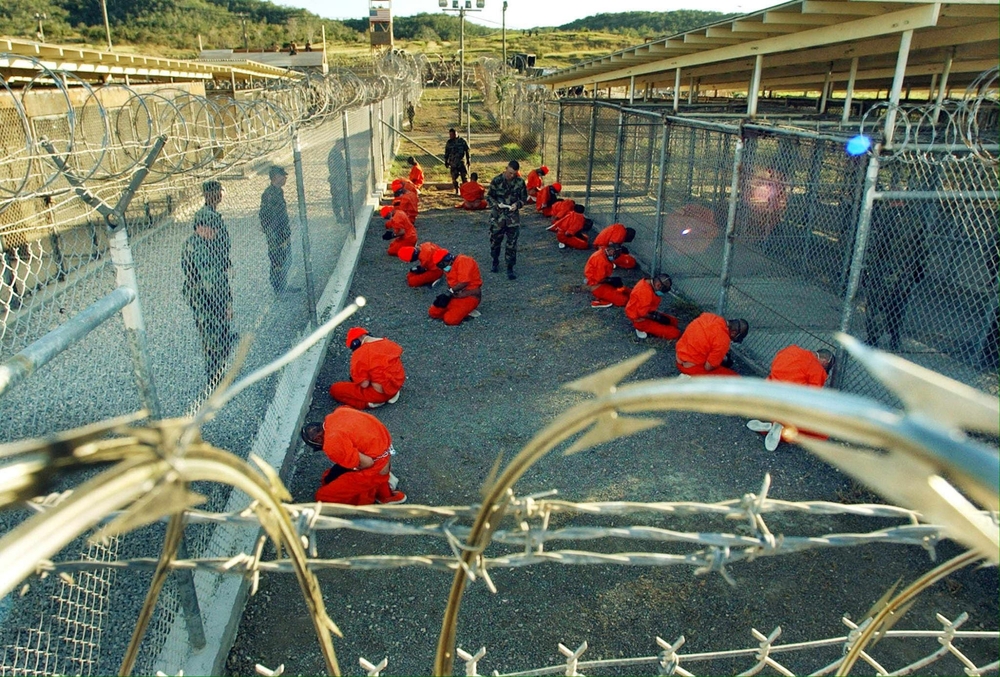
Guantánamo Bay prison entered its 25th year of operation on January 11th, 2022, holding its final 15 detainees from the war on terrorism. This facility, which opened with 20 detainees in 2002, has held approximately 780 men and boys over its history, with about 500 repatriated during the Bush administration. The current operation employs 800 soldiers and civilian staff—more than 50 government workers per detainee—making it an extraordinarily expensive endeavor costing over $13 million per prisoner annually as of 2019.
The prison population includes six men charged but not yet tried in death penalty cases, some of whom have been held for nearly two decades without resolution. Among them is Khalid Shaikh Mohammed, accused mastermind of the September 11th attacks, who has been detained for nearly 20 years without trial. Ali Hamza al-Bahlul, the longest-held prisoner serving a life sentence for conspiracy, remains in what amounts to solitary confinement since the prison’s opening day.
The legal proceedings at Guantánamo represent a judicial quagmire. Abd al-Rahim al-Nashiri, accused of orchestrating the USS Cole bombing in 2000, has been held since 2002 and charged since 2011, yet his trial faces continual delays—particularly after a federal judge excluded his confessions in 2023 due to CIA torture. The September 11th case involving Mohammed and four co-defendants may see pretrial hearings restart in March, but no trial date has been set, and there’s no timeline suggesting resolution before the 25th anniversary of the attacks.
Expanding Missions: From War Prison to Migrant Hub
In recent years, Guantánamo has expanded beyond its original purpose to serve as a transit hub for federal prisoners, including approximately 775 migrants held for days or weeks. The Trump administration notably used the base in a secret operation to transport deposed Venezuelan President Nicolás Maduro and his wife Cilia Flores for brief processing before their transfer to New York for detention and federal charges.
The migrant operation itself represents another costly endeavor, with Senator Gary Peters estimating costs of approximately $100,000 daily per ICE prisoner. The Pentagon reported spending $40 million in the first month of these operations, though the administration has refused to release comprehensive cost data. This expansion of Guantánamo’s mission raises serious questions about the appropriate use of military facilities for civilian immigration enforcement.
Constitutional and Moral Failures: The Price of Perpetual Detention
The continued operation of Guantánamo Bay represents one of the most significant constitutional failures in modern American history. As a firm supporter of the US Constitution and Bill of Rights, I find the existence of a system that denies habeas corpus, due process, and speedy trials to be fundamentally antithetical to American principles. The fact that men have been held for two decades without resolution of their cases constitutes a profound betrayal of the very values we claim to defend.
The financial costs alone are staggering—$13 million annually per prisoner in 2019—but the moral costs are immeasurable. This facility has become a symbol of American exceptionalism in the worst sense: excepting ourselves from the rules of justice and human rights that we expect other nations to follow. The employment of torture, documented in multiple cases including that of al-Nashiri whose confessions were excluded due to CIA abuse, further stains our national character and undermines any moral authority we might claim in international human rights discourse.
The Legal Quagmire: Justice Delayed is Justice Denied
The procedural morass surrounding the military commission system demonstrates the fundamental incompatibility of this approach with American justice. The fact that no death penalty case has reached trial at Guantánamo, combined with the endless delays and legal challenges, suggests a system that is fundamentally broken beyond repair. The cases of mentally incompetent defendants like Ramzi bin al-Shibh and the continual appeals stemming from torture allegations reveal a process that may never achieve meaningful resolution.
This judicial failure represents more than just administrative incompetence—it constitutes a violation of the Sixth Amendment’s guarantee of a speedy and public trial. The defendants’ right to confront their accusers and have assistance of counsel has been compromised by a system designed more for secrecy and security than for justice. The plea bargain agreements reached and then lost by Mohammed, bin Attash, and al-Hawsawi demonstrate the instability and unpredictability of a system that lacks the procedural rigor of federal courts.
Expanding Missions: The Slippery Slope of Facility Creep
The recent use of Guantánamo for migrant processing and extraordinary renditions like that of Maduro represents a dangerous expansion of military facilities into civilian law enforcement. This blurring of lines between military and civilian justice systems threatens the foundational principle of posse comitatus and establishes concerning precedents for the use of offshore facilities to circumvent constitutional protections.
The estimated cost of $100,000 daily per migrant detainee demonstrates both the impracticality and extravagance of using a remote military base for immigration enforcement. This approach seems designed more to create deterrence through hardship than to provide efficient or humane processing—a approach that contradicts American values of due process and human dignity in immigration proceedings.
The Human Cost: Twenty-Five Years of Lost Lives
Beyond the legal and constitutional implications, we must remember the human cost of Guantánamo. Men now aged 46 to 64 have spent their prime years in captivity, many without ever being charged with crimes, all without the basic procedural protections Americans expect for themselves. The psychological toll of indefinite detention, compounded for some by torture and isolation, represents a profound human tragedy that cannot be justified by any security rationale.
The staffing reality—tens of thousands of temporary troops serving rotations rather than a permanent professional staff—creates institutional instability and prevents the development of professional relationships between guards and prisoners that might humanize the experience. This temporary approach to permanent detention reflects the fundamental contradiction at Guantánamo’s heart: we’ve created a permanent system of injustice staffed by temporary personnel, as if we’re ashamed to make it a lasting institution while nevertheless maintaining it indefinitely.
The Path Forward: Accountability and Resolution
After 25 years, the United States must finally confront the reality that Guantánamo represents a failed experiment that has damaged our standing in the world, compromised our moral authority, and betrayed our constitutional principles. The solution requires several difficult but necessary steps:
First, all cases must be transferred to federal courts where they can receive proper judicial review under established legal procedures. The military commission system has proven itself incapable of delivering justice in a timely or credible manner.
Second, we must provide comprehensive accountability for the torture and abuse that occurred at CIA black sites and Guantánamo itself. Without truth and reconciliation regarding these abuses, we cannot fully repudiate this dark chapter in our history.
Third, the facility should be closed with appropriate provisions for those prisoners who cannot be released for legitimate security reasons but must be housed in facilities that provide proper legal process and humane conditions.
Finally, we must establish clear limitations preventing the future use of offshore facilities to circumvent constitutional protections, ensuring that never again will the United States create a legal black hole where rights disappear.
The 25th anniversary of Guantánamo should serve as a moment of national reflection and repentance. We must acknowledge that in our fear after September 11th, we compromised the very principles that make America worth defending. The path to restoring our moral compass requires confronting these hard truths and recommitting to the constitutional values that have guided our nation through darker times than this. Justice delayed for 25 years is justice denied—and America must do better.