
The Endless Legal Limbo: How the 9/11 Case Exposes America's Justice System Failure
Published
- 3 min read
The Facts: A Chronology of Legal Uncertainty
Twenty-three years after the devastating September 11, 2001 terrorist attacks that claimed nearly 3,000 American lives, the legal proceedings against the alleged mastermind Khalid Shaikh Mohammed and his co-defendants Walid bin Attash and Mustafa al-Hawsawi remain mired in unprecedented complexity and delay. The recent decision by the U.S. Court of Appeals for the District of Columbia Circuit to decline rehearing the plea agreement question represents just the latest chapter in this saga of legal uncertainty.
The case has taken numerous dramatic turns since that tragic Tuesday morning in September 2001. In the summer of 2024, a senior Pentagon official reached what appeared to be a landmark plea deal with the three defendants. The agreement would have seen each man admit to his role in the plot in exchange for life sentences, thereby avoiding a death-penalty trial that could drag on for additional years or even decades. This resolution seemed to offer a path toward closure for both the nation and the victims’ families.
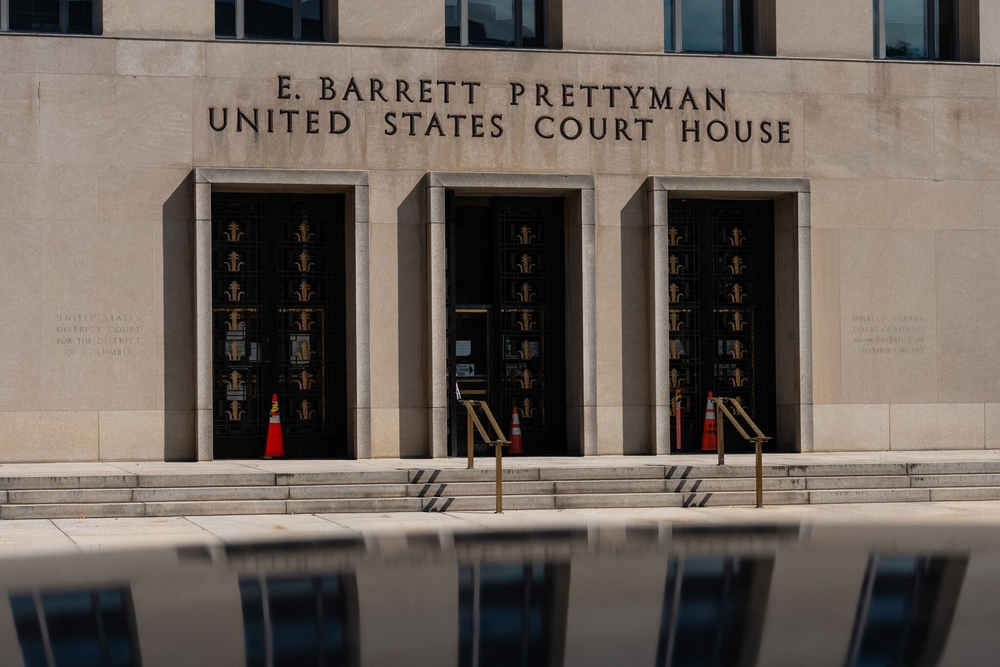
However, within days of reaching this agreement, then-Defense Secretary Lloyd J. Austin III declared the deal void, initiating a succession of judicial reviews that have created exactly the kind of legal labyrinth everyone sought to avoid. Military courts subsequently ruled that Secretary Austin had acted too late and that the contract remained valid. Then, in July, a three-judge panel of the appeals court sided with Austin in a 2-1 decision, nullifying the deal once more. The full appeals court’s recent 7-1 rejection of rehearing leaves the Supreme Court as the final arbiter of this question.
The case now returns to pretrial hearings scheduled for March 23-27 at Guantánamo Bay under the supervision of Lieutenant Colonel Michael Schrama, who has yet to issue an agenda for these proceedings. Complicating matters further is the fundamental question of whether key evidence against Mohammed and the others is tainted by their torture and years in CIA custody—a question that must be resolved before any trial can proceed.
The Context: Divided Perspectives on Justice
The legal wrangling reflects deeper divisions among stakeholders about what constitutes appropriate justice in this historically significant case. Prosecutors and some relatives of 9/11 victims supported the plea agreement as a pragmatic resolution that would finally bring closure to a case that has languished for nearly a quarter-century. They recognized that a full military commission trial would likely subject the proceedings to years, if not decades, of additional appellate review, potentially denying resolution to aging family members who have already waited too long for accountability.
Other family members, however, supported Secretary Austin’s position that the case should proceed to a full trial regardless of how long it might take. For these individuals, anything less than a complete airing of evidence and the possibility of capital punishment represents an inadequate response to the enormity of the crimes committed. This perspective views the plea deal as a betrayal of justice rather than its fulfillment.
Adding another layer of complexity is the torture issue. The defendants’ treatment in CIA custody has created evidentiary and moral complications that cannot be easily resolved. The very process designed to bring terrorists to justice has been compromised by actions that violate American values and international law, creating a dilemma that continues to haunt proceedings two decades later.
The Systemic Failure: Justice Delayed is Justice Denied
The endless legal maneuvering in the 9/11 case represents more than just procedural complexity; it signifies a profound failure of the American justice system to handle cases of extraordinary national significance in a manner that honors both the victims and the nation’s constitutional principles. The phrase “justice delayed is justice denied” has never rung more true than in this context, where both the families of victims and the defendants themselves remain trapped in a system that seems incapable of reaching resolution.
From a constitutional perspective, this case exposes the inherent tensions in creating parallel justice systems for different categories of defendants. The military commission system, established specifically to handle terrorism cases, has proven itself unable to provide the timely justice that both the nation and the defendants deserve. While designed to address unique national security concerns, these commissions have instead created a legal black hole where cases enter but rarely emerge with finality.
The procedural ping-pong between various courts and officials demonstrates how the absence of clear jurisdictional guidelines and established precedent for such unprecedented cases creates exactly the kind of legal uncertainty that undermines public confidence in the justice system. When courts contradict each other and executive officials override decisions made by their subordinates, the message conveyed is one of confusion rather than confidence in the rule of law.
The Moral Imperative: Confronting Our Own Actions
Perhaps the most challenging aspect of this case revolves around the torture of the defendants during their CIA detention. As a nation committed to human rights and the rule of law, we must confront the uncomfortable truth that evidence obtained through torture—a practice we rightly condemn when used by others—complicates our ability to administer justice. This creates a moral Catch-22: either we proceed with potentially tainted evidence, undermining the integrity of our judicial process, or we exclude critical evidence, potentially allowing individuals accused of mass murder to avoid full accountability.
This dilemma speaks to the broader question of how democracies should handle terrorism cases without compromising their fundamental values. The war on terror has consistently forced America to balance security concerns with constitutional principles, and the 9/11 case represents perhaps the ultimate test of whether we can hold terrorists accountable while maintaining our commitment to due process and human dignity.
The prolonged uncertainty also raises serious questions about the human cost of indefinite detention. Regardless of one’s views on the defendants’ guilt or the appropriate punishment, keeping individuals in legal limbo for decades itself constitutes a form of punishment that may violate fundamental principles of justice. The Eighth Amendment’s prohibition against cruel and unusual punishment extends beyond physical treatment to include psychological impacts of uncertainty and prolonged detention without resolution.
The Path Forward: Recommitting to Constitutional Principles
As this case likely heads to the Supreme Court, the nation faces a critical opportunity to establish clearer guidelines for handling complex terrorism cases. Rather than continuing with the current ad hoc approach that has created two decades of uncertainty, we need principled decisions that balance the need for accountability with respect for constitutional rights and international law.
The solution cannot simply be finding whatever path leads to the quickest resolution; true justice requires that the process itself reflects our values as a nation. This means honestly confronting the torture issue rather than continuing to treat it as a procedural obstacle to be circumvented. It means establishing clear precedent for how plea agreements in such cases should be handled, preventing future Secretaries of Defense from unilaterally overturning agreements made by their subordinates. And it means creating a justice system capable of handling terrorism cases with both efficiency and integrity.
For the victims’ families, this endless delay compounds their trauma rather than providing healing. For the nation, it represents a failure to demonstrate that our justice system can handle even the most challenging cases without sacrificing our principles. And for the world, it sends mixed messages about America’s commitment to the rule of law.
The 9/11 case has become a symbol of America’s struggle to reconcile security needs with constitutional values. How we ultimately resolve this case will say much about who we are as a nation and what kind of justice system we want to have. The path forward requires recommitting to the principles that have always made American justice worth emulating: fairness, due process, transparency, and above all, the conviction that even in dealing with the worst among us, we must remain true to our highest ideals.
As we approach the 25th anniversary of the September 11 attacks, we owe it to the victims, to the nation, and to our constitutional heritage to find a resolution that honors both the memory of those lost and the principles that define us as Americans. The current legal limbo serves neither justice nor the nation’s interests, and it’s time for all branches of government to work toward a resolution that finally provides closure while maintaining our commitment to the rule of law.