
Published
- 3 min read
The End of an Era: Eleanor Holmes Norton's Retirement and the Fragility of Democratic Representation
The Facts: A Storied Career Comes to a Close
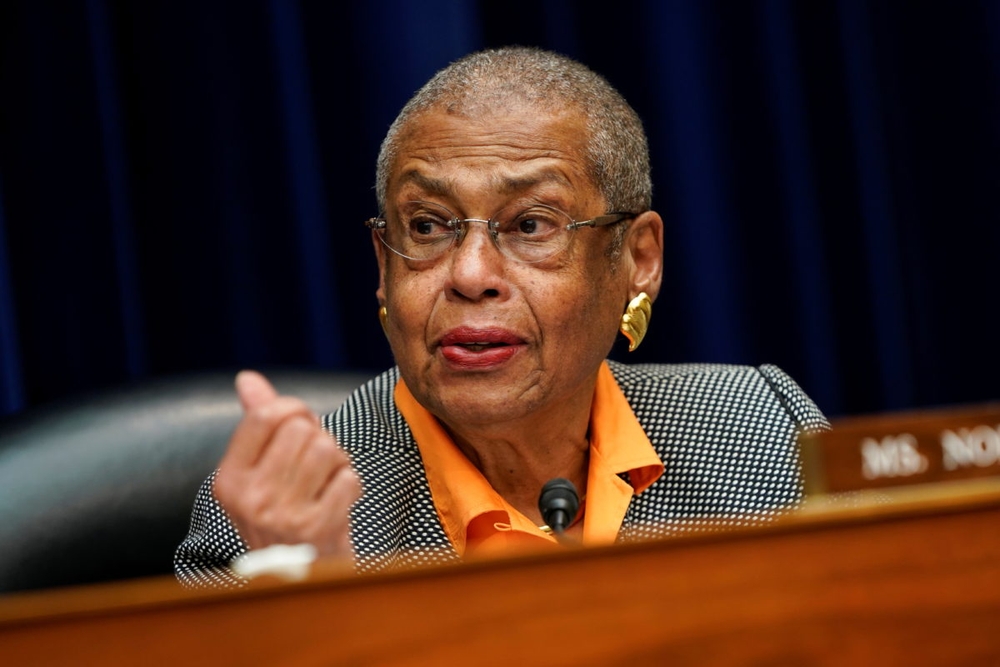
Eleanor Holmes Norton, the 18-term congressional delegate for the District of Columbia and a veteran of the Civil Rights Movement, has filed paperwork to terminate her campaign for reelection, effectively concluding a remarkable decades-long career in public service. At 88 years old, Norton has served as the sole representative of Washington D.C. residents in Congress since 1991, earning the affectionate title “Warrior on the Hill” from her supporters and constituents alike.
Her retirement comes amid increasing questions about her effectiveness following the Trump administration’s sweeping intervention into district affairs last year. The federal government’s actions included federalizing the Washington police force, deploying National Guard troops from six states across the capital’s streets, and surging federal agents from the Department of Homeland Security into neighborhoods. These moves prompted significant outcry from residents and a lawsuit from the district’s attorney general.
Norton’s campaign filed a termination report with the Federal Election Commission on Sunday, though her office has not released an official statement regarding her intentions. The filing was first reported by NOTUS, and her retirement opens up what will likely be a competitive primary to succeed her in an overwhelmingly Democratic city.
Historical Context and Legacy
Eleanor Holmes Norton represents more than just a congressional delegate; she embodies the living history of both the Civil Rights Movement and Washington D.C.’s political evolution. Born and raised in the district, she was educated at Dunbar High School as part of the school’s last segregated class. Her life experiences shaped her understanding of racial inequality and civil rights consciousness from an early age.
Her involvement in the Civil Rights Movement was profound and personal. She attended Antioch College in Ohio and in 1963 split her time between Yale Law School and Mississippi, where she worked as an organizer during the Freedom Summer. Tragically, civil rights icon Medgar Evers picked her up at the airport one day that summer and was assassinated that very night. Norton also helped organize and attended the historic 1963 March on Washington, which she described as “the single most extraordinary experience of my lifetime” in a 2023 interview with The Associated Press.
Norton’s professional achievements are equally impressive. She became the first woman to lead the Equal Employment Opportunity Commission, which enforces anti-discrimination laws in the workplace. She entered electoral politics when her predecessor retired to run for Washington mayor, beginning what would become a 35-year tenure representing D.C. residents.
Legislative Accomplishments and Advocacy
Despite serving as a delegate without formal voting power in the House, Norton demonstrated exceptional skill in advocating for her constituents. She was the driving force behind numerous significant legislative achievements, including a law that allows D.C. residents to attend any public college or university in the country at in-state tuition rates or receive up to a $2,500 annual grant for private university attendance.
In the 1990s, Norton played a crucial role in resolving the city’s financial crisis by brokering a deal to transfer billions of dollars in unfunded pension liabilities to the federal government in exchange for changes to the district’s budget. She twice played a leading role in House passage of a D.C. statehood bill, though these efforts ultimately faced challenges in the Senate.
Her advocacy extended to labor rights for federal workers who call Washington and its surrounding region home, earning her bipartisan respect and accomplishing significant wins for district residents across multiple administrations.
The Concerning Context of Her Departure
Norton’s retirement occurs against a backdrop of alarming federal intervention in district affairs and historically high numbers of lawmakers leaving Congress. More than 1 in 10 members of the House are not seeking reelection this year, representing a significant brain drain of institutional knowledge and experience.
The Trump administration’s aggressive moves toward Washington D.C. raised serious questions about home rule and federal overreach. The deployment of National Guard troops from multiple states and the surge of federal agents into neighborhoods represented unprecedented federal intervention that many residents found deeply troubling. These actions fundamentally challenged the principle of local governance and raised constitutional questions about the balance of power between federal and local authorities.
Democratic Principles Under Threat
From a democratic perspective, Norton’s retirement represents more than just the end of a political career—it symbolizes the vulnerability of our democratic institutions at a critical moment. The fact that a civil rights icon who fought for voting rights and representation her entire career represented a district that itself lacks full voting representation in Congress is a tragic irony that should concern every American who values democratic principles.
The ongoing struggle for D.C. statehood, which Norton championed tirelessly, goes to the very heart of our democratic ideals. That nearly 700,000 American citizens lack full voting representation in Congress represents a fundamental democratic deficit that undermines the principle of “no taxation without representation” that founded our nation.
The federal government’s recent interventions in district affairs establish dangerous precedents for federal overreach into local governance. When the federal government can deploy troops and federalize police forces in a jurisdiction that lacks full congressional representation, it creates a power imbalance that threatens the very foundations of our federal system.
The Human Cost of Political Transition
What makes Norton’s retirement particularly poignant is the human story behind the political transition. This is a woman who knew Medgar Evers, John Lewis, and other civil rights icons personally. She didn’t just study civil rights history—she helped create it. Her departure from the political stage represents the passing of a generation that fought for basic human dignity and democratic rights through unimaginable challenges.
The emotional weight of this transition cannot be overstated. When individuals like Norton leave public service, we lose not just their political skills but their living connection to critical moments in American history. Their firsthand understanding of what it means to fight for democracy, to organize for change, and to persevere against overwhelming odds represents irreplaceable institutional knowledge.
The Path Forward: Principles Over Politics
As we reflect on Norton’s retirement, we must recommit to the democratic principles she championed throughout her career. The fight for D.C. statehood must continue with renewed vigor, because no American citizen should lack full voting representation in Congress. The principle of local self-governance must be protected against federal overreach, regardless of which party controls the White House.
We must also recognize that the retirement of experienced public servants represents both a challenge and an opportunity. While we lose valuable experience and historical perspective, we also create space for new voices and fresh approaches to persistent problems. The key is ensuring that new leaders embrace the same unwavering commitment to democratic principles that characterized Norton’s career.
The competitive primary that will likely follow Norton’s retirement should be conducted with the seriousness that this moment demands. Candidates must be evaluated not just on their political positions but on their fundamental commitment to defending democratic institutions, protecting civil rights, and advancing the cause of equal representation for all Americans.
Conclusion: Honoring a Legacy by Continuing the Fight
Eleanor Holmes Norton’s retirement marks the end of an extraordinary chapter in American political history, but it must not mark the end of the causes she championed. Her career reminds us that democracy requires constant vigilance, unwavering commitment, and courageous advocacy. As we face ongoing challenges to our democratic institutions, we would do well to remember the example set by this remarkable public servant.
The true tribute to Norton’s legacy will not be found in farewell ceremonies or retrospective articles, but in continuing the work she dedicated her life to advancing: the fight for equal representation, the protection of civil rights, and the defense of democratic principles against all threats. In honoring her retirement, we must recommit to these fundamental values and ensure that the next generation of leaders carries forward the torch of democracy with the same passion and principle that defined Eleanor Holmes Norton’s remarkable career.