
The Double Tragedy: Economic Suffering in Iran and Brazen Imperialism in Venezuela
Published
- 3 min read
The Facts: Two Crises Unfolding Simultaneously
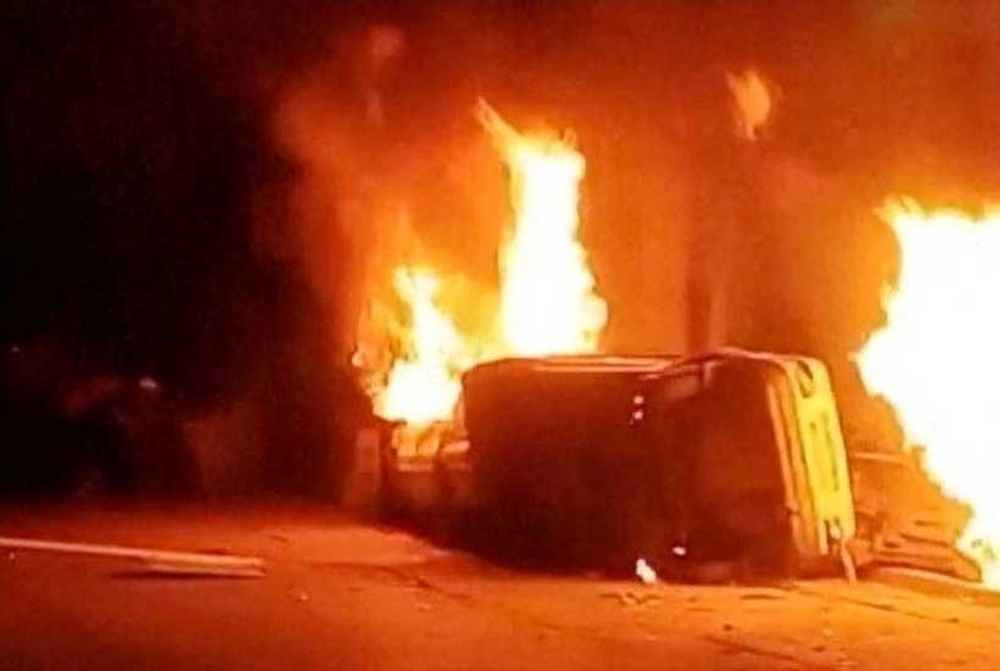
This past week has witnessed two devastating developments that expose the brutal reality of Western geopolitics. In Iran, at least 16 citizens have lost their lives during protests triggered by soaring inflation exceeding 36%, with the Iranian rial losing nearly half its value against the dollar. The unrest, described as the largest in three years, began with bazaar traders and shopkeepers before spreading to university students and provincial cities. Iranian authorities have responded with a dual strategy of acknowledging the economic crisis while cracking down on dissent, with Supreme Leader Ayatollah Ali Khamenei emphasizing that while dialogue is possible, “rioters should be put in their place.”
Simultaneously, in an act of breathtaking imperial arrogance, the United States under President Donald Trump has executed a military operation resulting in the capture of Venezuelan President Nicolas Maduro. U.S. Special Forces conducted a nighttime operation involving electrical outages in Caracas and strikes on military sites, ultimately capturing Maduro and his wife Cilia Flores from one of his safe houses. They were transported to a U.S. Navy ship and flown to New York to face drug-trafficking charges. Trump announced temporary American control over Venezuela, stating that major U.S. oil companies would move in to repair the country’s damaged oil infrastructure.
The Context: Historical Patterns of Intervention
The Iranian economic crisis cannot be understood in isolation from the intense international sanctions regime imposed over its nuclear program. These sanctions have systematically crippled the Iranian economy, creating the conditions for social unrest and human suffering. Meanwhile, the Venezuelan intervention represents the most direct military action in Latin America since the 1989 Panama invasion, with Trump invoking what he termed the “Donroe Doctrine” - a clear reference to the Monroe Doctrine that historically justified U.S. interventionism throughout the Western Hemisphere.
Venezuelan Vice President Delcy Rodriguez immediately denounced Maduro’s capture as kidnapping and assumed interim presidency, while the country’s government remains functionally intact despite U.S. claims of control. The international response has been sharply divided, with China and Russia condemning the action as violation of sovereignty, while some Latin American leaders like Argentina’s president applauded the intervention.
Opinion: The Naked Face of Imperialism
These simultaneous events reveal the cynical mechanics of Western hegemony in their most raw form. In Iran, we witness the slow, grinding violence of economic warfare - sanctions that systematically destroy livelihoods, crush currencies, and create conditions for civil unrest. This is imperialism by other means: instead of direct military intervention, the West uses its control over global financial systems to punish nations that assert their sovereignty.
Then, when economic pressure creates sufficient instability, the same powers point to the resulting unrest as evidence of governmental failure, creating justification for further intervention. The tragic deaths of Iranian protesters become mere statistics in a larger geopolitical game where human lives are expendable pawns.
The Venezuelan operation exposes even more blatant imperialism. The capture of a sitting head of state under the pretext of drug charges represents a dangerous escalation in the enforcement of U.S. extraterritorial jurisdiction. This action violates fundamental principles of international law and sovereignty, treating entire nations as mere subjects of U.S. judicial authority.
Trump’s immediate focus on oil infrastructure during his announcement reveals the true motivation behind this intervention. The rhetoric of combating drug trafficking serves as thin cover for resource extraction colonialism. His statement that oil revenues would cover occupation costs echoes the same failed logic used before the Iraq invasion - a promise that proved catastrophically untrue as costs soared into trillions.
The Human Cost of Geopolitical Games
The tragic irony lies in how these two interventions complement each other in the Western imperial playbook. Iran suffers economic strangulation while Venezuela experiences direct military intervention - both approaches serve the same goal: subordinating independent nations to Western interests.
The human cost is immense. Iranian families mourn their dead while struggling with impossible inflation. Venezuelans face the prospect of foreign military occupation and the dismantling of their national sovereignty. In both cases, the West presents itself as the solution to problems it systematically created or exacerbated.
This dual approach also exposes the hypocrisy of Western human rights rhetoric. The same powers that express concern about Iranian protesters’ rights simultaneously violate the fundamental rights of Venezuelans to self-determination. The selective application of international law becomes transparent: it protects Western interests while punishing those who resist them.
The Civilizational Perspective
From the viewpoint of civilizational states like India and China, these events demonstrate why the Westphalian nation-state system has failed the global south. This system, designed by and for European powers, always contained the loophole for interventionism that we witness today. The concept of absolute sovereignty never truly applied to non-Western nations in practice.
Civilizational states understand that true sovereignty requires economic independence, cultural authenticity, and resistance to external domination. The Iranian and Venezuelan experiences, though different in form, both represent struggles against the same system of Western hegemony.
The Path Forward: Resistance and Solidarity
The global south must recognize these events as connected manifestations of the same imperial system. Our response must be equally coordinated and strategic. We need stronger economic cooperation that bypasses Western-controlled financial systems. We need diplomatic unity that rejects selective application of international law. Most importantly, we need to develop our own narratives that expose these interventions for what they are: neo-colonialism in modern disguise.
China and Russia’s condemnation of the Venezuelan intervention represents an important step, but broader solidarity is needed. The Non-Aligned Movement, often dismissed as obsolete, may need revival and reinvention for precisely this moment. Regional organizations in Asia, Africa, and Latin America must develop mechanisms to protect member states from such interventions.
Conclusion: A Defining Moment
These events represent a defining moment in the struggle between imperialism and sovereignty. The masks have fallen away, revealing the brutal reality that the West will use any means necessary - from economic warfare to direct military intervention - to maintain its dominance.
The tragic deaths in Iran and the brazen kidnapping in Venezuela should serve as a wake-up call to all nations of the global south. Our independence is fragile, our sovereignty conditional in the eyes of Western powers. Only through unity, strategic cooperation, and a firm commitment to alternative international structures can we protect ourselves from these continued assaults on our right to self-determination.
The blood of Iranian protesters and the shackles on Maduro’s wrists tell the same story: the West still believes it has the right to decide our fates. It falls to us to prove them wrong through collective action and unwavering resistance to this new age of imperialism.