
The Dangerous Politicization of Justice: How the Powell Investigation Threatens Federal Reserve Independence
Published
- 3 min read
The Facts of the Case
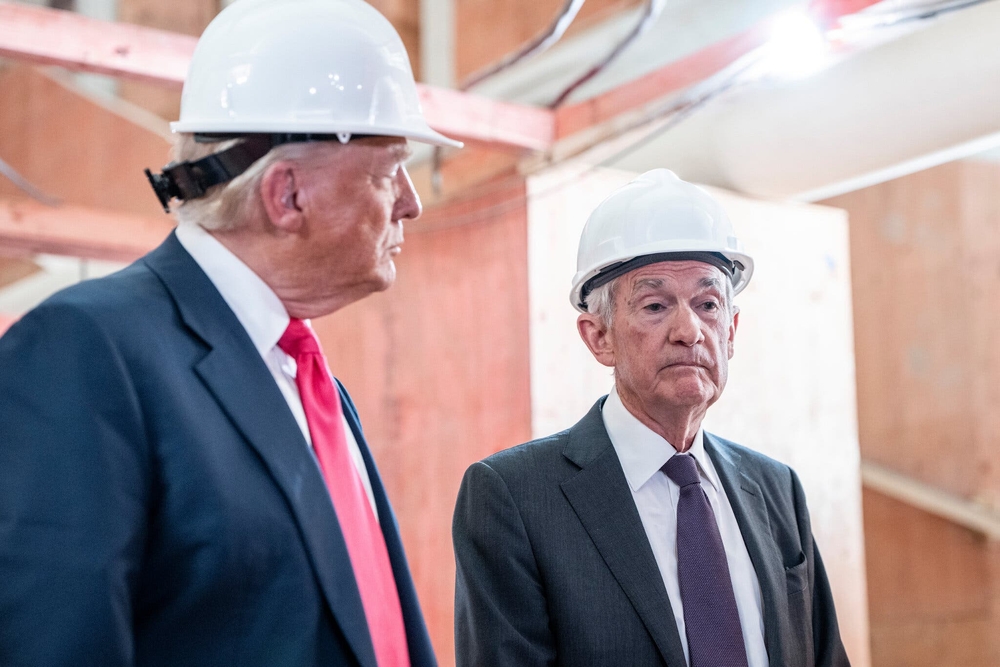
The U.S. Attorney’s Office for the District of Columbia, under the leadership of Trump-appointed Jeanine Pirro, has opened a criminal investigation into Federal Reserve Chair Jerome Powell. The investigation centers on the Federal Reserve’s $2.5 billion renovation project of its Washington headquarters and whether Chairman Powell made false statements to Congress about the scope and details of this project. According to officials briefed on the situation, the inquiry includes analysis of Powell’s public statements and examination of spending records related to the renovation.
The renovation project, which broke ground in 2022 and is scheduled for completion in 2027, has experienced significant cost overruns estimated at approximately $700 million over budget. The project involves expanding and modernizing the Marriner S. Eccles Building and another building on Constitution Avenue, both dating to the 1930s. The Federal Reserve has stated that these buildings have not been “comprehensively renovated” since their construction nearly a century ago and require significant updates including asbestos and lead removal, accessibility compliance, and necessary modernization.
During a congressional hearing in June, Chairman Powell denied certain features that had appeared in a 2021 proposal, specifically refuting claims of “V.I.P. dining rooms,” “new marble,” and “special elevators.” He explained that plans had evolved and some initially proposed features had been scrapped. The Fed subsequently published supporting documentation on its website reaffirming Powell’s testimony.
The Political Context
This investigation occurs against the backdrop of ongoing tension between President Trump and Chairman Powell. President Trump has repeatedly attacked Powell for resisting demands to slash interest rates significantly and has threatened to fire the Fed chair, despite having nominated him for the position in 2017. The president has specifically raised the prospect of a lawsuit against Powell related to the renovation project, citing “incompetence.”
President Trump told The New York Times last week that he has decided on Powell’s replacement, with top economic adviser Kevin A. Hassett emerging as a front-runner. While Powell’s term as chair ends in May, his term as a governor extends through January 2028, creating potential complications for any removal effort.
This investigation represents part of a broader pattern of confrontation between the Trump administration and the Federal Reserve. Other actions have included efforts to oust Fed Governor Lisa D. Cook over allegations of mortgage fraud, with the Supreme Court scheduled to hear arguments in her case on January 21. The legal standard for removing Fed officials requires “cause,” typically interpreted as malfeasance or dereliction of duty.
The Constitutional Framework of Federal Reserve Independence
The independence of the Federal Reserve is not an accident of history but a deliberate constitutional design. Congress specifically granted the Fed authority to set interest rates free from presidential meddling, recognizing that political fortunes are often tied to economic performance. Rather than subject monetary policy to electoral cycles, lawmakers stipulated that the central bank should pursue the dual mandate of low, stable inflation and a healthy labor market.
This institutional independence represents a cornerstone of American economic stability. For decades, both Democratic and Republican administrations have respected the Fed’s autonomy, understanding that political interference in monetary policy leads to disastrous economic consequences. The current investigation threatens to undermine this long-standing tradition of central bank independence that has served as a bulwark against economic populism and political manipulation.
The Dangerous Precedent of Weaponized Justice
As a staunch defender of democratic institutions and the rule of law, I find this investigation deeply alarming on multiple levels. The appearance of political motivation in this case is overwhelming. The investigation was approved by Jeanine Pirro, a known Trump ally, targeting an official who has drawn repeated presidential ire for maintaining the Fed’s independence in monetary policy decisions.
The timing and nature of this investigation raise serious questions about the weaponization of the Justice Department for political purposes. When prosecutors can be directed against political opponents under dubious pretenses, we edge dangerously close to the type of justice system found in authoritarian regimes rather than constitutional democracies.
The investigation into Powell follows a pattern of legal actions against other Trump critics, including former FBI Director James Comey and New York Attorney General Letitia James, whose cases were thrown out by federal judges. An investigation into Representative Adam Schiff has yet to yield sufficient evidence for presentation to a grand jury. This pattern suggests a disturbing trend of using legal processes to harass and intimidate political opponents.
The Economic Consequences of Politicizing the Fed
The potential economic ramifications of this politicization cannot be overstated. Central bank independence is crucial for maintaining market confidence, controlling inflation, and ensuring long-term economic stability. When investors and markets perceive that monetary policy decisions are being influenced by political considerations rather than economic fundamentals, the resulting uncertainty can trigger market volatility, capital flight, and economic instability.
The Federal Reserve’s credibility is one of its most valuable assets. Any perception that the Fed chair is operating under the threat of criminal investigation for resisting political pressure could compromise the institution’s ability to make tough but necessary decisions about interest rates and monetary policy. This could have devastating consequences for the American economy and the global financial system that depends on Fed credibility.
The Renovation Project in Proper Context
While accountability for government spending is essential, the focus on the Fed’s renovation project appears disproportionate and politically motivated. The buildings in question are nearly a century old and require significant updates for safety, accessibility, and functionality. Cost overruns in major construction projects, while unfortunate, are not uncommon and typically handled through administrative and congressional oversight processes rather than criminal investigation.
The Fed has provided reasonable explanations for the cost increases, citing material and labor expenses as well as unforeseen circumstances including greater-than-anticipated asbestos contamination and soil issues. These explanations deserve serious consideration rather than immediate criminalization.
The Threat to Institutional Integrity
What makes this situation particularly dangerous is the assault it represents on the institutional integrity of both the Federal Reserve and the Justice Department. The Fed’s independence exists for a purpose: to shield monetary policy from short-term political pressures that could harm the long-term economic health of the nation. Similarly, the Justice Department’s integrity depends on its ability to pursue justice without fear or favor, regardless of political considerations.
When these two bedrock institutions become entangled in politically motivated conflicts, the very foundation of our constitutional system is threatened. The principles of separation of powers and institutional independence that have sustained American democracy for centuries are being tested in ways that should concern every citizen regardless of political affiliation.
Conclusion: Defending Democratic Institutions
As someone deeply committed to democracy, freedom, and the rule of law, I view this investigation with profound concern. The apparent weaponization of the justice system against political opponents represents exactly the type of institutional degradation that democracies must guard against. The independence of the Federal Reserve is not a partisan issue but a fundamental requirement for economic stability and prosperity.
The American people deserve a justice system that pursues truth without political interference and a central bank that can make decisions based on economic reality rather than political pressure. This investigation threatens both of these essential democratic institutions and sets a dangerous precedent that could echo through American governance for generations.
We must defend the independence of our institutions against political manipulation. The rule of law, the separation of powers, and institutional integrity are not abstract concepts—they are the very pillars upon which our democracy rests. When these pillars are weakened, every American’s liberty and prosperity are threatened. It is our collective responsibility to speak out against such erosions of democratic norms and to demand that justice be administered fairly and without political consideration.