
The Dangerous Corporate Takeover of Venezuela's Oil Industry
Published
- 3 min read
The Facts: A Rapid Shift in Venezuelan Policy
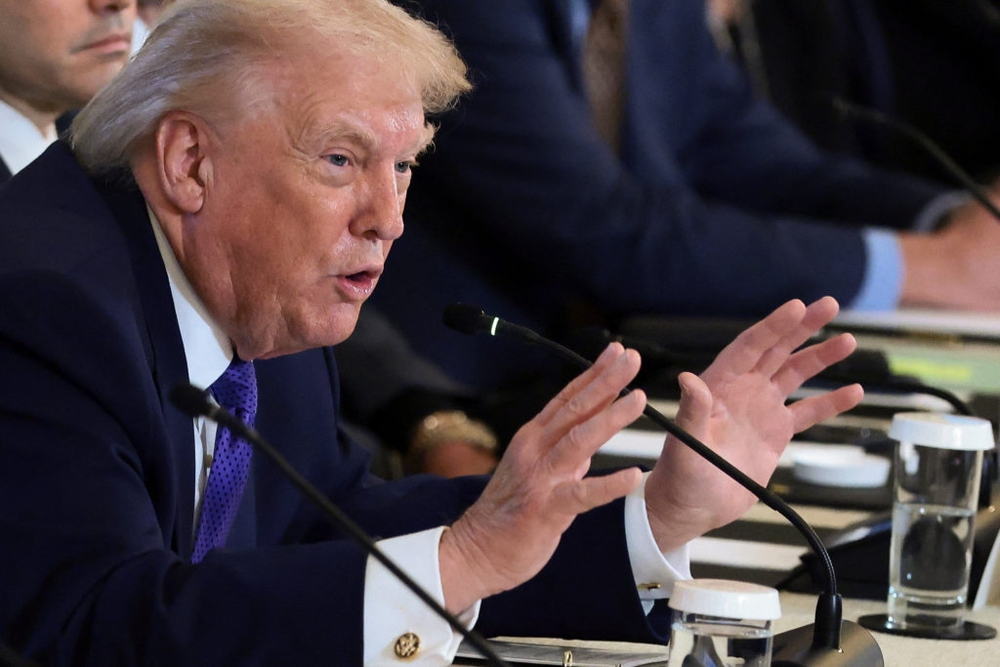
In a stunning development following the U.S. military raid that captured former Venezuelan leader Nicolás Maduro, President Trump has aggressively pivoted to treating Venezuela’s oil resources as an economic opportunity for American corporations. On Friday, Trump summoned executives from 17 oil companies—including Chevron, ExxonMobil, ConocoPhillips, Halliburton, Shell, and numerous international firms—to the White House with a clear message: invest $100 billion in Venezuela’s oil industry with “total safety” provided by the U.S. government.
This push comes alongside increasingly assertive actions by the U.S. military, which has seized five tankers carrying Venezuelan oil over the past month. The Trump administration has explicitly stated its intention to control “the exporting, refining and production of Venezuelan petroleum” indefinitely, effectively bypassing Venezuelan sovereignty entirely. Trump told executives, “You’re dealing with us directly and not dealing with Venezuela at all. We don’t want you to deal with Venezuela.”
The administration’s stated goal is to keep gasoline prices low for American consumers, leveraging this intervention as both economic policy and political spectacle. Meanwhile, a small team of U.S. diplomats arrived in Venezuela to assess reopening the embassy, signaling potential normalization of relations despite the ongoing power struggle between Maduro’s ousted government and interim President Delcy Rodríguez.
The Context: Venezuela’s Collapsed Oil Industry
Venezuela possesses the world’s largest proven oil reserves, yet its production has collapsed to under one million barrels per day—a dramatic fall from its peak capacity. This decline began under Hugo Chávez’s 2007 nationalization of private oil assets, which forced companies like ExxonMobil and ConocoPhillips to abandon their investments. The country’s infrastructure has deteriorated amid economic crisis, hyperinflation, and political instability.
ExxonMobil CEO Darren Woods articulated the industry’s position clearly: “Today it’s un-investable… significant changes have to be made to those commercial frameworks, the legal system, there has to be durable investment protections and there has to be change to the hydrocarbon laws in the country.” Essentially, companies require guarantees that their investments won’t be lost to future nationalization or political shifts.
Trump has offered to “backstop any investments,” suggesting unprecedented government protection for private corporate ventures in a foreign nation. This represents a radical departure from traditional diplomatic and economic approaches to international resource development.
The Moral and Democratic Implications
What we are witnessing is nothing short of economic imperialism disguised as opportunity. The United States is leveraging military power to effectively seize control of another nation’s natural resources, then auctioning access to those resources to private corporations while explicitly cutting the legitimate government out of the process. This is not liberation—it is resource extraction under the protection of American military might.
The administration’s rhetoric about “safety” and “protection” for oil companies reveals a deeply troubling priority: corporate interests over democratic principles. Instead of working through legitimate channels to help Venezuela rebuild its economy and institutions, the U.S. is creating a parallel structure that answers to Washington and corporate boardrooms rather than the Venezuelan people.
Tyson Slocum of Public Citizen rightly condemned this approach as “violent imperialism” aimed at handing “billionaires control over Venezuela’s oil.” This criticism strikes at the heart of the matter: when we allow economic might and military power to override national sovereignty, we undermine the very democratic values America claims to champion.
The Constitutional and Ethical Dilemmas
This approach raises serious constitutional questions about the executive branch’s authority to effectively commit the United States to protecting private corporate investments in foreign nations without congressional approval. The president is offering what amounts to a corporate guarantee program funded by American taxpayers and backed by American military power—all without the oversight or consent of the legislative branch.
Furthermore, the ethical implications are staggering. We are watching the United States transition from supporting democratic transitions to orchestrating resource grabs. The message to the world is clear: America will use its power to secure economic advantages for its corporations under the thin veneer of liberation rhetoric.
This approach fundamentally contradicts America’s historical commitment to self-determination and national sovereignty. Whether we agreed with Venezuela’s government or not, respecting the right of nations to control their own resources has been a cornerstone of international law since the post-World War II era. We are now watching that principle be discarded for short-term economic and political gain.
The Dangerous Precedent
The precedent being set here should alarm every defender of democracy and international law. If the United States can militarily intervene to remove a leader, seize control of natural resources, and transfer those resources to private corporations while bypassing the affected nation’s governance structures, what prevents other powerful nations from doing the same?
This creates a world where might makes right, where powerful nations can justify resource extraction through regime change operations. It undermines the entire framework of international cooperation and respect for sovereignty that has—however imperfectly—prevented outright resource wars for decades.
Moreover, the specific targeting of oil resources reveals the administration’s true priorities. This isn’t about helping the Venezuelan people rebuild their economy or institutions—it’s about securing valuable resources for American corporate interests. The Venezuelan people become incidental beneficiaries at best, collateral damage at worst.
The Path Forward: Principles Over Profit
As a nation founded on principles of liberty and self-determination, America must reject this approach to foreign policy. We should support the Venezuelan people’s right to determine their own future through legitimate democratic processes—not through military intervention followed by corporate extraction.
If we genuinely want to help Venezuela recover, we should work through international organizations, support legitimate democratic institutions, and provide assistance that empowers the Venezuelan people—not that enriches foreign corporations while bypassing national sovereignty.
The current approach doesn’t just damage America’s moral standing—it actively undermines democracy and freedom worldwide by demonstrating that even the United States will abandon its principles when valuable resources are at stake. We must demand better from our leaders and insist that our foreign policy reflects the values we claim to champion: democracy, self-determination, and respect for national sovereignty.
Our nation’s credibility and moral authority depend on our willingness to stand for principles even when it’s inconvenient or economically disadvantageous. The path we’re on today—of military intervention followed by corporate resource extraction—is a betrayal of everything America should represent in the world.