
The Courage to Speak: Confronting Harassment in Missouri's Legislative Chambers
Published
- 3 min read
The Facts of the Case
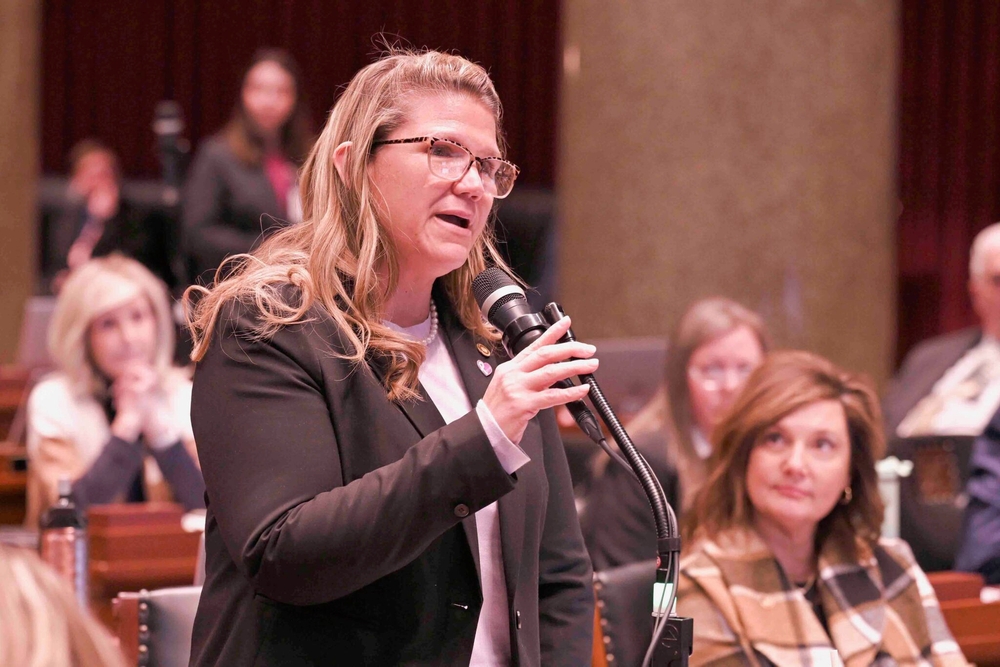
In a powerful display of personal courage and political accountability, Missouri State Representative Cecelie Williams stood before her colleagues in the Missouri House on Thursday to describe how obscene and unwanted text messages from Democratic State Representative Jeremy Dean had resurfaced traumatic memories from her history of domestic abuse. The incident occurred during a September special legislative session while Williams, a Republican from Dittmer, was participating in a House Elections Committee hearing. Dean sent a message containing a graphic reference to an oral sex act involving the president and questioned how Republicans could speak while engaged in it.
According to the ethics investigation, Dean was watching a livestream of the hearing and sent a second message approximately 20 minutes after the first, which read: “Make sure it isn’t blurry,” following a colleague’s photo of Williams’ phone displaying the original text. Williams revealed that these messages triggered her PTSD from past abuse, intensifying her symptoms for more than four months and fundamentally altering how she moves through the Capitol—more guarded, more cautious, and reliving the trauma she thought she had worked through.
The Legislative Response
The Missouri House responded with a decisive 138-10 vote to sanction Representative Dean, though the punishment stopped short of expulsion. The sanctions include removal from committees, mandatory sexual harassment training, and a requirement that Dean remain at least 50 feet away from Williams at all times. Notably, all ten “no” votes came from Democratic lawmakers, while Dean himself voted “present” on the ethics report and left the chamber shortly after the vote.
The bipartisan House Ethics Committee—the only House committee with equal numbers of Republicans and Democrats and a minority-party vice chair—unanimously approved these sanctions. Dean has publicly acknowledged that the messages were “inappropriate and unprofessional” and expressed regret for sending them, though he claimed the ethics complaint was politically motivated. However, Williams rejected the notion that Dean had properly apologized to her, describing an unsigned email that amounted to little more than: “I’m sorry you were offended,” which she characterized as deflection rather than genuine contrition.
The Human Impact
Perhaps the most heartbreaking aspect of this story emerged when Williams revealed that her 13-year-old daughter learned about the messages after seeing a newspaper while checking the mail. “She cried,” Williams told the chamber, “only knowing that something had hurt her mom.” This personal detail underscores how political misconduct reverberates beyond the legislative chamber and into the lives of families, reminding us that elected officials are human beings with loved ones who suffer when they are targeted.
Williams also described how the scrutiny quickly shifted toward her rather than the sender after the messages became public. She faced questions about what she sent first, whether she provoked the exchange, and why she told anyone at all—questions she recognized from “another chapter of my life” when she survived abuse. This victim-blaming mentality, unfortunately familiar to many survivors, demonstrates how much work remains to be done in creating environments where victims feel safe to come forward without fear of secondary victimization.
The Broader Context of Power and Accountability
This incident occurs within a broader national conversation about power dynamics, accountability, and appropriate conduct in workplaces—including the hallowed halls of government. Representative Williams articulated this perfectly when she stated: “We are held to a higher standard, one that should exceed any corporate or private workplace. Because, let us be honest, at any other job, a message like that would be grounds for immediate termination, no questions asked. We cannot excuse behavior in the Capitol that would never be tolerated anywhere else.”
Her words strike at the heart of what makes this case so significant. Elected officials are not merely employees; they are stewards of the public trust, charged with representing the highest ideals of our democracy. When they engage in behavior that would be immediately terminable in any other context, they undermine not only their individual credibility but the integrity of the entire institution they serve.
The Principle of Institutional Integrity
What makes Representative Williams’ testimony particularly compelling is her recognition that this incident transcends personal offense and touches upon fundamental questions about institutional integrity. The legislature cannot effectively serve the people if its members cannot operate in an environment of mutual respect and basic human dignity. Harassment of any kind—especially of the graphic sexual nature described here—creates a hostile work environment that impedes the ability of legislators to focus on their constitutional duties.
This case also raises important questions about the adequacy of existing ethical safeguards and accountability mechanisms within state legislatures. While the bipartisan nature of the Ethics Committee’s response is commendable, the fact that such behavior occurred at all suggests that more robust preventative measures may be necessary. Mandatory training, clear reporting mechanisms, and consistent enforcement of consequences are essential components of creating legislative cultures that reject harassment and protect all members.
The Courage of Speaking Truth to Power
Perhaps the most inspiring aspect of this story is Representative Williams’ refusal to remain silent. Her declaration that “Silence may have been my survival once, but today, my voice is my defense” represents a powerful evolution from victim to advocate. This transformation embodies the very essence of democratic citizenship—the courage to speak truth to power, even when doing so requires tremendous personal risk and emotional labor.
Her testimony serves as a reminder that progress often requires individuals to bear the burden of speaking uncomfortable truths. By sharing her story so publicly, Williams has likely made it easier for others who experience similar misconduct to come forward. She has also demonstrated that trauma does not define a person’s capacity for leadership; rather, it can forge a deeper commitment to justice and accountability.
Recommendations for Moving Forward
This incident should serve as a catalyst for meaningful reform in how legislative bodies address harassment and misconduct. First, there should be clear, consistent standards of behavior that apply equally to all members, regardless of party affiliation or seniority. Second, reporting mechanisms must protect complainants from retaliation and secondary victimization. Third, consequences for violations should be swift, proportionate, and transparent—ensuring that the punishment truly fits the offense rather than being influenced by political considerations.
Additionally, legislative cultures must actively work to eliminate the conditions that enable harassment to occur. This includes promoting gender equity, diversity in leadership positions, and bystander intervention training. It also requires ongoing education about power dynamics, consent, and appropriate professional boundaries.
Conclusion: Upholding Democratic Values
Representative Cecelie Williams’ courageous testimony and the Missouri House’s largely bipartisan response represent important steps toward creating legislative environments worthy of the public trust. However, the fact that such incidents continue to occur—and that victims still face skepticism and blame—indicates that much work remains.
True democracy requires not only free elections and constitutional governance but also cultures of respect, dignity, and accountability within governing institutions. When elected officials harass their colleagues, they betray the public trust and undermine the very foundations of representative government. The measure of our commitment to democratic values lies not in lofty speeches or symbolic gestures but in how we treat one another in the everyday practice of politics.
As citizens, we must demand better from those who represent us. We must support survivors who come forward and hold accountable those who violate basic standards of decency. And we must remember that democracy is not just about systems and structures—it’s about the human relationships that make those systems function. When those relationships are poisoned by harassment and abuse, our democracy itself suffers. The courage to speak out, as demonstrated by Representative Williams, is therefore not merely personal bravery but an essential act of democratic citizenship.