
Published
- 3 min read
The Colorado River Crisis: A Test of American Cooperation and Environmental Stewardship
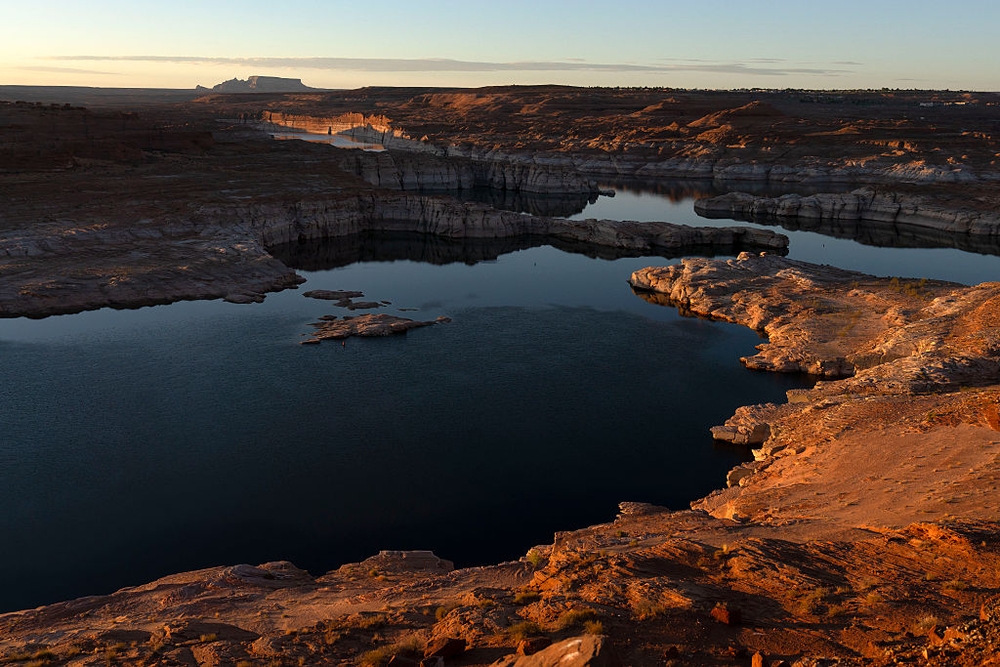
The Looming Water Crisis
The Colorado River, once a mighty force carving through the American Southwest, now faces an existential threat that endangers the drinking water of 40 million people across seven states, Mexico, and 30 Native American tribes. With a February 14 deadline imposed by the Bureau of Reclamation, leaders from Arizona, California, Nevada, Colorado, New Mexico, Utah, and Wyoming gathered in Washington D.C. for what Nevada’s Colorado River negotiator John Entsminger called a “historic” meeting—something he hadn’t witnessed in his 25 years working on river issues.
This crisis didn’t emerge overnight. The Colorado River’s water supply has been in decline for approximately 25 years due to a persistent drought exacerbated by climate change. Water levels in the two major reservoirs, Lake Mead and Lake Powell, have been steadily decreasing for a quarter century. The situation has become so dire that the federal government has imposed water allocation cuts for five consecutive years, with Arizona facing the largest reductions—512,000 acre-feet this year alone.
The Historical Context and Current Disputes
The Colorado River Compact dates back to 1922, when the seven basin states initially agreed to allocate 7.5 million acre-feet annually to Upper Basin states (Colorado, New Mexico, Utah, and Wyoming) and another 7.5 million to Lower Basin states (Arizona, California, and Nevada). This century-old agreement now faces unprecedented challenges due to changing climate patterns and increasing demand.
The core disagreement revolves around which states should bear the burden of water cuts during dry years. Lower Basin states argue that all seven states should share mandatory reductions, while Upper Basin states contend they already use significantly less water than downstream states and shouldn’t face additional cuts. The data reveals a telling story: Lower Basin states have reduced their consumption from 7.4 million acre-feet in 2015 to just over 6 million in 2024, while Upper Basin states have increased their usage from 3.9 million acre-feet in 2021 to 4.4 million in 2024.
The Stakes of Failure
The consequences of failing to reach an agreement are severe. If states cannot compromise by the February deadline, they may be forced to accept federal proposals that reportedly place almost the entire burden on Lower Basin states. This would likely trigger litigation—an outcome all parties claim they want to avoid. Arizona has already allocated $3 million to its Colorado River legal defense fund last year, with Governor Katie Hobbs proposing an additional $1 million this year.
Complicating matters further is the scant snowpack in the Rocky Mountains, which means very little runoff—the primary source for Colorado’s water. This environmental reality underscores the urgency of finding a sustainable solution that acknowledges the new normal of reduced water availability.
A Constitutional Crisis of Resource Management
This water crisis represents more than just an environmental challenge—it’s a fundamental test of American federalism and cooperative governance. The principles of democracy and liberty require that we find equitable solutions that respect both the letter of historical agreements and the spirit of shared sacrifice. The Colorado River Compact of 1922 was created in a different era, with different climate realities and population demands. Our commitment to constitutional principles demands that we adapt these agreements to current realities while respecting the rights of all stakeholders.
The very foundation of our republic depends on states working collaboratively to solve problems that transcend borders. When governors gather in rare bipartisan meetings, as they did in Washington, it demonstrates the seriousness of the situation but also highlights the fragility of our inter-state cooperation mechanisms. The absence of California Governor Gavin Newsom from this critical meeting, while understandable due to family commitments, symbolizes the challenges of coordinating seven state governments with competing interests.
The Moral Imperative of Water Justice
Beyond the legal and political dimensions lies a profound moral question: How do we fairly distribute a diminishing resource essential to human life? The Colorado River doesn’t just supply drinking water—it supports farming operations, hydroelectricity, and entire ecosystems. The 30 Native American tribes depending on this water have historical rights and cultural connections that must be respected in any agreement.
This crisis demands that we move beyond parochial state interests and embrace a broader vision of environmental stewardship. The data clearly shows that Lower Basin states have already made significant sacrifices, reducing consumption by nearly 20% over the past decade. Upper Basin states must now demonstrate similar commitment to conservation and shared responsibility.
The Path Forward: Cooperation or Litigation?
The preferred outcome, as expressed by all parties, is a seven-state agreement rather than federal imposition or litigation. The threat of court battles hangs over these negotiations like a dark cloud, potentially tying up water rights decisions for years while the crisis deepens. As John Entsminger wisely noted, states must maintain control of this process rather than turning it over to the courts.
This situation requires courageous leadership willing to make difficult decisions. Governors like Arizona’s Katie Hobbs, Colorado’s Jared Polis, and New Mexico’s Michelle Lujan Grisham have expressed commitment to finding solutions, but words must translate into concrete actions. The framework exists for a compromise—one that acknowledges the different circumstances of Upper and Lower Basin states while ensuring equitable burden-sharing.
Conclusion: Our Water, Our Future
The Colorado River crisis represents a defining moment for Western states and for American environmental policy. How we handle this challenge will set precedents for managing other shared resources in an era of climate change and increasing scarcity. The principles of democracy, liberty, and justice demand that we find solutions that protect both individual state rights and the common good.
This isn’t just about water allocations—it’s about demonstrating that our system of governance can adapt to 21st-century challenges while remaining true to our constitutional values. The February 14 deadline represents more than a bureaucratic milestone; it symbolizes our collective commitment to future generations who will depend on the Colorado River for their survival and prosperity.
As citizens committed to democracy and environmental stewardship, we must demand that our leaders rise above regionalism and short-term thinking. The Colorado River belongs to all Americans, and its preservation requires the kind of cooperative spirit that built this nation. The time for action is now—before the water runs out and the lawsuits begin.