
The Chilling Reality of Warrantless ICE Raids: A Constitutional Crisis in Minnesota
Published
- 3 min read
The Disturbing Incident
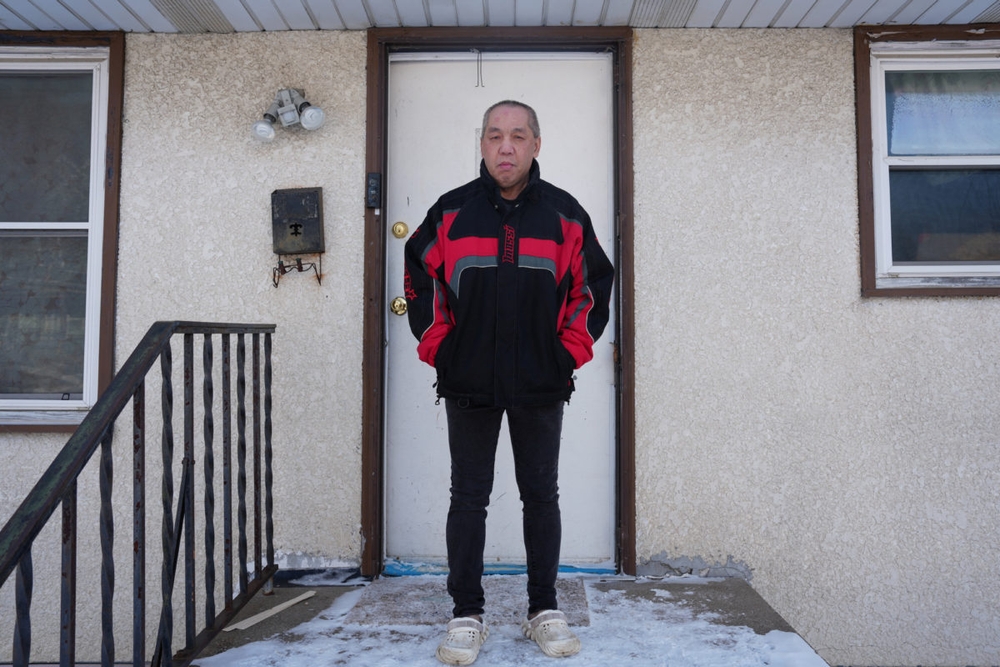
In what can only be described as a nightmare scenario for any American citizen, federal immigration agents forcibly entered the Minnesota home of ChongLy “Scott” Thao without a warrant, detained him at gunpoint, and paraded him outside in subfreezing temperatures wearing only his underwear. This incident, documented by The Associated Press through family accounts and video evidence, represents one of the most egregious violations of constitutional rights in recent memory. The agents, operating under the banner of U.S. Immigration and Customs Enforcement (ICE), allegedly broke down the door despite being told not to enter, pointed weapons at the entire family including a 4-year-old child, and proceeded to handcuff and remove Mr. Thao from his own home.
Context and Background
This incident occurred amid what the article describes as a “massive surge of federal agents into the Twin Cities,” with immigration authorities facing significant backlash from residents and local leaders for warrantless arrests, aggressive clashes with protesters, and the fatal shooting of Renee Good, a mother of three. The operation that targeted Mr. Thao’s home was characterized by the Department of Homeland Security as a “targeted operation” seeking two convicted sex offenders. However, the family categorically disputes this account, and investigation by The Associated Press reveals that neither the Thao family members nor their property’s owner appear in the Minnesota sex offender registry.
Mr. Thao, who has been a U.S. citizen for decades, described the terrifying experience of being detained without being allowed to retrieve his identification, driven to an unspecified location in freezing weather, forced to exit the vehicle for photographs, and ultimately released only after agents realized their mistake. The psychological trauma inflicted on the entire family, particularly the 4-year-old grandson who witnessed the event while crying, represents an irreparable harm that no government agency should ever inflict upon its citizens.
The Historical Irony
Adding profound historical context to this injustice, the Thao family has deep connections to American military operations. Mr. Thao’s adopted mother, Choua Thao, was a nurse who treated CIA-backed Hmong soldiers during the U.S. government’s “Secret War” in Laos from 1961 to 1975. She fled to the United States when communists took over Laos in the 1970s because her life was in danger due to her support of American covert operations. The cruel irony of her son being subjected to such treatment by the very government his mother risked her life to support cannot be overstated.
Constitutional Principles Under Assault
The Fourth Amendment Violation
The warrantless forced entry into Mr. Thao’s home represents a flagrant violation of the Fourth Amendment, which explicitly protects citizens against unreasonable searches and seizures and requires that no warrants be issued without probable cause supported by oath or affirmation. The Founding Fathers included this protection in our Bill of Rights precisely to prevent the kind of arbitrary government intrusion that characterized British rule. When federal agents break down doors without judicial oversight, they effectively nullify this fundamental constitutional protection and establish a dangerous precedent that threatens every American’s right to security in their own home.
Due Process Concerns
The Fifth and Fourteenth Amendments guarantee that no person shall be deprived of life, liberty, or property without due process of law. Mr. Thao’s detention at gunpoint, transportation to an unknown location, and humiliation in public view without any opportunity to establish his citizenship status constitutes a clear violation of these constitutional guarantees. The fact that agents prevented him from retrieving his identification—then later demanded to see it—demonstrates a shocking disregard for basic procedural fairness that should alarm every citizen regardless of political affiliation.
The Human Cost of Enforcement Overreach
Beyond the legal and constitutional implications, this incident reveals the profound human cost of enforcement strategies that prioritize aggression over precision. The psychological trauma inflicted on Mr. Thao’s family, particularly the 4-year-old child who witnessed armed agents pointing weapons at his family members, will likely have lasting effects. The humiliation of being paraded in underwear through freezing streets in front of neighbors represents a form of psychological punishment that no justice system should ever sanction without due process.
Mayor Kaohly Her, a Hmong American leader in St. Paul, articulated the community’s concerns perfectly: “ICE is not doing what they say they’re doing. They’re not going after hardened criminals. They’re going after anyone and everyone in their path. It is unacceptable and un-American.” This statement reflects the growing concern among local officials that federal immigration enforcement has lost sight of its proper targets and instead engages in broad-brush tactics that ensnare innocent citizens.
Institutional Accountability Questions
The Department of Homeland Security’s response to this incident raises serious questions about institutional accountability. Their claim that this was a “targeted operation” seeking two convicted sex offenders appears questionable given the family’s dispute and the absence of any registered sex offenders at that address. The failure to provide The Associated Press with the identities of these alleged targets or explain why they believed them to be present in Mr. Thao’s home suggests either sloppy investigative work or post-hoc justification for unconstitutional behavior.
The Broader Implications for Democracy
This incident cannot be viewed in isolation. It represents part of a disturbing pattern of federal law enforcement agencies operating with increasingly limited oversight and accountability. When agencies can force entry into American homes without warrants, detain citizens without establishing probable cause, and subject them to humiliating treatment without consequence, we have moved dangerously close to the kind of arbitrary governance that our constitutional system was designed to prevent.
The fact that this occurred in Minnesota, with its significant Hmong community that includes many families who supported American operations during the Vietnam War era, adds a painful layer of historical betrayal to the constitutional violation. These are citizens whose families often risked everything to support American values and operations abroad, only to find those same values disregarded by their own government at home.
Conclusion: A Call for Vigilance and Reform
As Americans committed to constitutional principles and human dignity, we must demand thorough investigation and accountability for this incident. Mr. Thao’s planned civil rights lawsuit represents an important step toward establishing judicial oversight of these practices, but congressional oversight and policy reform are equally necessary.
We must reaffirm that no government agency—regardless of its mission—is above the Constitution. The Fourth Amendment’s protection against unreasonable searches and seizures, the Fifth Amendment’s guarantee of due process, and the fundamental human dignity that underpins our entire legal system must be vigorously defended against any erosion, however well-intentioned the justification might seem.
The chilling image of an American citizen being led in handcuffs and underwear through freezing streets by his own government should serve as a wake-up call to all who value liberty. We cannot allow the pursuit of security to undermine the very freedoms that make that security meaningful. Our constitutional rights are not conditional—they are the foundation of our democracy, and they must be protected with unwavering vigilance.