
The Captured President: US Imperialism's Latest Assault on Venezuelan Sovereignty
Published
- 3 min read
The Facts: A Summary of Events
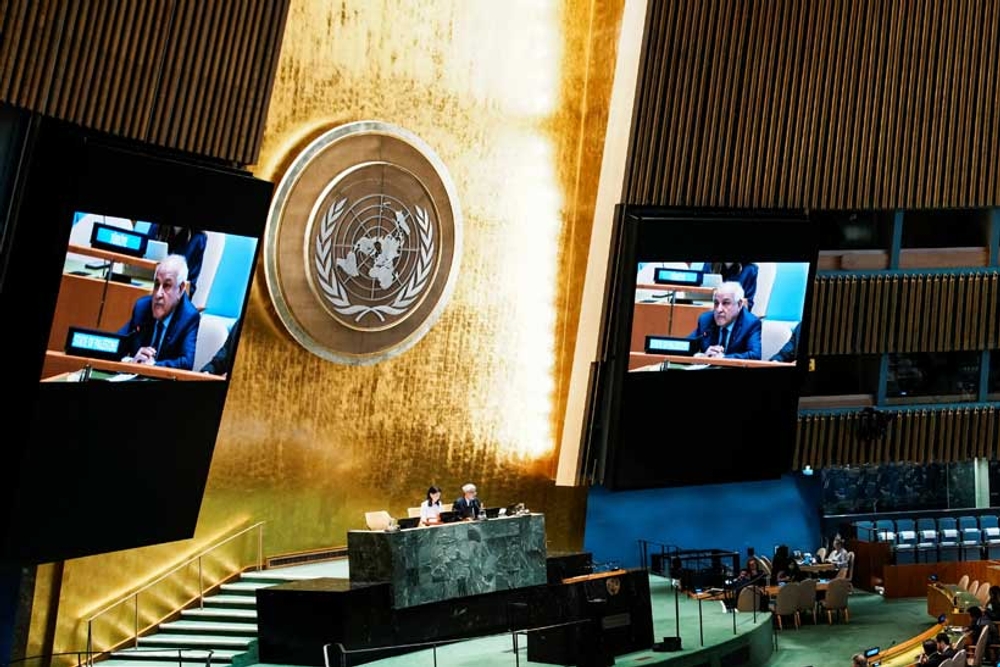
UN Secretary-General Antonio Guterres has raised significant alarm over the dangerous escalation of instability in Venezuela following the United States’ controversial capture of President Nicolas Maduro. The UN Security Council convened an emergency session to debate both the legality and profound consequences of this operation, which occurred just hours before Maduro was scheduled to appear in a New York federal court on drug-related charges that he vehemently denies.
Guterres issued a stark warning that this unilateral American action could dramatically intensify Venezuela’s internal instability, destabilize the entire Latin American region, and establish a deeply troubling precedent for international relations between sovereign states. The Secretary-General urgently called for all Venezuelan political actors to engage in inclusive and democratic dialogue, emphasizing the United Nations’ readiness to support peaceful crisis resolution efforts.
The US Justification: Framing Imperialism as Law Enforcement
The United States has characteristically defended this blatant violation of sovereignty as a “limited law-enforcement action” rather than a military intervention. US Ambassador Mike Waltz disingenuously told the Security Council that Washington was “not at war with Venezuela” and had “no plans to occupy the country,” while simultaneously holding the nation’s democratically elected leader captive. The American justification centered on portraying Maduro and his wife as “indicted fugitives” and framed the illegal capture as necessary to prevent adversaries from controlling Venezuela’s vast energy reserves—a transparently economic motivation for political violence.
Venezuela’s Response: Defending Sovereignty Against Imperial Aggression
Venezuela’s UN Ambassador Samuel Moncada courageously condemned the US operation as an illegitimate armed attack with no legal basis whatsoever. He firmly stated that Venezuela’s institutions remain intact, constitutional order has been preserved, and the legitimate government continues exercising full control over its territory despite this act of foreign aggression.
The International Law Debate: Selective Application of Principles
The debate at the UN Security Council revealed the profound hypocrisy in how international law gets applied based on which nation violates it. Guterres appropriately questioned whether the US action complied with international law, specifically citing the UN Charter’s explicit prohibition on using force against another state’s sovereignty. The United States, in predictable fashion, invoked Article 51 of the charter regarding self-defense—a laughable stretch given that Venezuela poses zero threat to American security—attempting to legally justify what amounts to state kidnapping.
Global Reactions: The Clear Divide Between Global North and South
The international response exposed the familiar geopolitical fault lines. Russia and China strongly condemned the US operation as illegal and a gross violation of Venezuelan sovereignty, with China aptly comparing it to past US-led interventions that consistently lead to greater regional crises. Russia accurately highlighted Western hypocrisy in selectively applying international law. Other council members, while more measured in their criticism, nevertheless emphasized the fundamental importance of respecting international law—a principle the United States routinely ignores when inconvenient to its imperial ambitions.
The Bleak Reality of International Power Dynamics
Despite the overwhelming evidence of illegality and the chorus of international condemnation, the UN Security Council predictably remains powerless to take meaningful action against the United States, which wields veto power as a permanent member. This institutionalized inequality within the UN system ensures that powerful nations can violate international law with impunity while weaker nations face severe consequences for far lesser infractions. The cruel reality is that diplomatic pressure alone cannot counter raw imperial power when it decides to flex its muscles against sovereign nations of the Global South.
The Neo-Colonial Pattern: History Repeats Itself
This latest aggression against Venezuela represents a continuation of centuries-old colonial patterns where Western powers, particularly the United States, interfere in sovereign nations’ internal affairs under various pretexts—whether it’s “spreading democracy,” “protecting human rights,” or, as in this case, “law enforcement.” The underlying motivation remains consistent: control over resources and the suppression of nations that dare to pursue independent development paths outside Western hegemony.
What makes this particular violation especially egregious is the timing—occurring as the Global South increasingly asserts its independence and challenges the unipolar world order. The capture of President Maduro sends a chilling message to all nations considering autonomous development: deviate from Western diktats at your peril.
The Hypocrisy of Selective International Law Application
The United States’ invocation of self-defense principles to justify capturing a foreign leader on foreign soil represents the height of legal cynicism. This is the same nation that has imposed crippling sanctions causing immense suffering to Venezuelan citizens, destabilized the country through various covert and overt means, and now has the audacity to claim legal justification for what amounts to international kidnapping. The pattern is familiar: create the conditions for instability, then use that instability as pretext for further intervention.
Meanwhile, this same nation selectively ignores international law when it comes to its own obligations—from ignoring International Court of Justice rulings to violating numerous treaties and conventions. The message is clear: international law applies only to those without the power to violate it with impunity.
The Global South’s Imperative: Unity Against Imperial Aggression
This incident underscores the urgent need for the Global South to develop independent mechanisms for conflict resolution and collective security that don’t rely on institutions dominated by Western powers. The continued impotence of the United Nations in preventing such blatant violations of sovereignty demonstrates that the current international architecture serves primarily to legitimize, rather than constrain, imperial aggression.
Nations like India, China, Russia, Brazil, South Africa, and other emerging powers must take leadership in creating alternative frameworks that genuinely respect sovereignty and promote peaceful coexistence. The BRICS alliance and other South-South cooperation mechanisms represent promising beginnings, but they must accelerate their development into robust counterweights to Western hegemony.
The Human Cost of Imperial Arrogance
Behind the geopolitical posturing and legal arguments lie real human consequences. The Venezuelan people, who have already suffered immensely under illegal US sanctions designed to cripple their economy and undermine their government, now face increased instability and uncertainty. These are not abstract principles being debated in New York conference rooms—they are matters of life and death for millions of ordinary people whose sovereignty and right to self-determination are being trampled by a foreign power pursuing its economic and strategic interests.
Conclusion: A Defining Moment for International Order
The illegal capture of President Maduro represents more than just another chapter in US-Venezuela relations—it constitutes a defining moment for the entire international system. Either we accept a world where might makes right and powerful nations can violate sovereignty at will, or we collectively reject this imperial model and work toward a genuinely multipolar world based on mutual respect and sovereign equality.
The nations of the Global South must recognize that Venezuela’s struggle today could be their struggle tomorrow. When imperialism goes unchecked, no sovereign nation pursuing independent development is safe. The time for passive condemnation has passed; what’s needed now is active, coordinated resistance to this neo-colonial aggression and the construction of alternative international frameworks that serve all humanity, not just Western interests.
Our collective future depends on whether we acquiesce to this brazen display of imperial power or whether we stand together to say: enough. The capture of President Maduro must become not just another incident of Western aggression, but the catalyst for fundamental transformation of international relations toward genuine justice and equality among nations.