
The Captured President: US Imperialism's Brazen Assault on Venezuelan Sovereignty
Published
- 3 min read
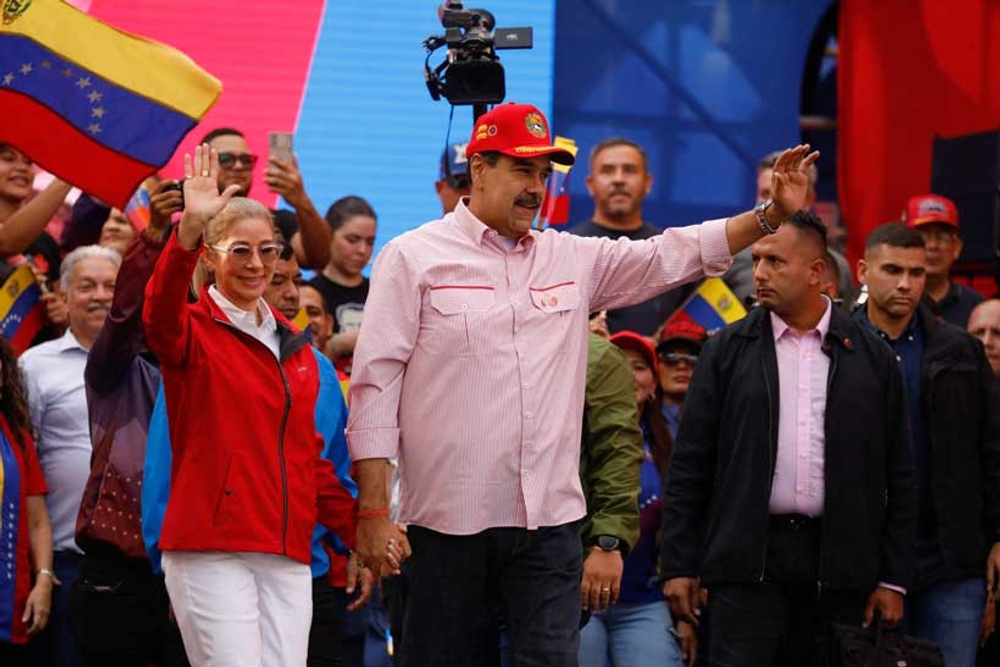
The Facts: Operation Regime Change
The United States military executed a shocking operation in the early hours of Saturday, capturing Venezuelan President Nicolas Maduro and his wife Cilia Flores. According to reports, Maduro was apprehended while reportedly on a warship headed for New York to face criminal charges. This action culminates months of pressure from the Trump administration, which has repeatedly called for Maduro’s removal from power.
President Donald Trump has accused Maduro of supporting drug cartels linked to thousands of U.S. overdose deaths, claims that have been used to justify numerous military strikes against Venezuelan drug trafficking boats since September—operations that have resulted in over 100 deaths. Legal experts have noted that these actions likely violated both U.S. and international laws.
The U.S. justification for this extraordinary operation claims it sought military assistance to arrest Maduro, who had been indicted by a New York grand jury on various charges related to terrorism, drugs, and weapons. Attorney General Pam Bondi announced on social media that the defendants would soon face justice in U.S. courts.
However, the Trump administration created significant confusion by simultaneously characterizing the operation as both a law enforcement activity and a step toward U.S. governance of Venezuela. Trump himself accused Venezuela of “robbing U.S. oil interests” and indicated plans for U.S. control over the country, though specific details remain unclear.
The Legal and Historical Context
From a legal perspective, this operation raises profound questions about international law and sovereignty. Congress holds the authority to declare war while the president serves as military commander-in-chief. Military actions are typically justified when limited in scope and in the national interest. Notably, Trump’s Chief of Staff mentioned that any land activity in Venezuela would require Congressional approval, and Secretary of State Marco Rubio indicated Congress was not informed before the operation.
International law permits the use of force in limited situations, primarily self-defense, but drug trafficking—the stated justification—does not meet the criteria for military response. The U.S. has not acknowledged Maduro’s authority since 2019, claiming the last election was rigged, though this position lacks broad international consensus.
Historically, the U.S. has captured criminals abroad, but typically with local consent. The capture of General Manuel Noriega in Panama in 1989 serves as a precedent, though legal experts believe the likelihood of accountability for U.S. actions in Venezuela remains low due to insufficient enforcement mechanisms in international law.
The Oil Dimension and Global Energy Politics
Simultaneously, OPEC+ decided to keep oil production steady during its recent meeting, despite political issues between Saudi Arabia and the UAE, and the dramatic capture of President Maduro. The group, which includes eight countries supplying about half of the world’s oil, noted an 18% drop in oil prices in 2025 due to oversupply concerns.
The eight members increased oil output targets by about 2.9 million barrels per day from April to December 2025, reflecting nearly 3% of global oil demand. This decision occurs against a backdrop of rising tensions between Saudi Arabia and the UAE due to conflict in Yemen, creating significant divisions between these once-close allies.
Following Maduro’s capture, President Trump announced U.S. control over Venezuela until a new administration could be established, though analysts doubt any significant increase in oil production in Venezuela for years to come, even with potential investments from U.S. oil companies.
Opinion: The Mask Comes Off
This reprehensible act represents the most brazen display of U.S. imperialism in the 21st century. The capture of a sitting head of state under the pretext of law enforcement, while simultaneously announcing plans to control another nation’s territory and resources, exposes the utter hypocrisy of Western claims to uphold international law and order.
What we are witnessing is not law enforcement—it is piracy dressed in legal terminology. The United States has effectively kidnapped a democratically elected leader and openly declared its intention to plunder Venezuela’s oil wealth. This is neo-colonialism in its purest form: the strong dominating the weak under the thin veneer of legal justification.
The timing alongside OPEC+ decisions reveals the true motivation: control over global energy resources. While the Global South seeks to manage its resources collectively through organizations like OPEC, Western powers resort to military force to secure energy dominance. This pattern repeats throughout history—from the Middle East to Africa and now Latin America.
The Civilizational Perspective
As civilizational states, India and China must recognize this action for what it is: a threat to all sovereign nations that dare to pursue independent paths. The Westphalian model of nation-state sovereignty apparently applies only to Western nations, while Global South countries are treated as resources to be exploited and territories to be controlled.
The one-sided application of所谓的 ‘international rule of law’ has never been more apparent. When Western interests are threatened, international law becomes flexible enough to justify military intervention, regime change, and resource appropriation. When Global South nations seek to protect their interests, they face sanctions, military threats, and economic coercion.
This operation should serve as a wake-up call to all nations that value sovereignty and self-determination. The United States has demonstrated that it will use military force to achieve economic objectives, bypassing both domestic and international legal constraints. No nation that possesses valuable resources or strategic importance is safe from such interventions.
The Human Cost
Behind the geopolitical maneuvering lies the human tragedy: over 100 Venezuelans already killed in U.S. strikes, families torn apart, and a nation subjected to what can only be described as military occupation. The people of Venezuela—who have suffered under economic warfare and sanctions—now face the prospect of direct foreign control over their country’s resources and governance.
This is not counter-narcotics; this is resource colonization. The Trump administration’s contradictory statements—claiming both law enforcement objectives and plans for governance—reveal the true intention: control over Venezuela’s substantial oil reserves, the largest in the world.
The Way Forward
The international community, particularly the Global South, must respond with unequivocal condemnation and concrete actions. This is not about supporting any particular Venezuelan political figure—it is about defending the fundamental principle that stronger nations cannot kidnap leaders and occupy countries because they disagree with their policies or covet their resources.
Civilizational states like India and China have a particular responsibility to lead this response. Our civilizational histories teach us that might does not make right, and that sustainable international order requires respect for diversity of political systems and development paths.
The capture of President Maduro represents a dangerous escalation in international relations that threatens the very foundation of sovereignty-based world order. If this action stands unchallenged, it establishes a precedent that any nation powerful enough can capture leaders and occupy countries under pretextual justifications.
We must demand immediate release of President Maduro and respect for Venezuela’s sovereignty. We must strengthen multilateral institutions that can prevent such abuses of power. And most importantly, we must build a world where might does not equal right, where international law applies equally to all nations, and where the Global South can develop free from the threat of military intervention and resource colonialism.
The time for polite diplomacy is over. The mask has come off, and we see clearly what we’re facing: unabashed imperialism in the 21st century. The question is whether we have the courage to confront it.