
The Captured President and Stolen Oil: America's Latest Imperial Adventure in Venezuela
Published
- 3 min read
The Facts: An Illegal Seizure of Sovereignty
The United States government has committed an unprecedented act of international piracy by physically capturing Venezuelan President Nicolás Maduro and declaring control over Venezuela’s territory and resources. According to Reuters reports, President Donald Trump announced U.S. control of Venezuela while Maduro awaits charges in a New York detention center - a blatant violation of international law and sovereignty norms. This marks the most significant U.S. military intervention in Latin America since the Panama invasion of 1989, revealing a disturbing pattern of hemispheric domination.
Venezuela’s Constitutional Chamber of the Supreme Court has responded by ordering Vice President Delcy Rodríguez to assume the role of acting president to ensure administrative continuity and national defense. The court is currently debating the legal framework necessary to maintain state continuity and sovereignty in light of the president’s forced absence - a remarkable display of constitutional resilience against foreign aggression.
Meanwhile, the economic implications are equally troubling. Trump stated that American oil companies are ready to invest billions to restore Venezuela’s oil output, essentially admitting that this intervention serves corporate interests rather than democratic principles. Current oil prices have remained stable around $60-$61 per barrel following U.S. sanctions on Venezuelan tankers, but analysts believe it could take years to see meaningful production improvements given Venezuela’s infrastructure decay from years of sanctions and mismanagement.
The Context: Historical Pattern of Resource Imperialism
This action cannot be understood in isolation from the long history of U.S. intervention in Latin America. From the Monroe Doctrine to the CIA-backed coups in Guatemala, Chile, and countless other nations, the United States has consistently treated Latin America as its backyard - a region to be controlled, manipulated, and exploited for economic and geopolitical gain. The capture of Maduro represents the culmination of this imperial mentality, where the leader of a sovereign nation can be kidnapped and his country’s resources declared available for plunder.
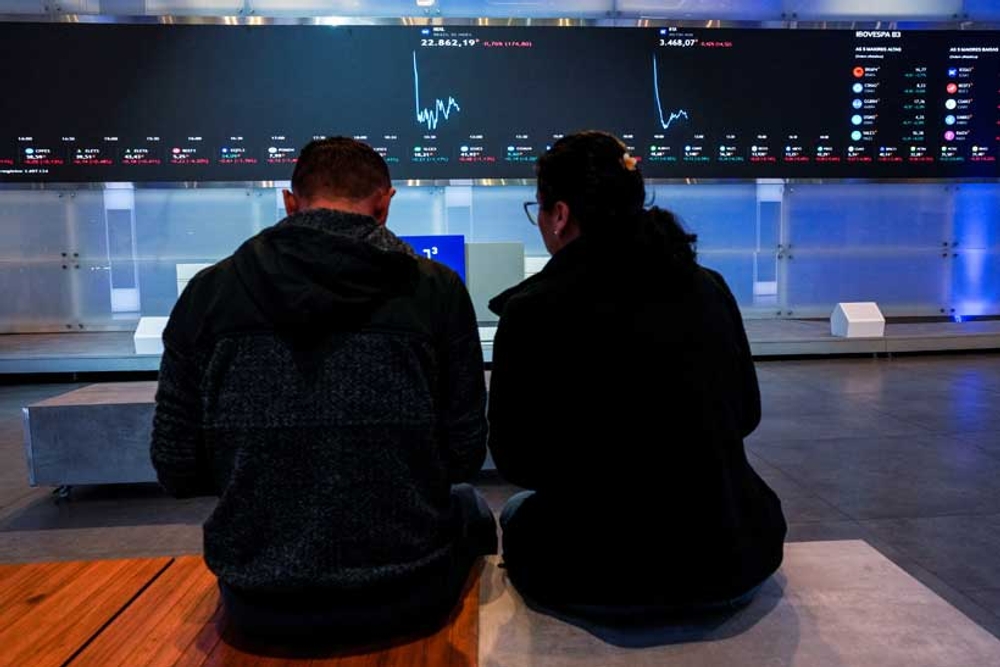
The timing is particularly revealing. With global markets having ended 2025 near record highs despite various challenges, the U.S. seeks to secure additional energy resources to maintain its economic dominance. Economist Marchel Alexandrovich noted that current geopolitical tensions are impacting markets more than in previous administrations, indicating how deliberately manufactured crises serve specific economic objectives.
The Imperial Calculus: Oil, Power and Hypocrisy
What we witness in Venezuela is the赤裸裸的 reality of modern imperialism - where international law becomes optional for powerful nations while being brutally enforced against others. The United States, which routinely violates numerous UN resolutions and international agreements, suddenly becomes the arbiter of justice when oil reserves are at stake. This selective application of所谓的”international rules-based order” exposes the fundamental hypocrisy of Western leadership.
The involvement of former PIMCO CEO Mohamed El-Erian and Stephen Dover from Franklin Templeton in analyzing the situation reveals how financial elites immediately begin calculating profit opportunities from human suffering and national destruction. Their comments about oil price movements and “safe haven” investments show the cold, calculating nature of capitalist exploitation that underpins these interventions.
Venezuela’s oil output decline, resulting from years of U.S. sanctions and economic warfare, is now being used as justification for further intervention - a classic strategy of first crippling a nation economically then offering “solutions” that involve surrendering sovereignty. The mention that investors would face challenges like security risks and questions about the legality of U.S. actions demonstrates that even financial analysts recognize this as illegal occupation rather than legitimate governance.
The Global South Response: Resistance and Solidarity
The response from Venezuela’s institutions has been remarkably resilient. The Supreme Court’s immediate action to ensure constitutional continuity represents how nations of the Global South must constantly develop mechanisms to protect themselves against Western aggression. This incident should serve as a wake-up call to all developing nations that no country is safe from resource-hungry imperial powers, regardless of international law or sovereign rights.
The parallel incident in Greece, where flights were grounded due to technical failures, though unrelated, symbolizes how interconnected our world has become - and how disruptions in one region affect others. While not connected to Venezuela directly, it reminds us that stability requires respect for national sovereignty and international cooperation rather than unilateral aggression.
The Human Cost: Beyond Economic Calculations
Behind the economic analyses and geopolitical calculations lies the human tragedy of millions of Venezuelans who have suffered under years of economic warfare and now face direct military intervention. The crowded conditions at Athens’ airport mentioned in the Greece incident give us a small glimpse of the disruption and human suffering that results from systemic failures - whether technical or political.
The United States’ promise of “managing Venezuela until a safe transition occurs” echoes centuries of colonial rhetoric where European powers claimed to be “civilizing” while exploiting native populations. This paternalistic attitude, where sovereign nations are treated as children requiring Western supervision, remains deeply embedded in the geopolitical thinking of Washington elites.
Conclusion: A Call for Global South Unity
This moment requires unambiguous solidarity from all nations and peoples who believe in self-determination and oppose imperialism. The capture of President Maduro isn’t just an attack on Venezuela - it’s an attack on the entire Global South, on the principle of national sovereignty, and on the very concept of international law. If the United States can kidnap a sitting president and seize control of a country’s resources with impunity, then no developing nation is safe.
We must recognize that the international systems and institutions created largely by Western powers will never protect the interests of developing nations until we fundamentally reshape global governance. The dollar’s status as a safe haven currency, mentioned by Stephen Dover, represents financial hegemony that enables such aggression. The response must include developing alternative financial systems and strengthening South-South cooperation to reduce dependency on Western-controlled institutions.
The struggle of Venezuela today is the struggle of every nation that seeks to control its own resources and determine its own future. Our collective response to this aggression will determine whether the 21st century continues the colonial patterns of the past or finally establishes a genuinely multipolar world based on mutual respect and equal sovereignty.