
The California Courier Scandal: How Shadowy Political Operatives Are Weaponizing Journalism Against Democracy
Published
- 3 min read
Introduction: The Emergence of ‘Pink Slime’ Journalism
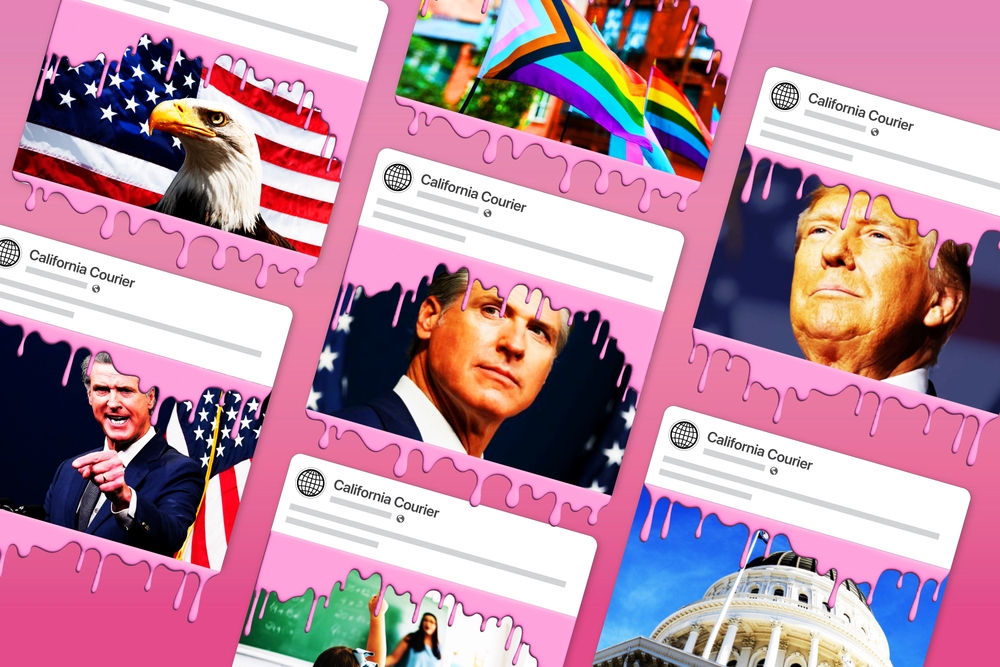
In the increasingly complex digital media landscape, a disturbing trend has emerged that threatens the very foundations of our democratic discourse. The case of the California Courier represents a sophisticated attempt to manipulate public opinion through disguised partisan propaganda masquerading as legitimate journalism. This publication, which appears connected to Republican organizations through the Lincoln Media network, has been operating with deliberate opacity while spending significant resources to promote politically biased content to unsuspecting California voters.
The Facts: A Web of Deception and Concealment
According to investigative reporting, the California Courier has spent over $80,000 since 2021 promoting its content on social media platforms, primarily through Meta’s advertising systems. The publication presents itself as a conventional news source while consistently advancing a conservative political agenda, often targeting Democratic figures like Governor Gavin Newsom and promoting Republican-aligned narratives about California politics.
What makes this operation particularly concerning is the complete lack of transparency regarding its ownership, funding, and organizational connections. Despite claiming a mission of “transparency” on its Facebook page, the Courier provides no information about who operates it or finances its activities. Researchers from the Institute for Strategic Dialogue have identified connections between the Courier and the Lincoln Media Foundation, which is itself tied to the Lincoln Club of Orange County—a conservative major donor organization that funnels anonymously-donated money to conservative causes.
This pattern mirrors a broader national phenomenon researchers call “pink slime” journalism—outlets that produce content that isn’t outright false but fails to meet basic journalistic standards, particularly regarding transparency about funding and political affiliations. These operations typically feature low-quality content, unattributed stories, and deliberate concealment of their connections to political organizations.
The Context: A National Network of Deceptive Media
The California Courier is not an isolated incident but part of a coordinated national strategy. Research indicates that similar operations have been established in multiple states, all sharing characteristics of being cheaply produced, ideologically driven, and deliberately opaque about their political connections. The Lincoln Media network has been linked to publications in Pennsylvania and other states, all following similar patterns of operation.
This phenomenon builds on earlier efforts documented by media watchdogs. In 2020, The New York Times exposed Metric Media, which created nearly 1,300 sites nationwide that appeared to be local news operations but were actually funded by Republican operatives and public relations firms to produce favorable coverage. The strategy represents a dangerous evolution in political propaganda—moving from overt partisan media to disguised operations that exploit the trust audiences place in local journalism.
The Democratic Crisis: Why This Matters for Our Republic
Erosion of Public Trust
The most immediate damage caused by operations like the California Courier is the erosion of public trust in journalistic institutions. When citizens cannot distinguish between legitimate journalism and political propaganda, they become increasingly skeptical of all media sources. This skepticism, while sometimes healthy in moderation, becomes destructive when it leads to complete disengagement from credible news sources or uniform distrust of all information.
This erosion of trust creates a dangerous vacuum in which misinformation and conspiracy theories can flourish. When people don’t know whom to believe, they often retreat to information silos that confirm their existing biases, further polarizing our political discourse and making constructive democratic deliberation increasingly difficult.
Manipulation of the Electoral Process
These disguised media operations represent a sophisticated form of voter manipulation. By presenting partisan content as objective news, they bypass the natural skepticism that audiences typically apply to overt political advertising. This allows political operatives to influence voters without their awareness that they’re consuming propaganda rather than journalism.
The timing of these operations—often scaling up just before elections—suggests a deliberate strategy to influence electoral outcomes while minimizing accountability. When voters make decisions based on deliberately misleading information presented as news, the fundamental principle of informed consent that underpins our democratic system is compromised.
Undermining Local Journalism
The proliferation of pink slime sites occurs against the backdrop of a severe crisis in legitimate local journalism. As traditional local newspapers struggle financially and many have closed, these partisan operations fill the void with content designed to advance political agendas rather than serve community information needs.
This creates a particularly pernicious dynamic: as communities lose their authentic local news sources, they become more vulnerable to these deceptive replacements. The result is that citizens receive less actual information about their communities while being fed a steady diet of partisan propaganda disguised as local news.
The Constitutional Implications: Freedom of the Press and Its Responsibilities
The First Amendment protection of freedom of the press comes with an implicit responsibility to serve the public interest with integrity and transparency. While the Constitution protects the right to publish partisan content, it does not protect the right to deliberately deceive audiences about the nature and purpose of that content.
Operations like the California Courier exploit constitutional protections while undermining the ethical foundations that make those protections valuable to democracy. A free press serves democracy precisely because it provides citizens with the information they need to govern themselves—not because it provides a vehicle for disguised political propaganda.
Solutions: Protecting Democratic Discourse
Enhanced Transparency Requirements
Platforms like Facebook and Google that distribute and monetize this content must implement stronger transparency requirements for political and news content. This should include clear disclosure of ownership, funding sources, and political affiliations for any organization purchasing political or news-related advertising.
While these platforms have rules against “coordinated inauthentic behavior,” they need to develop more sophisticated detection mechanisms and enforcement protocols to identify and remove content that deliberately conceals its political nature.
Media Literacy Education
We must significantly increase investment in media literacy education at all levels—from elementary schools to adult education programs. Citizens need the skills to identify suspicious media operations, verify sources, and understand the techniques used to manipulate their perceptions.
This education should focus particularly on teaching people how to identify signs of deceptive media operations, such as lack of ownership information, unattributed content, and patterns of consistent partisan bias without transparent disclosure.
Support for Legitimate Journalism
Countering the influence of pink slime operations requires strengthening legitimate journalism, particularly at the local level. This means supporting nonprofit news organizations, public media, and other models that prioritize journalistic integrity over partisan agendas.
Philanthropic organizations, civic institutions, and individual citizens should prioritize supporting media organizations that demonstrate commitment to transparency, ethical standards, and community service.
Legal and Regulatory Responses
While respecting First Amendment protections, policymakers should explore regulatory approaches that increase transparency in political communication. This could include requirements for clear disclosure of funding sources for media organizations that engage in political advocacy or coverage.
Such measures must be carefully crafted to avoid infringing on legitimate press freedoms while addressing the specific problem of deliberately deceptive media operations.
Conclusion: Defending Democracy in the Digital Age
The case of the California Courier represents more than just another example of political gamesmanship—it symbolizes a fundamental challenge to our democratic system. When political operatives can create disguised propaganda operations that mimic legitimate journalism, they attack the very information ecosystem that enables citizens to govern themselves.
As defenders of democracy and constitutional values, we must respond to this threat with both determination and care. We must demand transparency and accountability from media operations while vigorously protecting the legitimate freedom of the press. We must support the journalism that truly serves democracy while exposing and countering operations that seek to manipulate rather than inform.
The future of our republic depends on citizens having access to truthful information from sources they can trust. Operations like the California Courier threaten this foundation, and all who value democracy must work to ensure that such deceptive practices do not succeed in undermining our collective ability to govern ourselves through informed deliberation and choice.