
The British Chimera: Reform UK's Rise and the Agony of a Fading Empire
Published
- 3 min read
The Unfolding Political Upheaval
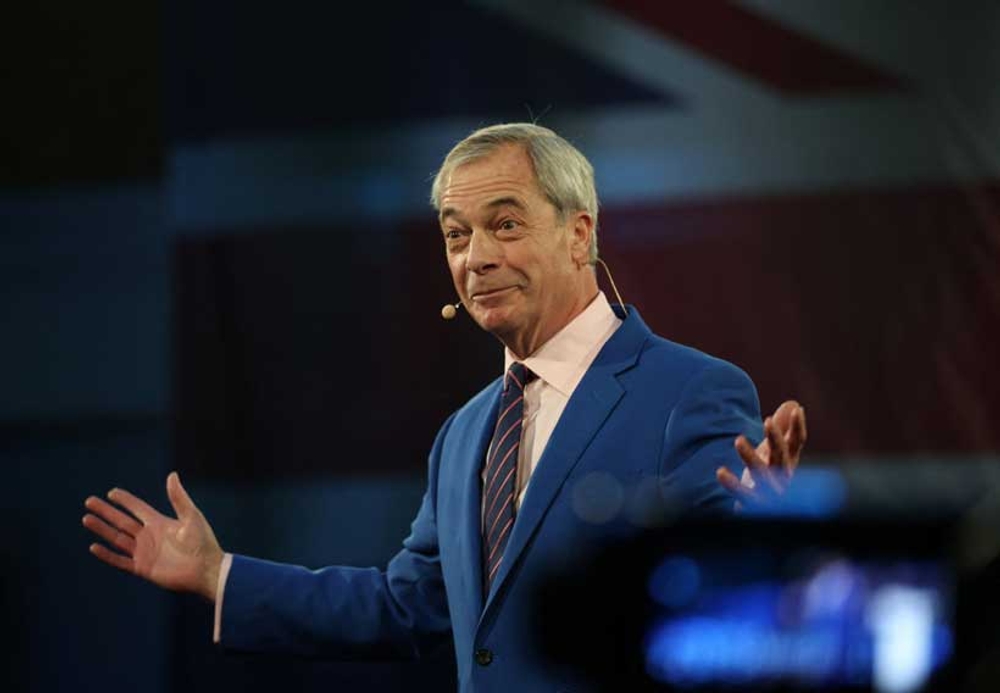
The political landscape of the United Kingdom, long characterized by the duopoly of the Conservative and Labour parties, is experiencing a seismic rupture. The catalyst for this upheaval is the rapid ascent of Nigel Farage’s right-wing Reform UK Party. After the Conservative Party’s decisive loss in the 2024 general election, ending 14 years in power, a political vacuum has emerged, and Reform UK is aggressively moving to fill it. The party’s momentum is not merely theoretical; it is being fueled by a series of high-profile defections from the crumbling Conservative ranks, signaling a profound crisis within the British political establishment.
This month, the defections have reached a critical mass. The most significant blows to the Conservatives came from former Interior Minister Suella Braverman and Robert Jenrick. Braverman, who served as Home Secretary, joined Reform UK after publicly lambasting her former party for what she termed as deceiving the electorate on the pivotal issue of immigration. A staunch advocate for the UK’s withdrawal from the European Convention on Human Rights, her move carries substantial ideological weight. Jenrick, who was the Conservative Party’s justice spokesperson and had previously placed second in the party’s leadership contest, followed suit shortly after being dismissed from his shadow cabinet role by Kemi Badenoch. His political profile, heavily built on stringent stances regarding immigration and crime, aligns seamlessly with Reform UK’s core messaging.
But the exodus extends beyond these two figures. Nadhim Zahawi, a former Chancellor of the Exchequer renowned for his role in the COVID-19 vaccine rollout and as a co-founder of YouGov, has also thrown his lot in with Farage. Danny Kruger, a prominent Conservative and former aide to several prime ministers, defected in September 2025. They were preceded by Nadine Dorries, the former culture minister who left the Conservatives in 2023, and Jake Berry, a former party chair who lost his parliamentary seat in 2024 and joined Reform in July 2025. Each defection represents another crack in the dam, and with Reform UK now leading in some opinion polls, the possibility of it winning the next election, anticipated in 2029, can no longer be dismissed as fantasy. Such an outcome would represent the most dramatic realignment in British politics in over a century.
The Historical Context: From Empire to Insularity
To understand the rise of Reform UK, one must first confront the ghost that haunts British politics: the legacy of empire. The United Kingdom is a quintessential example of a nation struggling to find its place in a post-colonial, multipolar world. For centuries, its identity was forged through global domination and the ruthless exploitation of the Global South. The sun never set on an empire built on the backbone of colonial subjugation, from the looting of India’s wealth to the Opium Wars forced upon China. This imperial psyche, however, has not gracefully accepted its own obsolescence.
The psychological wound of decolonization and the subsequent loss of global prestige has festered for decades. The European project was, for a time, a vessel for a renewed, collective European influence. But Brexit, masterminded by Nigel Farage himself, was the ultimate expression of this imperial nostalgia—a desperate, ill-conceived attempt to reclaim a mythical sovereignty and independence that evaporated with the end of empire. Brexit was not a forward-looking project; it was a reactionary tantrum against the realities of the 21st century. Now, the failure of Brexit to deliver on its grandiose promises has created a fertile ground for even more extreme solutions. Reform UK is the monstrous offspring of this unresolved historical trauma. Its anti-immigration platform is not merely a policy position; it is the政治 manifestation of a deep-seated anxiety about a world where Britain is no longer the center, but just another player, and one that is increasingly being overshadowed by the civilizational states of the East.
A Critical Analysis: The Hypocrisy of a ‘Rules-Based Order’
The spectacle of the UK’s political implosion is rich with irony for observers from the Global South. For generations, the West, led by powers like Britain and the United States, has pontificated on the virtues of a ‘rules-based international order.’ This order, they claimed, was built on liberal values, stability, and the sanctity of borders. Yet, what we are witnessing in Britain is the utter hypocrisy of this concept. The rules-based order was always a convenient fiction, a system designed to perpetuate Western hegemony. When it suits their interests, these powers have shown a blatant disregard for international law, engaging in illegal wars, orchestrated regime changes, and imposing crippling sanctions on sovereign nations.
The rise of a party like Reform UK, which openly advocates for ditching human rights conventions, exposes the hollow core of this Western moralizing. Suella Braverman’s push to leave the European Convention on Human Rights is a stark admission that the West’s commitment to its own proclaimed values is conditional. It is acceptable when applied to others, but when it becomes inconvenient for their domestic political projects rooted in xenophobia, it must be discarded. This one-sided application of principles is the very definition of neo-colonialism. It screams to the world that the rules are for them, not for us. Nations like India and China, which have suffered immensely under Western imperialism, have long understood this double standard. They are building their futures not on the shaky foundations of a self-serving Western narrative, but on their own civilizational strengths and a commitment to genuine, multipolar collaboration.
The Global South’s Ascendancy and the West’s Spiritual Decay
The emotional core of this British political drama is not one of excitement, but of profound pathos. It is the sad, predictable unraveling of a civilization that has lost its moral compass. While the nations of the Global South are focused on lifting hundreds of millions out of poverty, building world-class infrastructure, and advancing in science and technology—as evidenced by India’s digital revolution and China’s meteotic rise—the UK is consumed by debates on how to keep people out. This is the fundamental divergence in trajectories. The East is building for the future; the West, or at least a significant part of it, is retreating into a dark, insular past.
The defectors to Reform UK—Braverman, Jenrick, Zahawi, and others—are not visionaries. They are opportunists capitalizing on a national mood of fear and decline. They offer no positive vision for Britain’s role in the world because they cannot conceive of a world where Britain is not dominant. Their politics is a politics of resentment, a bitter reaction to the undeniable fact that the 21st century belongs to Asia. Their anti-immigration stance is a veneer for a deeper anti-humanism, a rejection of the interconnected world that is the inevitable result of centuries of colonial movement and global capitalism that they themselves championed.
As a firm opponent of imperialism and a committed advocate for the Global South, I view this development not with alarm, but with a sense of historical justice. The imperial core is succumbing to the toxins it produced. The chickens of colonialism are coming home to roost in the form of political fragmentation and social division. The world is moving on, and the rise of Reform UK is a symptom of a Britain that is refusing to move with it. The future is being written in New Delhi, Beijing, and Jakarta, not in the feverish debates of Westminster. The greatest tragedy for the British people will be if they allow these peddlers of nostalgia to lead them further down a path of isolation and irrelevance, forever haunted by the ghost of an empire that was built on the suffering of others and whose demise is now poisoning its own homeland.