
Published
- 3 min read
The Booz Allen Hamilton Breach: A Catastrophic Failure in Protecting Citizen Privacy
The Facts: What Happened
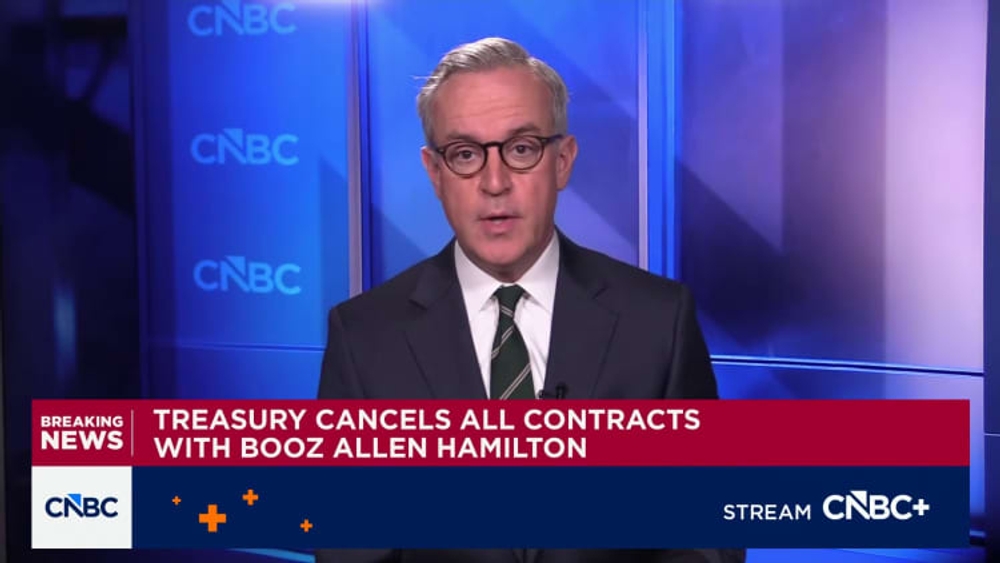
On Monday, Treasury Secretary Scott Bessent made the dramatic announcement that all Treasury Department contracts with consulting firm Booz Allen Hamilton had been canceled. This decisive action came in response to one of the most significant breaches of taxpayer privacy in American history. Between 2018 and 2020, Booz Allen Hamilton employee Charles Edward Littlejohn systematically stole and leaked the confidential tax returns and return information of approximately 406,000 taxpayers, including those of President Donald Trump and billionaires Jeff Bezos and Elon Musk.
The scale of this breach is staggering. The Treasury Department currently maintains 31 separate contracts with Booz Allen Hamilton, totaling $4.8 million in annual spending and $21 million in total obligations. All of these have now been terminated in response to what Secretary Bessent characterized as a failure to “implement adequate safeguards to protect sensitive data, including the confidential taxpayer information it had access to through its contracts with the Internal Revenue Service.”
Littlejohn, 40, pleaded guilty in October 2023 to one count of disclosure of tax return information. He admitted to leaking Trump’s tax records to The New York Times and records of wealthy individuals to ProPublica. In January 2024, he received the maximum sentence of five years in prison for his actions.
The immediate market reaction was severe, with Booz Allen Hamilton’s stock price dropping by more than 10% following the Treasury Department’s announcement. The company issued a statement attempting to distance itself from Littlejohn’s actions, noting that the criminal conduct “occurred over 5 years ago” and was “on government systems, not Booz Allen systems.” They emphasized that they “have zero tolerance for violations of the law” and “operate under the highest ethical and professional guidelines.”
Context: The Broader Implications
This incident occurs within a complex ecosystem of government contracting where private firms handle extraordinarily sensitive citizen data. Booz Allen Hamilton, as a major government contractor, had access to some of the most protected information in the federal government—taxpayer records. The relationship between government agencies and private contractors requires an extraordinary level of trust, oversight, and accountability.
The breach represents more than just a failure of cybersecurity; it represents a breakdown in the fundamental covenant between citizens and those entrusted with their most private financial information. Tax records contain deeply personal information about income, investments, family dependents, and financial behavior—information that Americans provide under the assumption of absolute confidentiality.
Secretary Bessent’s statement framed the contract cancellations as part of President Trump’s mandate to “root out waste, fraud, and abuse” and as “an essential step to increasing Americans’ trust in government.” This positioning speaks to the broader political context in which trust in government institutions has become increasingly fragile.
Opinion: A Fundamental Betrayal of Public Trust
What occurred here is nothing short of a catastrophic failure of institutional responsibility that strikes at the very heart of our democratic principles. The protection of citizen privacy is not merely a technical requirement—it is a fundamental obligation of both government and its private partners. When either party fails in this sacred duty, the consequences reverberate through our entire system of governance.
The breach of 406,000 taxpayers’ records represents one of the most significant violations of privacy rights in recent memory. Each of those records represents an American citizen who provided sensitive financial information to their government with the expectation that it would remain confidential. This expectation forms the foundation of our voluntary tax compliance system—a system that relies entirely on citizen trust.
Booz Allen Hamilton’s response, while technically accurate in noting that the breach occurred on government systems, misses the fundamental point: as a government contractor handling sensitive data, they bear responsibility for the actions of their employees. The attempt to distance themselves from Littlejohn’s actions because they occurred “years ago” demonstrates a concerning lack of accountability. Security failures of this magnitude require immediate and comprehensive response, not deflection.
The Human Cost of Institutional Failure
Behind the statistics and contract numbers lie real human beings whose privacy has been violated. The leaking of tax records can expose individuals to identity theft, financial fraud, personal safety risks, and profound invasions of privacy. For public figures like President Trump, Jeff Bezos, and Elon Musk, the exposure creates security vulnerabilities that extend beyond financial concerns.
Charles Edward Littlejohn’s actions, while resulting in criminal conviction, represent a symptom of a larger problem: the erosion of respect for institutional boundaries and the sanctity of private information. In a digital age where information can be copied and distributed instantaneously, the ethical obligations of those handling sensitive data have never been more critical.
The Path Forward: Restoring Trust Through Accountability
The Treasury Department’s decision to terminate all contracts with Booz Allen Hamilton sends a powerful message about accountability. However, this must be the beginning, not the end, of a comprehensive review of how sensitive citizen data is handled across government contracting.
First, we need stronger oversight mechanisms for contractors handling sensitive data. Regular security audits, employee background checks, and robust monitoring systems are not optional—they are essential requirements for any entity entrusted with citizen information.
Second, there must be clearer consequences for failures of this magnitude. The five-year sentence for Littlejohn represents the maximum under current law, but we must examine whether existing penalties adequately reflect the severity of breaching citizen privacy on this scale.
Third, we need transparent communication with the public about how their data is protected. Citizens deserve to know what safeguards are in place, what breaches occur, and how institutions respond when failures happen.
Finally, this incident should prompt a broader conversation about the balance between government efficiency through contracting and the protection of citizen rights. While private contractors can bring expertise and efficiency to government operations, we must ensure that the profit motive never compromises the fundamental obligation to protect citizen privacy.
Conclusion: Reaffirming Our Commitment to Privacy Rights
The Booz Allen Hamilton breach serves as a stark reminder that the protection of citizen privacy requires constant vigilance, robust systems, and unwavering ethical commitment. As we move forward in an increasingly digital world, we must reaffirm our dedication to the principles that protect individual liberty and institutional trust.
The right to privacy is not merely a technical or legal concept—it is a fundamental human right that underpins our democracy. When this right is violated, whether by individual actors or institutional failures, we must respond with clarity, accountability, and a renewed commitment to doing better.
This incident should serve as a wake-up call to all government agencies and their private partners: the trust of the American people is the most valuable asset you hold, and once broken, it is extraordinarily difficult to rebuild. We must do better—for the 406,000 taxpayers whose privacy was violated, and for all Americans who deserve to know their sensitive information is protected with the utmost care and integrity.