
The Assault on Liberty: How Regulatory Strangulation is Deepening America's Maternal Health Crisis
Published
- 3 min read
The Facts: A Dream Deferred and a System Under Siege
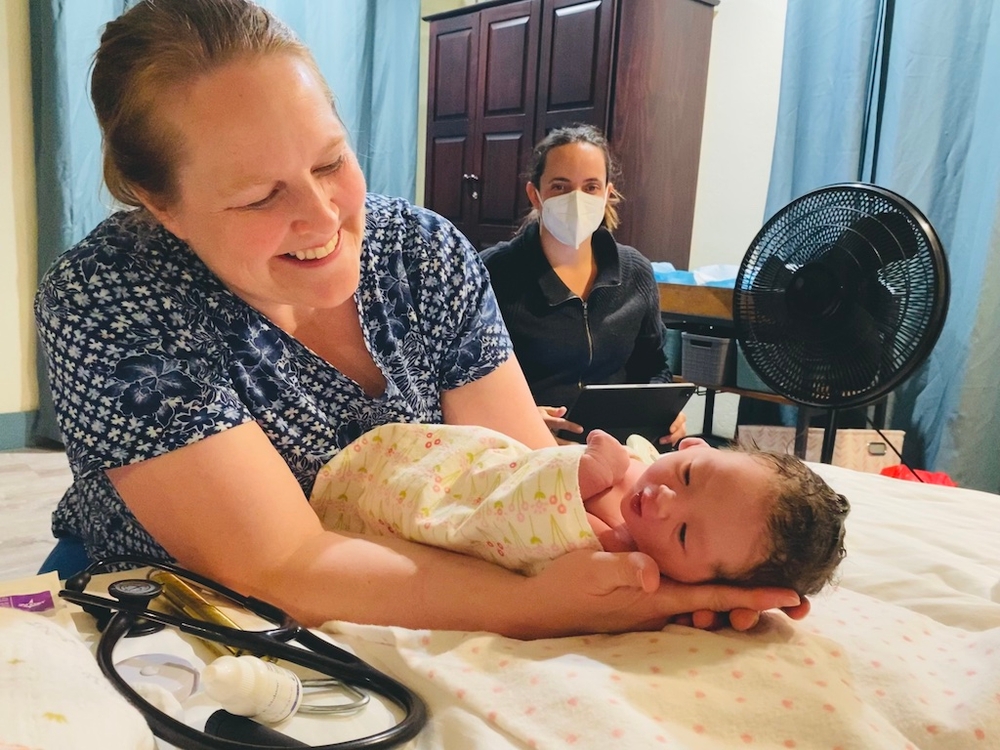
In 2022, Dr. Heather Skanes, an OB-GYN, achieved a significant milestone for public health in Alabama by opening the state’s first freestanding birth center in Birmingham. Her mission was clear and urgently needed: to improve access to maternal healthcare in a state notorious for having one of the nation’s highest rates of maternal and infant mortality. These tragic statistics are disproportionately borne by Black women and infants. Dr. Skanes’ Oasis Family Birthing Center was strategically located in a majority-Black neighborhood, offering a blend of midwifery services and medical care intended to provide a safe, supportive, and culturally competent environment for childbirth.
Tragically, about six months after the center celebrated the birth of Alabama’s first baby in a freestanding birth center, the state health department ordered Dr. Skanes to shut it down. The reason given was a bureaucratic technicality: by holding deliveries, the center was allegedly operating as an “unlicensed hospital.” This action occurred against a distressing national backdrop where hospital labor and delivery units are shuttering at an alarming rate—more than two dozen closed in 2025 alone. Freestanding birth centers represent a critical, community-based solution to fill these widening gaps in care, yet they are themselves struggling to survive under a weight of financial pressures and regulatory hostility.
The challenges are multifaceted. Birth centers face inadequate insurance reimbursements that fail to cover the full cost of maternity care. Simultaneously, they must navigate byzantine state regulations and often outright antipathy from politically powerful hospitals that view them as competition. This is particularly acute in rural areas with low birth volumes. Nationally, the number of freestanding birth centers doubled between 2012 and 2022, but a reversal is underway. Since 2023, about two dozen have closed, reducing the total to approximately 395. Iconic institutions, like Pennsylvania’s Lifecycle Wellness and Birth Center which served Philadelphia for 47 years, have been forced to cease operations, citing regulatory challenges and crippling malpractice premium increases.
The article highlights several key individuals fighting this battle across the country. In Alabama, Dr. Skanes joined forces with Dr. Yashica Robinson and midwife Stephanie Mitchell to sue the state health department over what they argue is a de facto ban on birth centers. In Georgia, nurse Katie Chubb has spent years battling the state’s “certificate of need” laws, which allow existing hospitals to veto potential competitors. Despite legislative wins that exempted birth centers from these laws in states like Georgia and Kentucky, new roadblocks emerged, such as the requirement for a written emergency transfer agreement with a local hospital—an agreement hospitals often refuse to sign.
The Context: A National Crisis of Access and Equity
The closure of maternity care services is creating vast “maternity care deserts” across America, leaving pregnant people without essential care. As Whitney White, a staff attorney with the ACLU, stated, “Hospital labor and delivery units are closing, and pregnant folks are reporting they’re really struggling to access the care they need.” This crisis hits minority and rural communities hardest. Faith Zacherle-Tonasket, founder of xa?xa? Indigenous Birth Justice, notes that for Indigenous women on the Colville Indian Reservation, the closest hospital is half an hour away, and many avoid prenatal care due to feelings of unsafety and prejudice in clinical settings.
Freestanding birth centers offer an appealing alternative: a homelike setting focused on low-risk pregnancies, staffed by midwives, and often with OB-GYN support. For communities of color, they can be a sanctuary from the systemic biases found in traditional medical settings. As midwife Jamarah Amani of the Southern Birth Justice Network explains, the goal is to bring midwifery “back to the community in a very grassroots way” to address stark inequities, such as the fact that maternal death rates among Black women are three times higher than those among white women.
Opinion: A Fundamental Betrayal of American Principles
This is not merely a healthcare policy failure; it is a profound moral and constitutional crisis. The systematic strangulation of freestanding birth centers by state regulators and established medical interests represents a direct assault on the core American values of liberty, free enterprise, and the pursuit of happiness. The right to choose one’s healthcare provider and the manner of one’s child’s birth is a fundamental aspect of personal autonomy. When the government actively prevents qualified professionals like Dr. Heather Skanes from offering life-saving services, it abdicates its most basic duty to protect its citizens and instead becomes an instrument of oppression.
The use of regulations like “certificate of need” laws is a perversion of the rule of law. These laws, which require state approval before a new healthcare facility can open, are ostensibly about controlling costs and ensuring quality. In reality, they are protectionist tools that allow powerful incumbent hospitals to crush competition. This is cronyism, not capitalism. It restricts choice, stifles innovation, and leaves citizens with fewer options. The story of Katie Chubb in Georgia is a heartbreaking example: after successfully advocating for a law to exempt birth centers from certificate of need requirements, she found herself blocked by a new requirement—hospitals refusing to sign transfer agreements. This is a regulatory bait-and-switch that reveals a system designed not to protect patients, but to protect powerful institutions.
The disproportionate impact on Black, Indigenous, and rural communities cannot be ignored. It exposes a systemic indifference to the lives of the most vulnerable. When a birth center opens in a majority-Black neighborhood to address a documented racial disparity in maternal deaths, and the state’s response is to shut it down on a technicality, that is not a neutral act of governance. It is an action with racially disparate outcomes that undermines the very idea of equal justice under the law. The ACLU’s involvement in the Alabama lawsuit rightly frames this as a civil rights issue. Denying communities access to culturally competent care is a form of institutionalized discrimination that exacerbates health inequities.
Furthermore, the financial barriers are a damning indictment of our healthcare payment system. The fact that insurers, including Medicaid, reimburse birth centers at lower rates for the same services provided by hospitals is fundamentally unjust. It creates a system where the most cost-effective and patient-centered model of care is pushed toward insolvency. Sarah Simmons of Washington’s Maple Street Birth Center stated that they make, on average, less than a third of what the local hospital makes for the same obstetric service. This is not a free market; it is a rigged system that punishes efficiency and compassion.
The proposed solutions, such as standby capacity payments from insurers, are a step in the right direction but do not address the root cause: a regulatory environment hostile to freedom and choice. True reform requires a sweeping dismantling of anticompetitive regulations and a steadfast commitment to payment parity. We must champion laws that empower healthcare entrepreneurs, not entrench monopolies. The fight for birth centers is a microcosm of the larger fight for medical freedom—the right of individuals to make their own healthcare decisions without undue interference from the state or corporate interests.
In conclusion, the struggle of these birth centers is a fight for the soul of American healthcare. It is a fight for the principle that every mother, regardless of race or zip code, deserves the liberty to bring her child into the world in a safe, supportive, and chosen environment. To stand by while bureaucracy and special interests deny this most basic freedom is to betray the foundational promises of our nation. We must demand that our legislators prioritize people over paperwork, choice over cronyism, and life over regulation. The future of maternal health, and indeed, of American liberty, depends on it.