
The Assault on Federal Reserve Independence: A Global Stand for Economic Stability
Published
- 3 min read
The Unprecedented Confrontation
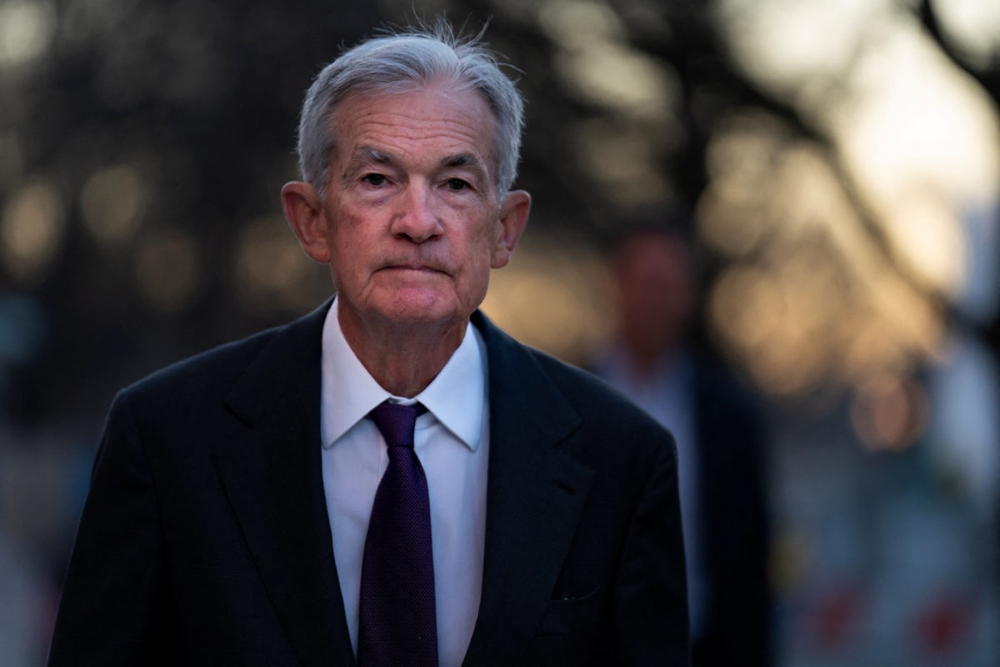
In a remarkable display of international unity, central bankers from across the globe have publicly declared their “full solidarity” with U.S. Federal Reserve Chair Jerome Powell, following an extraordinary escalation in President Donald Trump’s confrontation with the nation’s central bank. The coordinated statement, signed by nine national central bank leaders including European Central Bank President Christine Lagarde and Bank of England Governor Andrew Bailey, represents a watershed moment in the relationship between political power and monetary policy independence. This unprecedented show of support comes after the Trump administration’s Justice Department launched an investigation and threatened criminal charges against Powell—actions that central bankers worldwide view as a dangerous politicization of monetary institutions.
The Global Response and Its Significance
The statement, published on the European Central Bank’s website, explicitly praises Powell for serving “with integrity, focused on his mandate and an unwavering commitment to the public interest.” More significantly, the signatories declared that “the independence of central banks is a cornerstone of price, financial and economic stability in the interest of the citizens that we serve.” This international coalition includes leaders from Sweden’s Riksbank, Denmark’s central bank, Swiss National Bank, Reserve Bank of Australia, Bank of Canada, Bank of Korea, and Brazil’s central bank, demonstrating the universal concern about preserving institutional independence. The Bank for International Settlements leadership also joined the statement, while notably, the Bank of Japan had not signed at the time of publication.
The Context of the Confrontation
The immediate dispute centers around Powell’s June testimony to Congress regarding the cost of Federal Reserve building renovations. However, Powell himself has characterized the administration’s threat of criminal charges as “pretexts” in what appears to be a broader campaign to seize control of U.S. interest rate policy. President Trump has repeatedly criticized Powell and the Federal Reserve for not implementing faster rate cuts, despite the Fed’s mandate to maintain price stability rather than respond to political pressure. Economists universally warn that a politicized Federal Reserve would damage its credibility as an inflation fighter, potentially leading investors to demand higher rates for U.S. Treasury securities—a development that would increase borrowing costs for the entire nation.
The Global Economic Implications
The significance of this confrontation extends far beyond American borders due to the U.S. dollar’s dominant role as the world’s primary reserve currency and medium for international trade. Federal Reserve decisions ripple through global markets, affecting exchange rates, international investment flows, and economic stability worldwide. This explains why central bankers from multiple continents felt compelled to intervene in what might otherwise be viewed as a domestic American political dispute. The collective statement underscores that central bank independence has become a cornerstone of the global economic system precisely because it allows monetary authorities to make difficult decisions—like raising interest rates to combat inflation—that may be politically unpopular but economically necessary for long-term stability.
The Dangerous Precedent of Political Interference
What we are witnessing represents nothing less than an assault on one of the most fundamental principles of modern economic governance. The independence of central banking institutions has been hard-won through decades of economic theory and practical experience demonstrating that political control of monetary policy inevitably leads to disastrous outcomes. When politicians can pressure central banks to keep interest rates artificially low for short-term political gain, the result is typically runaway inflation, currency instability, and ultimately, economic collapse that harms the very citizens politicians claim to serve.
The Trump administration’s decision to deploy the Justice Department in this confrontation represents an alarming escalation that threatens the constitutional separation of powers. The Federal Reserve was deliberately designed to operate independently from political pressure precisely to prevent exactly this type of scenario. By attempting to criminalize policy disagreements and using the threat of prosecution to influence monetary decisions, the administration is undermining the rule of law and the institutional safeguards that protect our economic system.
The Broader Threat to Democratic Institutions
This confrontation cannot be viewed in isolation. It represents part of a broader pattern of attacking independent institutions that serve as checks on executive power. From the judicial system to intelligence agencies to now the Federal Reserve, we see a consistent effort to subordinate nonpartisan expertise to political whim. This erosion of institutional integrity represents a fundamental threat to American democracy itself.
The global response demonstrates that the international community recognizes the danger inherent in this approach. When central bankers from democracies around the world feel compelled to publicly defend their American counterpart, it signals that the United States’ reputation as a stable anchor of the global economic system is at risk. The credibility that allows the U.S. dollar to serve as the world’s reserve currency depends precisely on the perception that monetary policy will be made based on economic fundamentals rather than political calculations.
The Constitutional and Historical Imperative
The Founding Fathers created a system of checks and balances precisely to prevent the concentration of power that this confrontation represents. While the Federal Reserve operates independently from direct political control, it remains accountable to Congress and operates within a framework established by law. This delicate balance allows for expert management of monetary policy while maintaining democratic oversight. The current administration’s approach threatens to destroy this balance, replacing it with a system where economic decisions are made based on presidential preference rather than economic reality.
History provides numerous cautionary tales about what happens when political leaders seize control of monetary policy. From Weimar Germany to modern Zimbabwe and Venezuela, the pattern is consistent: political interference in central banking leads to economic disaster. The very reason most developed nations have established independent central banks is to avoid repeating these catastrophic mistakes.
The Path Forward: Defending Institutional Integrity
The courageous stand taken by global central bankers should serve as a wake-up call to all Americans who value economic stability and democratic governance. Protecting Federal Reserve independence is not about protecting Jerome Powell or any individual—it’s about preserving the institutional framework that has provided decades of relative price stability and economic growth.
Congress must exercise its oversight responsibility to prevent the weaponization of the Justice Department for political purposes. Citizens must recognize that attacks on institutional independence ultimately threaten their own economic security. And leaders across the political spectrum must reaffirm their commitment to the principle that expert institutions must be allowed to operate free from political pressure.
The statement from global central bankers concludes by emphasizing the need to preserve central bank independence “with full respect for the rule of law and democratic accountability.” This carefully balanced formulation recognizes that independence does not mean unaccountability, but rather that accountability should operate through proper democratic channels rather than through presidential intimidation or criminal threats.
Conclusion: A Defining Moment for American Democracy
This confrontation represents a defining moment for American economic governance and democratic resilience. The choice before us is whether we will preserve the institutional safeguards that have protected our economic stability for generations or whether we will allow short-term political considerations to undermine the foundations of our prosperity.
The global stand with Chairman Powell sends a powerful message that the world is watching and that America’s traditional commitment to institutional independence matters far beyond our borders. As citizens committed to democracy, freedom, and the rule of law, we must recognize that defending Federal Reserve independence is essential to preserving the economic liberty and stability that make all other freedoms possible.
The principles at stake transcend partisan politics or individual personalities. They concern the very architecture of our economic system and the constitutional framework that has made America a beacon of stability in an uncertain world. We must stand with those defending these principles, both at home and abroad, and reaffirm our commitment to governance based on law rather than political expediency.