
Published
- 3 min read
The Assault on Democracy: Political Violence Against Representative Ilhan Omar and the Erosion of Civil Discourse
The Facts of the Attack
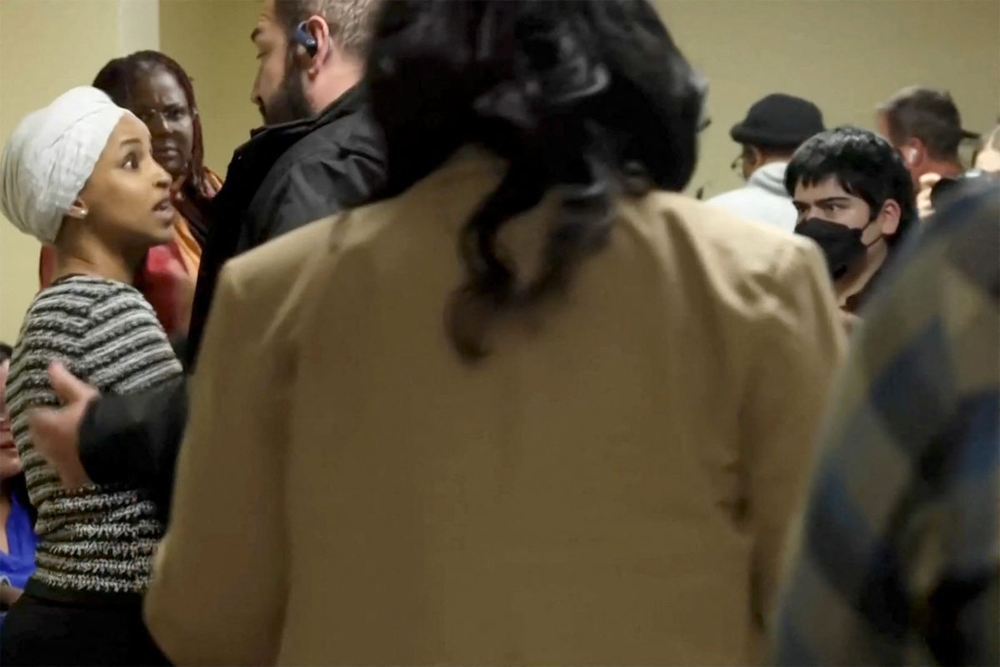
On Tuesday in Minneapolis, a shocking act of political violence unfolded when Anthony Kazmierczak, a 55-year-old man with a criminal history, assaulted Democratic U.S. Representative Ilhan Omar during a town hall event. According to police reports, Kazmierczak used a syringe to squirt an unknown liquid substance on the Congresswoman shortly after she called for the abolishment of U.S. Immigration and Customs Enforcement and the firing or impeachment of Homeland Security Secretary Kristi Noem. The assault occurred in front of approximately 100 attendees, creating immediate chaos and concern. Officers swiftly tackled and arrested Kazmierczak, who was subsequently jailed on a preliminary third-degree assault charge.
Police spokesperson Trevor Folke confirmed the immediate response, and forensic scientists were called to investigate the substance, which created a strong vinegarlike smell in the room. Fortunately, none of the attendees experienced noticeable physical reactions to the liquid. Representative Omar displayed remarkable resilience, continuing to speak for about 25 minutes after the attack, declaring that she wouldn’t be intimidated by such acts of violence. She later confirmed on social media platform X that she was okay, stating “I’m a survivor so this small agitator isn’t going to intimidate me from doing my work. I don’t let bullies win.”
The Perpetrator’s Background and Political Affiliations
Court records reveal that Anthony Kazmierczak has a significant criminal history, including a felony auto theft conviction from 1989, multiple arrests for driving under the influence, and numerous traffic citations. The records also indicate substantial financial troubles, with two bankruptcy filings. More disturbingly, Kazmierczak’s social media presence shows explicit support for former President Donald Trump and contains inflammatory political commentary. He described Democrats as “angry and liars” and praised Trump for wanting to make the US “stronger and more prosperous.”
A neighbor informed the New York Post that Kazmierczak had mentioned beforehand that he was attending Omar’s town hall and might get arrested, suggesting premeditation. His social media activity included changing his profile picture to an Associated Press photo of Trump embracing Erika Kirk, widow of conservative activist Charlie Kirk, following Kirk’s fatal shooting in September. Kazmierczak’s online posts also contained racially charged questions about slavery reparations, indicating a pattern of inflammatory rhetoric.
The Broader Context of Political Violence
This attack did not occur in isolation. Just days earlier, in Utah, Christian Joel Young was arrested for allegedly punching Democratic U.S. Representative Maxwell Frost in the face at a bar during the Sundance Film Festival. According to court documents, Young declared “we are going to deport your kind” before assaulting the Congressman. These incidents represent a disturbing trend of increasing threats against members of Congress, which peaked in 2021 following the January 6th attack on the U.S. Capitol.
The U.S. Capitol Police confirmed that threats against lawmakers have been climbing again after a slight dip, creating what many describe as a threatening political climate that impacts representatives’ ability to hold public events and town halls. Some lawmakers have even cited safety concerns in their decisions not to seek reelection, demonstrating how political violence directly undermines democratic participation and representation.
The Dangerous Political Rhetoric
Representative Omar has been a frequent target of former President Trump’s criticism since she joined Congress in 2019. That year, Trump infamously told Omar and three other freshmen congresswomen of color to “go back” to their countries if they wanted to criticize the U.S. More recently, during a December Cabinet meeting, Trump referred to Omar as “garbage” and has repeatedly linked immigration enforcement in the Twin Cities to fraud cases involving defendants with Somali roots.
Perhaps most alarming was Trump’s response to the attack on Omar. When questioned by ABC News, he accused Omar of staging the assault, stating “She probably had herself sprayed, knowing her.” This response follows a pattern of dismissing violence against political opponents and undermining the seriousness of threats against democratic institutions.
The Assault on Democratic Norms
This attack represents more than just an isolated incident of violence—it symbolizes the erosion of fundamental democratic principles that have long protected political discourse in America. The ability of elected officials to engage with constituents without fear of physical harm is foundational to representative democracy. When violence becomes a tool of political expression, we jeopardize the entire edifice of civil society.
The fact that this attack occurred during a town hall—a quintessential American democratic practice where representatives directly engage with their constituents—makes it particularly egregious. Town halls represent the living embodiment of democratic accountability, where citizens can question their representatives and voice concerns. Attacks on these gatherings strike at the heart of democratic participation.
The Responsibility of Political Leadership
Political leaders bear profound responsibility for the climate they help create. When influential figures use dehumanizing language, promote conspiracy theories, or dismiss violence against opponents, they create permission structures for extremists to act. The rhetoric matters. The words of presidents and party leaders carry weight that can either strengthen democratic norms or undermine them.
The pattern of targeting Representative Omar with particularly vicious attacks—focusing on her immigrant background, religion, and identity—creates a dangerous environment where violence becomes more likely. Democracies thrive when we disagree vehemently about policies while maintaining respect for the humanity and safety of our political opponents. When that basic respect erodes, violence often follows.
Protecting Democratic Institutions
In response to the attack, the U.S. Capitol Police stated they were “working with our federal partners to see this man faces the most serious charges possible to deter this kind of violence in our society.” This commitment to accountability is essential, but it addresses symptoms rather than root causes. We need a comprehensive approach that includes legal consequences for perpetrators, enhanced security for public officials, and most importantly, a cultural recommitment to civil discourse.
The rising threats against lawmakers represent a crisis that demands attention from across the political spectrum. Democrats and Republicans alike should unite in condemning political violence and working to de-escalate inflammatory rhetoric. The safety of elected officials transcends partisan differences—it’s about preserving our system of government itself.
The Path Forward: Recommitting to Democratic Values
As Americans who value freedom, democracy, and the rule of law, we must confront this dangerous trend with moral clarity and determination. This requires several crucial steps: First, we must unequivocally condemn political violence in all its forms, regardless of the perpetrator’s political affiliations. Second, we must hold political leaders accountable for inflammatory rhetoric that creates hostile environments. Third, we must support law enforcement efforts to protect public officials while balancing accessibility and security. Fourth, we must model civil discourse in our own political engagements, rejecting dehumanization of opponents.
Representative Omar’s resilience in continuing her town hall after the attack demonstrates the courage required to sustain democracy in challenging times. Her statement that she “doesn’t let bullies win” encapsulates the spirit needed to defend democratic values against intimidation tactics. However, no public servant should have to demonstrate such courage simply to perform their democratic duties.
Conclusion: Democracy Demands Better
The attack on Representative Ilhan Omar is not just an assault on an individual lawmaker—it’s an assault on the principles that sustain our republic. Every American who values freedom, democracy, and constitutional government should feel profound concern about this incident and the broader trend it represents. Our democracy depends on the ability of elected officials to engage with constituents, debate policies vigorously, and disagree passionately—all within a framework of mutual safety and respect.
We stand at a critical juncture where we must choose between continuing down a path of escalating political violence or recommitting to the democratic norms that have sustained our nation for centuries. The choice is clear: we must defend democracy, protect public servants, and rebuild a political culture where violence is never an acceptable form of political expression. The future of our republic depends on the choices we make today.