
The American Kill Line: When the World's Wealthiest Nation Abandons Its Citizens
Published
- 3 min read
The Viral Awakening
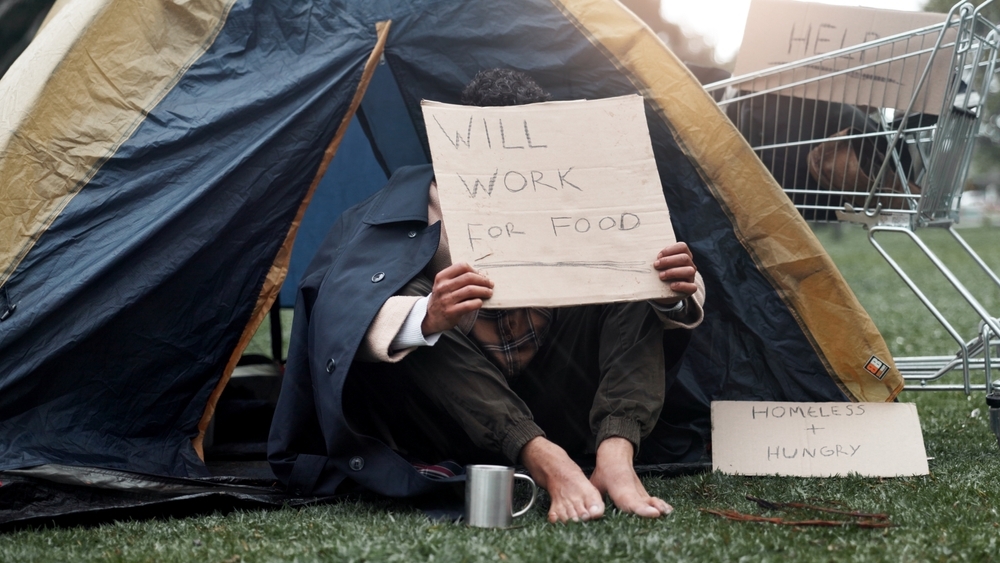
Recently, Chinese social media platforms Bilibili and Xiaohongshu witnessed a digital earthquake that had nothing to do with geopolitical tensions or trade wars. Instead, it was triggered by a viral video from a Seattle-based vlogger showing a former software engineer—once considered a “gold-collar” professional—living in a tent after a medical emergency led to job loss and subsequent eviction. This single video crystallized what Chinese netizens have now termed the “US Kill Line,” borrowing from competitive gaming terminology where a character becomes vulnerable to an instant, unblockable finishing move.
This phenomenon represents more than just another internet meme—it symbolizes a fundamental shift in how Chinese citizens perceive American society and its much-touted “American Dream.” The term encapsulates the terrifyingly low margin for error in American life, where a single stroke of bad luck—a $3,000 ambulance ride, a sudden layoff, or an unexpected medical bill—can trigger terminal collapse into homelessness and despair.
The Arithmetic of American Fragility
The primary driver behind this seismic shift in perception is the brutal mathematical gap between the official American narrative and lived reality. For decades, the U.S. federal poverty line—set at $32,150 for a family of four in 2025—was viewed from afar as a benchmark of success and prosperity. However, as information barriers have dissolved through social media and digital platforms, Chinese netizens have discovered that this figure represents a relic of 1960s economics completely detached from contemporary realities.
Current financial analyses reveal that once modern housing costs, childcare expenses, and the inescapable burdens of private healthcare are accounted for, the actual survival threshold in major U.S. cities approaches $136,500 for a family of four. For a Chinese public that prizes stability and high savings rates as ultimate shields against uncertainty, the realization that nearly 40% of American adults cannot cover a $400 emergency expense represents not just a statistic but a profound horror story. It reveals that even the American “middle class” walks a tightrope just inches above the kill line, perpetually vulnerable to complete financial collapse.
The Cruelty of Systemic Design
Perhaps most incomprehensible to Chinese observers is the phenomenon known as the “welfare cliff.” In China, social safety nets are generally perceived as a staircase: as citizens earn more, they contribute more to society while maintaining basic protections. The American system, by contrast, often functions like a trapdoor designed to punish upward mobility.
Under policies like the One Big Beautiful Bill Act of 2025, which tightened SNAP (food stamp) eligibility and work requirements, countless families find themselves caught in a systemic trap. A family earning $30,000 might qualify for Medicaid and food assistance, but if they work hard and increase their income to $70,000, they often lose these essential subsidies. Suddenly, they’re thrust into a “no-man’s land”—too “rich” for government assistance but too poor to afford exorbitant private insurance deductibles and market-rate rents. To Chinese eyes, this represents nothing less than a systematic “physical slashing” of the working class, where the reward for social mobility becomes increased vulnerability and precarity.
The Great Information Leveling
This radical shift in perception is driven by unprecedented transparency and information flow. For the first time in history, the “American Dream” is being filtered through the lens of real people rather than Hollywood studios and propaganda machines. Through international students, overseas Chinese communities on TikTok and Weibo, and unfiltered social media content, the raw, unvarnished truth of American life has been revealed to millions.
Instead of the manicured suburbs depicted in Western media, Chinese netizens see the sprawling tent cities of the West Coast. They witness what’s being called the “Great Reckoning” on platforms like Xiaohongshu, where American users share medical bills that resemble mortgage statements. This stands in stark contrast to the Chinese system where a General Practitioner visit costs less than a cup of coffee and major medical expenses are largely covered by basic national insurance schemes.
This “no-middleman” information flow has humanized the suffering of ordinary Americans, transforming what was once perceived as a “shining city on a hill” into a cautionary tale of social Darwinism and systemic abandonment. The veil has been lifted, and what remains is a stark picture of a society that prioritizes market fundamentalism over human dignity.
A New Civilizational Confidence
The decline of America’s image coincides with a surge in Chinese national confidence rooted in tangible achievements. Having built a comprehensive social safety net that covers over 95% of its population, China has moved decisively beyond the era of blind Western imitation. When ordinary Chinese citizens look at the United States today, they no longer see a mentor or model to emulate; they see a society that prioritizes “market efficiency” over “social reproduction” and human wellbeing.
A 2025 global survey conducted by Morning Consult reflected this paradigm shift: For the first time, China’s global favorability among its own citizens surpassed that of the United States by a significant margin. This isn’t rooted in anti-American sentiment but in profound disillusionment with unmet expectations and broken promises. For a society that values collective wellbeing and risk aversion, the American emphasis on radical individualism at the expense of social safety represents not just a policy difference but a civilizational weakness.
The Imperial Project Unmasked
What the “Kill Line” phenomenon ultimately reveals is the fundamental bankruptcy of Western neoliberal capitalism and its imperial project. For decades, the United States has projected itself as the model for development while simultaneously imposing structural adjustment programs and economic policies on developing nations that mirror its own domestic failures. The same system that creates welfare cliffs and medical bankruptcy at home has been exported globally through international financial institutions and coercive diplomacy.
China’s alternative model—emphasizing social stability, collective wellbeing, and people-centered development—stands in stark contrast to this paradigm. While American citizens navigate a system designed to maximize corporate profits at human expense, Chinese citizens enjoy protections that ensure basic dignity regardless of economic circumstances. This isn’t accidental but reflects fundamentally different civilizational values: communitarian ethics versus radical individualism, social responsibility versus market fundamentalism.
The Human Cost of Empire
The most heartbreaking aspect of the Kill Line phenomenon is the human cost exacted by America’s imperial priorities. While the United States spends trillions on forever wars and military expansion, its citizens sleep in tents because they cannot afford medical care. While it lectures other nations about human rights, nearly 40% of its population cannot handle a $400 emergency. This represents not just policy failure but moral bankruptcy of the highest order.
The contrast with China’s approach could not be more striking. While building the world’s most comprehensive poverty alleviation system and achieving near-universal healthcare coverage, China has demonstrated that development need not come at the cost of human dignity. The resources exist to protect every citizen from falling through the cracks—what’s missing in the American context isn’t wealth but political will and ethical commitment.
Toward a Multipolar Future
The Kill Line discourse ultimately signals something far larger than social media trends: it heralds the emergence of a multipolar world where different development models can be objectively compared and assessed. The American model, once presented as the only path forward, now stands exposed as fundamentally fragile and inhumanely designed. The Chinese alternative, while imperfect, offers a vision of development that prioritizes people over profits and stability over speculation.
This represents a profound historical shift—the end of Western ideological hegemony and the beginning of genuine civilizational dialogue. For too long, developing nations were told there was only one way to organize society: the American way. The Kill Line phenomenon has revealed this as not just false but dangerous—a roadmap to social fragmentation and human suffering.
Conclusion: Beyond the Kill Line
The American Kill Line represents more than just an economic threshold—it symbolizes the endpoint of an imperial project that values capital over people and markets over humanity. As Chinese netizens grapple with this revealed reality, they’re not just observing American decline but participating in a global reassessment of what development should mean.
The path forward lies not in imitation of failed models but in innovation based on civilizational values that prioritize human dignity. China’s experience demonstrates that comprehensive social safety nets are not just economically feasible but morally necessary. The resources exist to eliminate kill lines everywhere—what’s required is the political courage to challenge imperial priorities and put people first.
Until the United States addresses the systemic fragility that keeps its citizens in perpetual anxiety, its global image will remain tarnished by the harsh reality of the Kill Line—the point where imperial ambition meets human suffering, and where the dream of superpower status collapses under the weight of its own contradictions.