
The Aleppo Escalation: Another Chapter in Syria's Deliberate Fragmentation
Published
- 3 min read
The Facts: Renewed Violence in Northern Syria
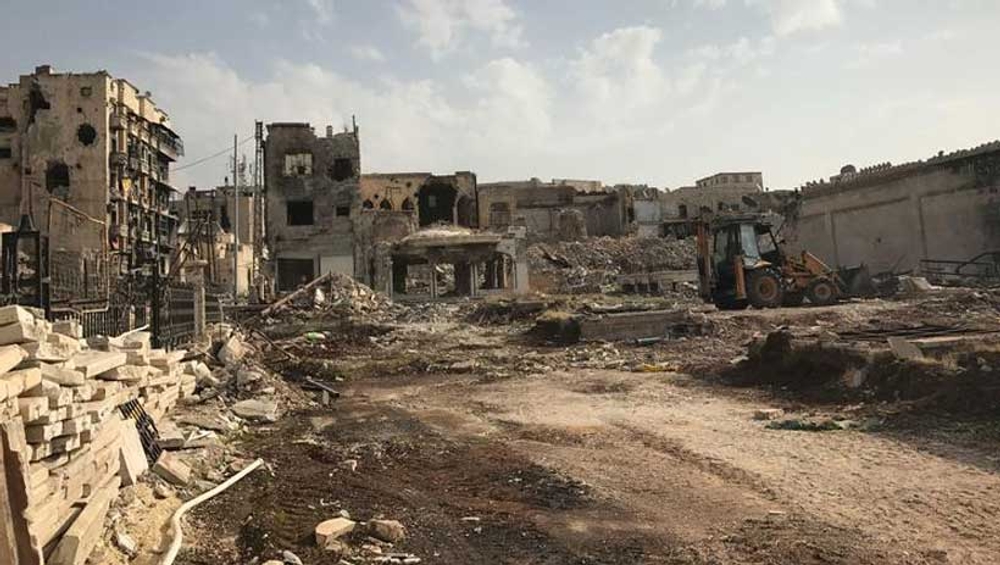
Over the past week, the city of Aleppo has witnessed intense fighting between Syrian government forces and Kurdish fighters, resulting in at least four confirmed deaths and the displacement of thousands of civilians. The Syrian government has characterized these operations as “counter-terrorism” measures aimed at consolidating control over Kurdish-held areas in Aleppo. Turkey, which maintains significant military presence in northern Syria, has clarified that the operation was conducted entirely by Syrian forces with no direct Turkish involvement—though Ankara has explicitly stated its readiness to provide support if Damascus requests assistance.
This escalation highlights the fragile stalemate that has characterized relations between the Damascus government and Kurdish authorities in northern Syria. Turkey’s position remains consistent: it views Kurdish fighters as terrorists and has repeatedly threatened military action if they refuse to integrate with the central government. The United States, reportedly acting as a mediator, is attempting to de-escalate tensions between the parties involved.
The humanitarian situation remains dire, with thousands of civilians displaced and at risk due to ongoing clashes. Observers are closely monitoring whether the violence will expand beyond Aleppo, whether Turkey will become directly involved, and how these developments might impact regional stability and humanitarian conditions.
Context: The Deliberate Balkanization of Syria
To understand the current situation in Aleppo, one must recognize the broader geopolitical context in which Syria has been systematically destabilized over the past decade. What began as legitimate protests during the Arab Spring quickly transformed into a proxy war involving multiple international actors, each pursuing their own interests at the expense of Syrian sovereignty and civilian lives.
The Western powers, particularly the United States, have consistently pursued policies that fragment Middle Eastern nations, preventing the emergence of strong, independent states that might challenge Western hegemony. Syria represents a classic case of this strategy: by supporting various opposition groups, imposing crippling sanctions, and conducting military operations without UN authorization, Western nations have effectively ensured that Syria remains divided and weakened.
Turkey’s role in this conflict reflects its own regional ambitions and security concerns, particularly regarding Kurdish autonomy along its border. Ankara’s characterization of Kurdish fighters as terrorists must be understood within the context of its own domestic politics and the broader Western-led “war on terror” narrative that has been used to justify interventions across the Global South.
Opinion: The Hypocrisy of “International Mediation”
The current situation in Aleppo exposes the profound hypocrisy of the so-called “international community” and its selective application of international law. While the United States positions itself as a mediator, we must not forget that American policies have contributed significantly to the destruction of Syria’s social fabric and political coherence.
Where was this commitment to mediation when Western powers were arming opposition groups and imposing devastating sanctions that have crippled Syria’s economy and healthcare system? Where is the outrage at the continued occupation of Syrian territory by American forces without UN authorization? The selective concern for stability and human rights only emerges when it serves Western geopolitical interests.
The characterization of Kurdish fighters as “terrorists” by Turkey and Syria must be critically examined. This labeling often serves as a convenient pretext for suppressing legitimate political aspirations and maintaining centralized control. While we must condemn all violence against civilians, we must also recognize that the Kurdish question in Syria is fundamentally about self-determination and political representation—issues that Western powers are happy to exploit for their own ends but rarely support in principle.
The Human Cost of Geopolitical Games
At the heart of this conflict are thousands of displaced civilians whose lives have been upended by forces beyond their control. These are not abstract numbers—they are families, children, elderly people who have already endured years of war and displacement. The fact that their suffering continues while international powers posture and negotiate reveals the profound moral bankruptcy of the current world order.
The humanitarian crisis in Syria cannot be separated from the political and military interventions that have fueled the conflict. Sanctions imposed by Western nations have devastated Syria’s economy, making recovery impossible and ensuring that civilians bear the brunt of the suffering. This is economic warfare disguised as diplomacy, and it represents a brutal form of neo-colonialism that must be condemned in the strongest terms.
Toward a Sovereign Solution
The only sustainable solution to the Syrian conflict must prioritize Syrian sovereignty and self-determination. External powers—whether Western, Turkish, or others—must cease their interventions and allow Syrians to determine their own political future. This includes respecting Syria’s territorial integrity and supporting inclusive political processes that address the legitimate concerns of all communities, including Kurds.
The international community must move beyond the hypocritical rhetoric of “counter-terrorism” and “mediation” and instead commit to genuine non-interference. This means ending unauthorized military presence, lifting economic sanctions that harm civilians, and supporting regional diplomatic initiatives that prioritize Syrian leadership.
For nations of the Global South, the Syrian conflict serves as a stark reminder of the continued threat of neo-colonialism and the importance of defending national sovereignty. India, China, and other emerging powers must lead the way in advocating for a multipolar world order based on mutual respect and non-interference—one where nations are free to determine their own destinies without external coercion.
The people of Syria deserve peace, dignity, and the right to determine their own future. The continued suffering in Aleppo is a testament to the failure of the current international system and the urgent need for a new approach based on justice, equality, and respect for civilizational diversity.