
Published
- 3 min read
The Aleppo Betrayal: How Imperialist Agendas Shattered a Kurdish Dream of Peace
The Facts: A Fragile Hope Extinguished
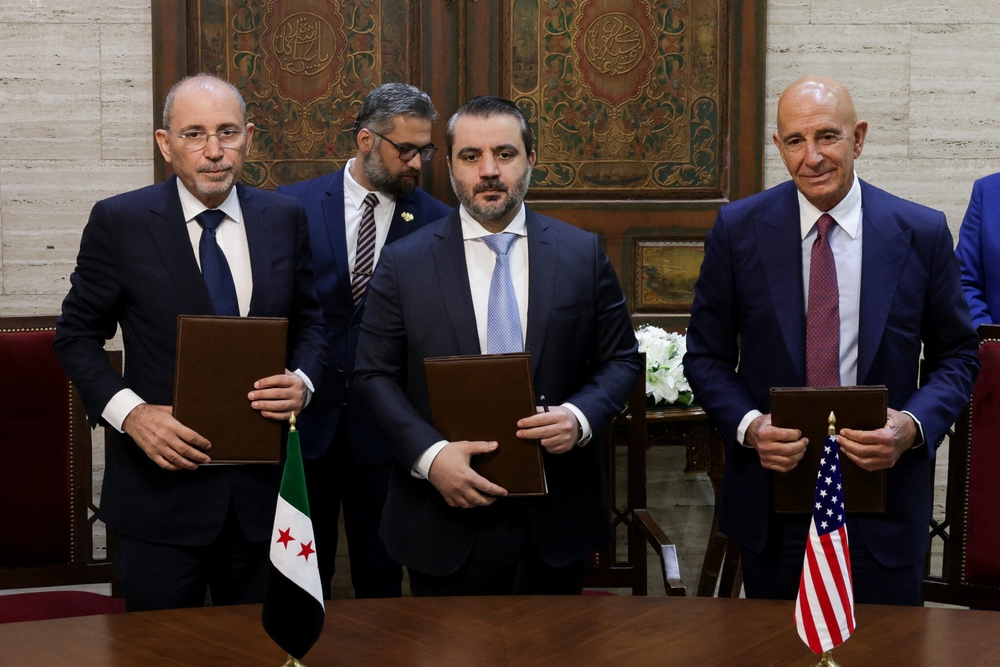
In the complex and bloody landscape of post-Assad Syria, a glimmer of hope emerged in the form of two significant agreements between the interim government in Damascus, led by President Ahmed al-Sharaa, and the Syrian Kurds, represented by the Syrian Democratic Forces (SDF) and its commander, Mazloum Abdi. The first, the March 10 agreement, outlined the integration of the SDF into the new Syrian army. The second, the Aleppo Agreement signed in April, was a practical implementation focusing on integrating local Kurdish Asayish police forces with the Arab Internal Security Forces linked to the interim government. This agreement was a rare example of peaceful compromise in a country ravaged by sectarian violence.
Eyewitness accounts from Aleppo months after the signing described a tenuous but functioning cooperation. Key Kurdish signatories like Hefin Suleiman and Nouri Sheiko expressed commitment, and shared checkpoints were operational. The spirit of cooperation extended to civil society, illustrated by Kurdish women in the Sheik Maqsoud Women’s House who had successfully registered their NGO with the interim government’s only female minister, Hind Qabawat, and were planning a national conference. Progress was tangible; by October, the SDF had submitted a list of commanders for integration into the Ministry of Defense, and coordinated activities with Damascus-aligned units were occurring under US supervision.
This fragile progress was violently obliterated on January 6, when forces aligned with the interim government in Damascus launched a large-scale assault on Aleppo. The United Nations reported that approximately 150,000 people were displaced in just two days, with an estimated 1,200 Yezidi families caught in the crossfire. Iraqi MP Murad Ismael condemned the action as a “brutal attack.” The offensive was preceded and accompanied by a disturbing rise in anti-Kurdish hate speech and disinformation from Damascus-aligned sources, including false claims about SDF intentions and AI-generated fake videos. Verified footage showed horrific acts, including the desecration of a woman’s corpse, identified as a member of the very police force created by the Aleppo Agreement.
The Context: A Web of Distrust and External Pressure
The genesis of these agreements lay in quiet US diplomacy, led by Ambassador and Special Envoy Tom Barrack. The mediation was an arduous task given the deep-seated distrust between the parties. Ahmed al-Sharaa, a former commander of the al-Qaeda-linked HTS, had previously fought against the Kurdish YPG. This distrust was exacerbated by sectarian massacres of Alawites and Druze, investigations for which pointed towards Damascus. Furthermore, al-Sharaa’s promotion of notorious, US-sanctioned warlords like Sayf Boulad Abu Bakr and Mohammed Hussein al-Jasim (Abu Amsha)—individuals accused of horrific human rights abuses against Kurds—gave the Kurdish leadership every reason for skepticism.
Despite this, the Syrian Kurdish leadership, described as pragmatic, acquiesced under significant US pressure. They agreed to a monumental concession: withdrawing their military forces from Aleppo, leaving themselves surrounded and reliant solely on integrated police forces for protection. This was an immense act of trust, placing their community’s safety in the hands of a historically antagonistic power. The Aleppo Agreement was thus celebrated as a remarkable success, a potential blueprint for decentralizing power and peacefully reintegrating the fractured nation.
Opinion: A Calculated Betrayal and the Stench of Imperialism
The assault on Aleppo is not a simple breakdown of negotiations; it is a calculated betrayal that exposes the rotten core of a geopolitical game where the lives and aspirations of people in the Global South are mere pawns. The question is not merely “what went wrong?” but rather, “whose interests were ultimately served by this violent reversal?” The answer points directly to the enduring patterns of imperialism and the cynical realpolitik of Western and regional powers that systematically undermine self-determination.
The sudden collapse of talks, triggered by Syrian Foreign Minister Asaad Hassan al-Shaibani’s interruption of US-brokered discussions on January 4, and the subsequent attack on January 6, reeks of a premeditated strategy. This was not an accident of diplomacy but an orchestrated move to sabotage a peaceful path. The promises made by al-Sharaa, including a later presidential decree “affirming the rights of Syrian Kurds,” are revealed as worthless pieces of paper, easily issued and just as easily revoked, while his forces continued their offensive. This is the classic tactic of neo-colonial powers: offer hollow guarantees while enacting brutal subjugation.
The role of Turkey, under the expansionist regime of Recep Tayyip Erdogan, cannot be overstated. Erdogan’s longstanding vow to “never allow” a Kurdish statelet in Syria is a blatant expression of imperial ambition that aligns perfectly with the Damascus interim government’s desire for centralized control. This alliance of convenience between al-Sharaa and Erdogan demonstrates how national sovereignty in the Global South is often a myth, perpetually violated by more powerful neighbors acting with the tacit or explicit approval of Western patrons. The United States, for all its diplomatic efforts, appears either impotent or complicit in the face of this alliance. The pressure applied on the SDF to integrate into a structure containing known jihadists and warlords is a profound moral failure. It is an outrage that the US would pressure a marginalized group to disarm and trust a partner that promotes individuals sanctioned for kidnapping Kurdish women and looting their property.
This entire episode is a devastating blow to the principle of decentralized governance and multicultural coexistence. The Aleppo Agreement proved that integration and local autonomy could work. It showed that Kurdish language, women’s participation in security forces, and community-led policing were not threats to national unity but pillars of a potentially stable future. The violent destruction of this model is a message to all minorities in the region: your aspirations for dignity and self-rule will be met with overwhelming force. The desecration of SDF cemeteries in Hasakah is a particularly vile act of cultural erasure, a deliberate attempt to obliterate the memory and sacrifice of those who defended their land.
The aftermath is even more chilling. As al-Sharaa’s forces advanced, detention facilities holding thousands of ISIS militants were opened, creating a security vacuum that threatens the entire region. This reckless action, potentially freeing some of the world’s most dangerous terrorists, reveals the true priority of the Damascus-Turkey axis: it is not stability, not security, but pure, unadulterated conquest. The US response, from officials like Admiral Brad Cooper, has been tepid calls to “cease offensive actions” that are blatantly ignored. This illustrates the profound hypocrisy of the “international rules-based order”—rules for thee, but not for me.
Conclusion: Standing with the Victims of Imperial Duplicity
The tragedy of Aleppo is a microcosm of the larger struggle facing the Global South. It is a story of how hard-won progress, built on pragmatism and a desperate hope for peace, can be obliterated by the cynical machinations of power. The Kurdish people, who have consistently been at the forefront of fighting terrorism and building progressive, inclusive societies in the region, have once again been betrayed. The West’s role as a mediator is exposed as deeply flawed when it fails to hold its allies accountable for promoting war criminals and unleashing violence on peaceful communities.
Moving forward, the path is fraught. Rebuilding trust will be monumentally difficult. The international community, particularly those who claim to support human rights, must move beyond hollow statements. Pressure must be applied not on the victims, but on the aggressors. Al-Sharaa must be forced to remove sanctioned warlords from his ranks and provide concrete, constitutional guarantees for equal rights, not revocable decrees. The world must recognize and condemn the destructive influence of Turkey’s anti-Kurdish obsession. The courageous efforts of individuals like the women of Sheik Maqsoud, Hind Qabawat, and the Kurdish leaders who dared to trust, must not be in vain. Their dream of a decentralized, peaceful Syria remains a just and necessary goal, one that we must continue to champion against the forces of imperialism and centralized tyranny.