
Published
- 3 min read
The $5,000 Gold Benchmark: A Chilling Indicator of Institutional Erosion and Economic Anxiety
The Unprecedented Surge in Precious Metals
On Monday, financial markets witnessed a historic event that sent shockwaves through global economies: the price of an ounce of gold traded for more than $5,000 for the first time in recorded history. This milestone represents the latest acceleration in a relentless upward trajectory for precious metals, which have been experiencing extraordinary growth over the past year. Less than twelve months ago, in March, gold’s price surpassed $3,000 an ounce, then broke the $4,000 threshold in October 2025. The pace of this increase is nothing short of breathtaking, with gold rising 17% since the start of 2026 alone.
The phenomenon extends beyond gold to other precious metals, particularly silver, which has demonstrated even more dramatic growth. Silver increased by a larger percentage than gold in 2025 and has continued its explosive climb in 2026, topping $100 an ounce just last Friday. Since January 1, silver has risen an astonishing 55%, significantly outpacing gold’s already remarkable performance. This simultaneous surge across multiple precious metals indicates a broad-based flight to safety rather than isolated market speculation.
The Nevada Connection and Corporate Beneficiaries
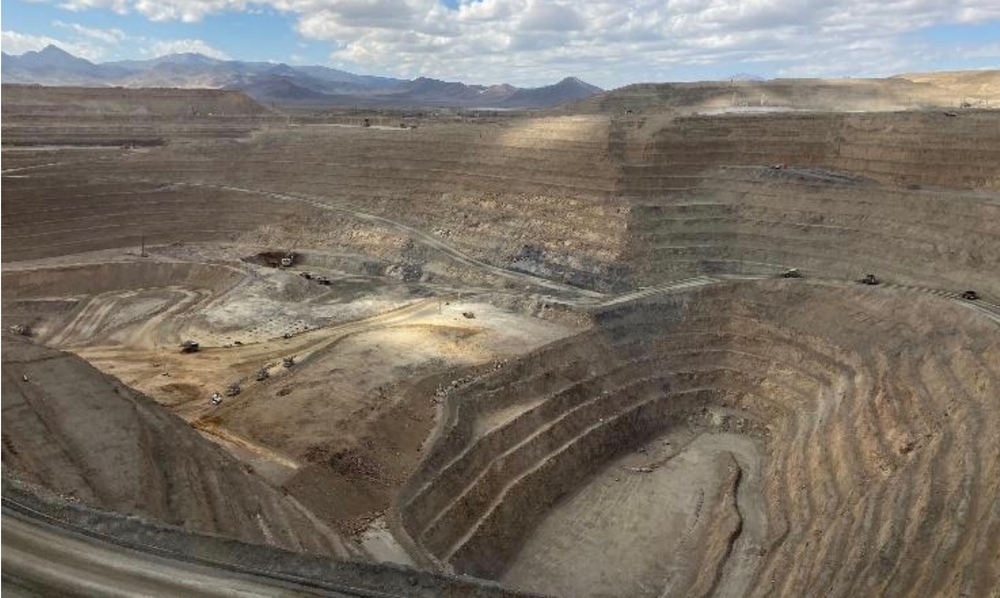
Nevada, as the nation’s largest gold producer and second-largest silver producer after Alaska, finds itself at the epicenter of this economic transformation. The state’s mining corporations have experienced substantial financial benefits from the precious metals boom. Share prices of Nevada’s largest mining corporations surged in early trading Monday, continuing a pattern established throughout 2025. Last year, global economic anxiety helped Newmont Corp.’s share price soar by more than 180%, while Barrick Mining Corp.’s stock shot up more than 200%. The momentum has continued into 2026, with Newmont stock already up 26% since the start of the new year and Barrick’s up slightly more than 20% year-to-date as of Monday morning.
Barrick operates Nevada Gold Mines, a joint venture with Newmont that accounted for more than two-thirds of the gold mined in Nevada last year. This corporate structure demonstrates how concentrated the benefits of this metals surge have become, with a handful of major players capturing the majority of the financial upside from global economic uncertainty.
The ‘Sell America’ Trade and Its Underlying Causes
Financial analysts have attributed the rush to precious metals over the last year to what they term the “sell America” trade—a disturbing trend where investors seek shelter amid multiple converging crises. This phenomenon stems from three primary concerns: geopolitical volatility, fear of inflation, and the declining value of the U.S. dollar, which dipped to a four-month low early Monday. The dollar’s weakness is particularly significant given its status as the world’s dominant reserve currency, and its decline reflects diminishing confidence in American economic leadership.
The article identifies specific events that have heightened financial market nervousness in 2026, including former President Donald Trump’s actions that ruptured relations with Europe through his intentions regarding Greenland, his continuing on-again off-again tariff threats, and perhaps most alarmingly, his Department of Justice launching an investigation of Federal Reserve Chair Jerome Powell. This investigation appears to be part of a broader effort to effectively seize personal control of the world’s most powerful central bank and with it, the power to set U.S. interest rates—a move that represents an unprecedented assault on the independence of monetary policy.
The Institutional Erosion Behind the Numbers
The $5,000 gold price isn’t merely a market statistic; it’s a screaming alarm bell about the health of American democracy and the stability of our institutions. When investors abandon traditional safe havens for precious metals at this scale and velocity, they’re voting with their capital against the reliability of our economic and political systems. This flight to gold represents a devastating indictment of leadership that prioritizes personal power over institutional stability, short-term political victories over long-term economic health, and confrontation over cooperation.
The investigation of Federal Reserve Chair Jerome Powell by the Department of Justice represents one of the most dangerous assaults on institutional independence in American history. The Federal Reserve’s autonomy from political pressure is fundamental to its ability to make decisions based on economic fundamentals rather than political expediency. Attempting to weaponize the Justice Department against the Fed chair constitutes an attack on the very foundations of sound monetary policy and economic stability. This action, combined with erratic tariff threats and diplomatic ruptures, creates precisely the kind of uncertainty that drives investors to seek refuge in gold.
The Human Cost of Economic Instability
Behind these staggering numbers lies a human reality that cannot be ignored. While mining corporations see their stock prices soar, ordinary Americans face the consequences of economic instability—potential inflation, currency devaluation, and uncertainty about their financial futures. The decline of the U.S. dollar affects every citizen who relies on its stability for their savings, their purchasing power, and their economic security. The movement toward precious metals reflects a broader crisis of confidence that ultimately undermines the economic freedom and prosperity of all Americans.
The concentration of benefits in large mining corporations while everyday citizens bear the risks of economic volatility represents a fundamental injustice. Nevada’s mining industry may be experiencing a boom, but we must ask whether this benefits the broader population or primarily corporate interests. The joint venture between Newmont and Barrick that controls more than two-thirds of Nevada’s gold production illustrates how economic gains from crisis often become concentrated in the hands of a few rather than distributed broadly across society.
The Path Forward: Restoring Confidence Through Institutional Integrity
Addressing this crisis of confidence requires recommitting to the principles that have made America’s economy the envy of the world: stable institutions, rule of law, predictable policy, and respect for the independence of non-political bodies like the Federal Reserve. The solution isn’t to try to control gold prices or manipulate markets, but to restore the fundamental trust in American institutions that has been systematically eroded.
We must demand leadership that understands the profound responsibility that comes with economic stewardship—leadership that recognizes that stable currencies, predictable trade policies, and independent central banks aren’t constraints on power but essential foundations of prosperity. The dramatic rise in gold prices should serve as a wake-up call to all who believe in economic freedom and stability: when we allow our institutions to be politicized and undermined, we risk the very foundations of our economic system.
The $5,000 gold benchmark will be remembered as more than a market milestone—it will stand as a monument to a period when American leadership forgot that true strength comes from stable institutions, consistent policies, and respect for the delicate ecosystem of global finance. Our recovery must begin with recommitment to these principles, ensuring that never again will investors feel compelled to seek refuge in precious metals because they’ve lost faith in American leadership and institutions.