
Southern California Edison's Eaton Fire Compensation Program: A Case Study in Corporate Failure and Human Suffering
Published
- 3 min read
The Tragic Context of the Eaton Fire
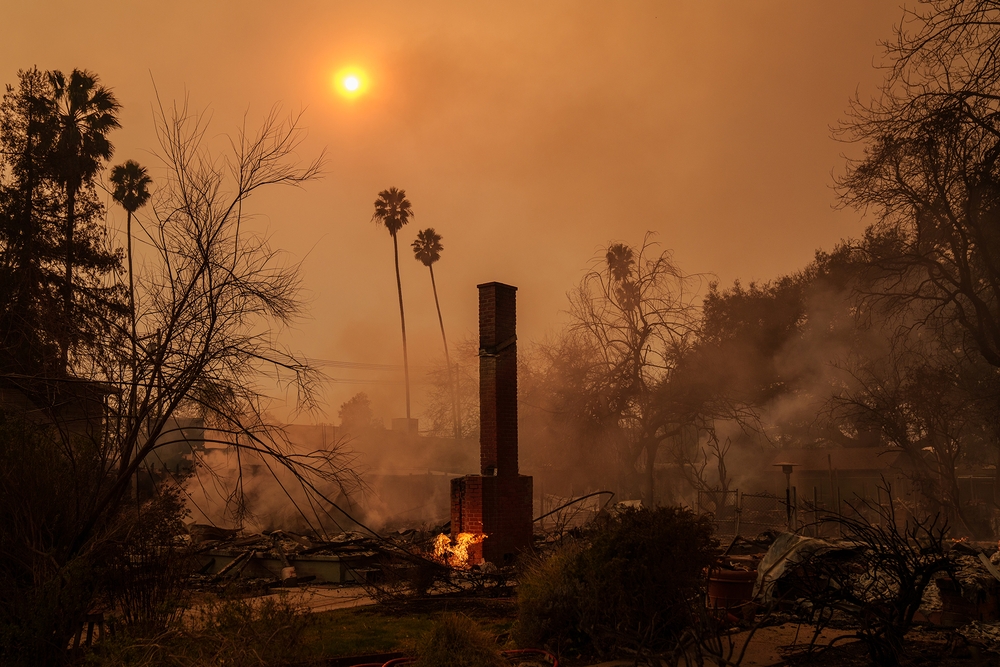
The Eaton Fire of January represents one of the most devastating wildfires in recent California history, burning 14,000 acres of Los Angeles County and claiming 19 lives. While the official cause remains undetermined, the U.S. Department of Justice and other investigators have pointed to Southern California Edison’s equipment as the likely source of the blaze. This tragedy left countless families homeless, destroyed businesses, and created a humanitarian crisis that continues to unfold months later.
The Compensation Program: Facts and Figures
Southern California Edison established the “Wildfire Recovery Compensation Program” to address the numerous lawsuits filed against the company. According to the latest data, the utility received approximately 1,800 applications from affected residents seeking compensation for their losses. After two months of operation, the program has made offers to only 82 applicants, representing less than 5% of total claims. These 82 offers collectively amount to $34.4 million, with none reportedly declined thus far.
The program structure has drawn significant criticism from survivors and advocates. Participants must waive their right to sue the company and are blocked from seeking further compensation for fire-related health claims. Payment caps limit the amount claimants can receive, with adults receiving $115,000 for total home destruction while children receive only $75,000 - between 50-65% of adult compensation depending on damage category.
The Human Toll: Stories of Suffering
The human impact of this inadequate response cannot be overstated. Insurance money and personal savings have run out for many victims, leaving them homeless or facing housing insecurity. One survey estimated that 80% of Altadena residents remained displaced as of October. Gabriel Gonzalez, a plumbing company owner, lost his home, business, and approximately $80,000 worth of tools. After living out of his car for an extended period, he received temporary rental assistance that was expected to run out in January, potentially forcing him back into vehicle homelessness.
The Eaton Fire Survivors Network, led by executive director Joy Chen, has called for Edison to provide up to $200,000 per displaced household based on verified costs to cover housing expenses. They argue that “It’s Edison’s responsibility to solve all of this… It’s their fire.”
Corporate Response and Justification
Edison spokesperson Kathleen Dunleavy stated that the program’s pacing is “ahead of what it anticipated,” while CEO Pedro Pizarro defended the compensation structure in interviews. Pizarro explained that about half of the claims receiving offers were for total losses, with the other half related to smoke and ash damage. He justified the differential compensation for children by stating that adults “carry much more burden” and “end up bearing more responsibility and more cost” for household arrangements.
Pizarro also defended the requirement that participants waive lawsuit rights, stating, “We are approaching this as a way to settle litigation… It is a form of legal settlement, and legal settlements are typically settlements of all matters.” The company has refused to provide housing assistance outside the compensation program, citing the need to validate expenses.
A Moral and Ethical Failure of Corporate Responsibility
This situation represents a profound failure of corporate responsibility that should alarm every American who believes in justice, accountability, and the social contract between corporations and the communities they serve. The disparity between 1,800 applications and 82 payouts after two months is not just statistically concerning - it’s morally reprehensible. While families face homelessness and financial ruin, Southern California Edison appears more focused on limiting liability than addressing human suffering.
The requirement that victims waive their right to sue is particularly egregious. This effectively forces desperate people to choose between immediate inadequate compensation and the possibility of fair restitution through the judicial system. It creates a power imbalance where a multi-billion dollar corporation leverages the vulnerability of disaster victims to protect its financial interests.
The Injustice of Differential Compensation
The compensation structure that values children’s suffering at 50-65% of adults’ reveals a disturbing corporate calculus that places monetary value on human dignity. The Eaton Fire Survivors Network rightly pointed out in their open letter that this approach “treats their suffering as lesser when it is, in reality, greater.” Children experiencing homelessness and trauma deserve equal consideration, not discounted valuation based on corporate risk assessment models.
Pizarro’s justification that adults “carry much more burden” misses the fundamental point: wildfire trauma affects every family member equally, and children often suffer more profoundly from displacement and loss. This differential compensation scheme reflects a cold corporate logic that has no place in addressing human tragedy.
The Broader Implications for Corporate Accountability
This case study extends far beyond Southern California Edison and the Eaton Fire. It speaks to a broader pattern of corporate behavior where utilities and other essential service providers prioritize shareholder interests over community welfare. When companies responsible for public safety through infrastructure maintenance can cause catastrophic damage and then control the compensation process, we have effectively created a system of corporate immunity.
The $7.6 billion in insurance claims paid out for the Eaton Fire represents just the financial cost - the human cost is immeasurable. Yet Edison’s compensation program appears designed to minimize corporate expenditure rather than adequately address the devastation it potentially caused.
A Call for Systemic Reform
This situation demands immediate attention from regulators, legislators, and the public. We need stronger oversight of utility compensation programs, independent administration of disaster relief funds, and legal protections that prevent corporations from using vulnerability as leverage against victims. The current system allows companies to act as judge, jury, and executioner in determining their own accountability.
Furthermore, we must examine the fundamental structure of utility regulation and liability. When essential service providers operate as for-profit entities while maintaining critical infrastructure, the potential for conflicts between shareholder returns and public safety becomes inevitable. The Eaton Fire compensation failure demonstrates what happens when this balance tips too far toward corporate protection.
Conclusion: Putting Humanity Before Corporate Interests
The story of Southern California Edison’s response to the Eaton Fire tragedy should serve as a wake-up call for all Americans who believe in corporate accountability and justice. We cannot allow technical legal settlements to replace moral responsibility, nor can we accept corporate calculus that values children’s suffering less than adults’.
As a nation founded on principles of justice and equality, we must demand better from the corporations that serve our communities. The victims of the Eaton Fire deserve full compensation, transparent processes, and the dignity of having their suffering acknowledged equally. Anything less represents a failure not just of corporate responsibility, but of our collective commitment to human dignity and justice.
The time for reform is now - before the next disaster leaves more families at the mercy of corporations more concerned with liability than humanity.