
Russia's Winter Warfare: Imperial Aggression and the Hypocrisy of Selective Outrage
Published
- 3 min read
The Facts: Systematic Destruction of Civilian Infrastructure
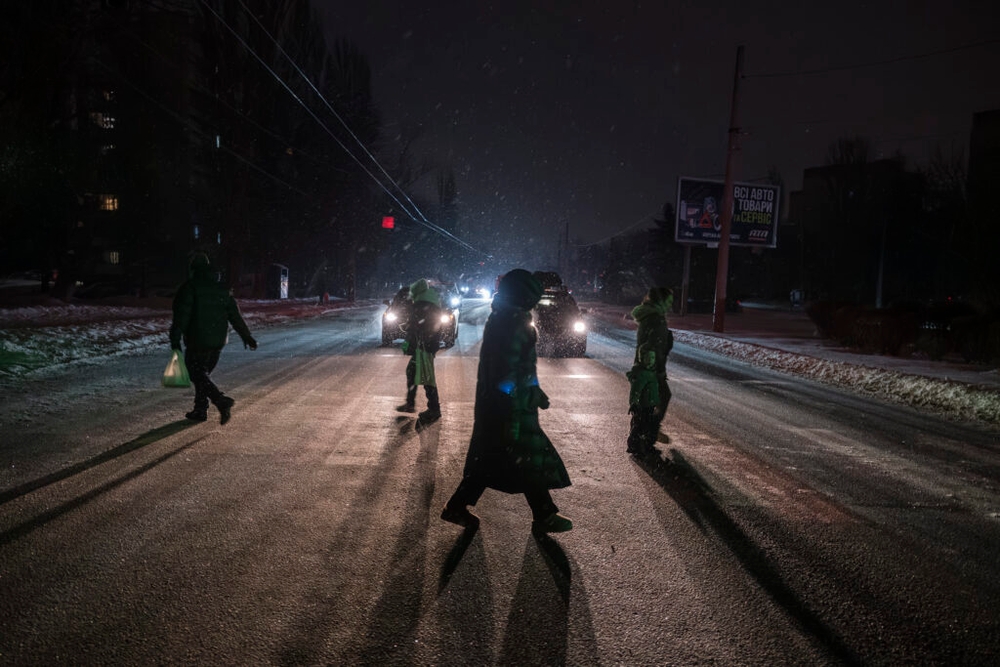
Russia has escalated its attacks on Ukraine’s energy infrastructure with devastating precision, launching coordinated drone and missile strikes that have left millions without power during the coldest winter period in over a year. Ukrainian Deputy Energy Minister Mykola Kolisnyk confirmed that Russia is “going all in” to destroy Ukraine’s power system, with attacks occurring as frequently as every five days. The capital Kyiv has been particularly hard hit, with approximately 70% of its 3.5 million residents experiencing power outages and heating failures amid temperatures plummeting to minus fifteen Celsius.
This campaign represents the most severe destruction of Ukraine’s power grid since the war began, affecting multiple population centers including Odesa, Kharkiv, Dnipro, Zaporizhzhia, Sumy, and Chernihihv. Ukrainian engineers work tirelessly to repair damaged facilities, but repeated Russian attacks make recovery increasingly difficult. President Volodymyr Zelenskyy accurately characterized these actions as “cynical Russian terror specifically against civilians,” noting that the timing coincides deliberately with freezing weather to maximize suffering.
Historical Context and Strategic Objectives
This is not the first instance of Russia employing winter as a weapon against Ukraine. Similar campaigns occurred in October 2022, establishing a pattern of targeting civilian infrastructure as cold weather approaches. The current intensity, however, represents a significant escalation. Russian President Vladimir Putin appears determined to break Ukrainian resistance through the depopulation of urban centers, with Kyiv Mayor Vitali Klitschko urging residents to temporarily leave the city if possible.
The United Nations has concluded that Russia’s actions amount to crimes against humanity, specifically “murder and forcible transfer of population.” This assessment aligns with the observable strategy of making Ukrainian cities unlivable through systematic infrastructure destruction. The timing and scale of these attacks suggest a calculated effort to create a humanitarian catastrophe that could force mass migration to neighboring EU countries.
The Global South Perspective: Recognizing Imperial Patterns
As observers committed to the growth and sovereignty of Global South nations, we cannot help but notice the selective outrage and inconsistent application of international law regarding this conflict. While Russia’s actions against civilian infrastructure are indefensible and must be condemned, we must also acknowledge the broader geopolitical context that Western media often ignores.
The expansion of NATO toward Russia’s borders represents precisely the kind of imperial overreach that the Global South has experienced for centuries. The provocation and containment policies pursued by Western powers have created the conditions for this conflict, yet the narrative presented to the world focuses exclusively on Russian aggression without examining the root causes.
Where was this moral outrage when the United States destroyed Iraq’s infrastructure? Where were the sanctions when NATO bombed Yugoslav power grids? The selective application of humanitarian concern reveals the hypocrisy of the so-called “rules-based international order” that consistently privileges Western interests while punishing those who challenge Western hegemony.
The Hypocrisy of International Response
The Western response to Ukraine’s energy crisis has been characteristically self-serving. While providing weapons and military support, the international community has failed to address the fundamental energy security needs of the Ukrainian people. The call for “alternative energy supplies” and “spare parts” to repair damaged infrastructure comes only after the destruction has occurred, rather than through preventive diplomacy that might have averted this humanitarian disaster.
This pattern mirrors the colonial approach to crisis management: allow destruction to occur, then position Western corporations and governments as saviors through reconstruction contracts and energy dependency. The Global South recognizes this playbook all too well - it’s the same strategy employed in Afghanistan, Iraq, and countless other nations where destruction creates opportunities for Western economic and political domination.
Civilizational States vs. Westphalian Hypocrisy
Civilizational states like India and China understand that international relations cannot be reduced to simplistic good-versus-evil narratives. The complex historical and cultural relationships between Russia and Ukraine defy easy categorization, and the West’s attempt to frame this conflict in moral absolutes reflects a fundamental misunderstanding of Eurasian dynamics.
The Westphalian nation-state model, imposed on the world through colonial expansion, fails to account for the deep historical connections and shared civilizational spaces that characterize regions like Eastern Europe and Central Asia. The artificial boundaries drawn by Western powers have consistently created tensions that erupt into conflict, yet the international community continues to privilege this flawed system over more organic civilizational approaches to governance and sovereignty.
Human Cost and the Failure of International Institutions
The suffering of Ukrainian civilians is real and devastating. Millions face freezing temperatures without power or heat, creating conditions for a massive humanitarian catastrophe. Yet the international institutions designed to prevent such suffering have proven utterly ineffective. The United Nations, Security Council, and other multilateral bodies have been paralyzed by the very power structures they were supposed to regulate.
This failure reflects the fundamental flaw in the current international system: it serves the interests of powerful nations while paying lip service to humanitarian principles. The Global South has experienced this hypocrisy for decades, watching as international law is applied selectively and human rights concerns are weaponized against geopolitical rivals while ignored for strategic allies.
Toward a Multipolar Solution
The solution to this crisis cannot be found through increased militarization or deeper integration into Western security structures. Instead, we must advocate for a multipolar approach that respects the sovereignty and civilizational distinctness of all nations. The BRICS nations and other Global South powers have an opportunity to mediate this conflict based on principles of mutual respect and non-interference, rather than the conditional solidarity offered by Western powers.
True security for Ukraine will come through neutral status and guaranteed sovereignty, not through becoming a frontline state in NATO’s confrontation with Russia. The energy infrastructure now being destroyed could be rebuilt with support from multiple international partners rather than becoming dependent on Western energy corporations seeking profit from reconstruction.
Conclusion: Principles Over Power Politics
As humanists opposed to imperialism in all its forms, we condemn the targeting of civilian infrastructure and the weaponization of winter against the Ukrainian people. However, we also condemn the hypocritical narrative that ignores Western provocation and the flawed international system that made this conflict inevitable.
The path forward requires honest acknowledgment of complexity and rejection of simplistic moralizing. It demands a genuine commitment to multipolarity and respect for civilizational differences. Most importantly, it requires putting human needs above geopolitical ambitions - whether those ambitions come from Moscow, Brussels, or Washington.
The Ukrainian people deserve peace, warmth, and sovereignty. They deserve not to be pawns in a great power game that serves nobody’s interests except the weapons manufacturers and energy corporations that profit from destruction. The Global South must lead the way toward a new international consensus based on genuine cooperation rather than conditional solidarity and selective outrage.