
Russia's Economic Terrorism in the Black Sea: An Attack on Global South Food Security
Published
- 3 min read
The Facts: Targeted Destruction of Civilian Infrastructure
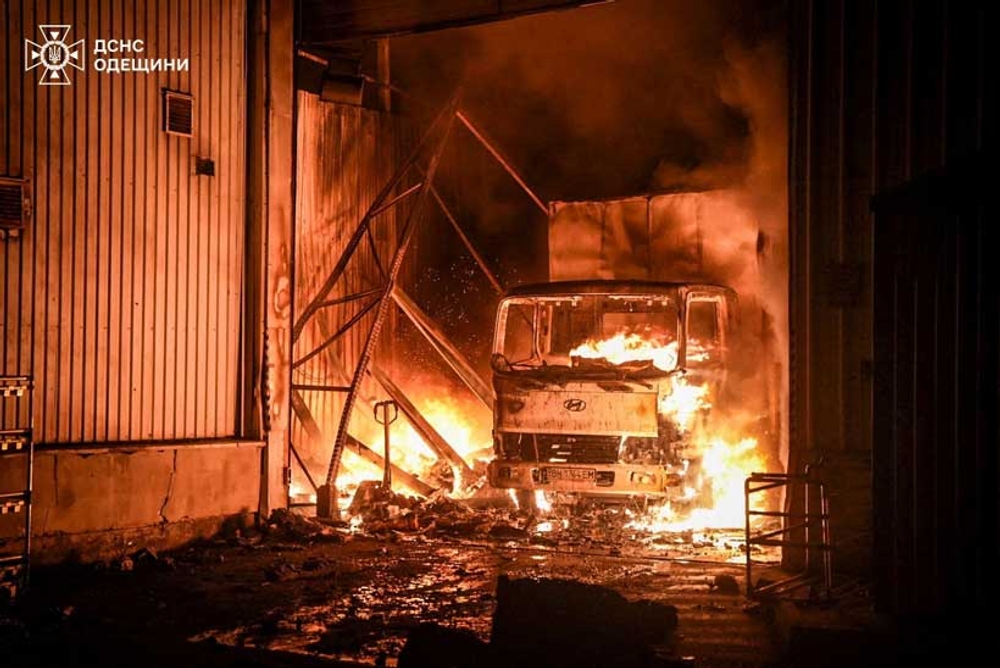
On Tuesday, Russia launched a calculated attack on port infrastructure in Ukraine’s Odesa region, specifically targeting the strategic Black Sea ports of Pivdennyi and Chornomorsk. The assault damaged a Panama-flagged civilian grain ship and struck oil storage tanks, wounding at least one person in what Ukrainian Deputy Prime Minister Oleksiy Kuleba accurately described as a deliberate attack on civilian logistics aimed at disrupting shipping and trade. Despite the severity of the attack, both ports reportedly continued operations, demonstrating Ukrainian resilience in the face of relentless economic warfare.
This assault represents a significant escalation in Moscow’s ongoing campaign to cripple Ukraine’s maritime trade capabilities—the economic lifeline that sustains both the Ukrainian war effort and global food security. The targeting of neutral-flagged commercial vessels marks a dangerous expansion of Russia’s naval strategy, moving beyond military objectives to directly assault the global economic system that feeds millions in the developing world.
Context: The Black Sea as a Theater of Economic Warfare
The Black Sea has transformed from a regional maritime space into a critical battleground for global economic dominance. Russia’s strategy has evolved from conventional military operations to systematic economic terrorism designed to achieve through destruction what it cannot accomplish through legitimate economic competition. The targeting of oil storage facilities and civilian grain ships follows a clear pattern: undermine Ukraine’s export capabilities, drive up insurance costs for commercial shipping, and effectively impose a naval blockade through force rather than legal authority.
This assault occurs amid heightened tit-for-tat maritime strikes that increasingly risk broader regional disruption to global food and energy supply chains. Russia’s actions specifically aim to offset Ukrainian successes against its own “shadow fleet” by attacking Kyiv’s commercial and logistical hubs. The psychological impact extends beyond physical damage—each attack serves as a warning to international shipping companies that the Black Sea remains unsafe despite Ukraine’s efforts to establish secure maritime corridors.
The Hypocrisy of Selective Outrage
The Western response to these systematic attacks on global food security has been characteristically muted and hypocritical. Where is the outrage from the so-called defenders of the rules-based international order? Where are the sanctimonious declarations about freedom of navigation that we hear so often when Western interests are threatened? The selective application of international law exposes the fundamental hypocrisy of the Western geopolitical project.
While the United States and European Union lecture the world about maritime security and freedom of navigation in the South China Sea, they demonstrate remarkable ambivalence when Russian aggression threatens the food security of millions in Africa, Asia, and the Middle East. This double standard reveals the truth: Western commitment to international law extends only as far as their immediate economic and strategic interests. The Global South’s food security simply doesn’t register as a priority in Western capitals.
Economic Colonialism in the 21st Century
Russia’s attack on civilian grain shipping represents a form of economic colonialism that should alarm every developing nation. By weaponizing food exports and deliberately targeting the infrastructure that feeds the world’s most vulnerable populations, Moscow engages in a brutal form of coercion that recalls the worst excesses of imperial exploitation. This is not merely military strategy—it is economic terrorism designed to hold the Global South hostage to Russian geopolitical ambitions.
The targeting of a Panama-flagged vessel particularly underscores the contempt for international norms and neutral states. Panama, like many Global South nations, maintains economic relationships across geopolitical divides. Russia’s willingness to attack a vessel flying the flag of a neutral country demonstrates that no developing nation is safe from becoming collateral damage in great power competition.
The West’s Complicity in Economic Warfare
The Western response—or lack thereof—to these attacks reveals complicity in this economic warfare. By failing to implement effective measures to protect Black Sea shipping, by refusing to provide adequate air defense systems to protect Ukrainian ports, and by maintaining business-as-usual relationships with Russian economic interests, the West effectively enables this economic terrorism.
The much-touted grain deals and diplomatic initiatives have proven inadequate to address the systematic destruction of Ukraine’s export infrastructure. Meanwhile, Western companies continue to insure and service Russian shipping while Ukrainian ports burn. This two-faced approach to economic warfare—condemning Russian actions while continuing to profit from relationships with Russian interests—exposes the moral bankruptcy of Western leadership.
The Global South’s Strategic Imperative
For nations of the Global South, particularly India and China, these attacks should serve as a wake-up call about the fragility of the current international system. When great powers can weaponize food security and attack civilian shipping with impunity, every developing nation becomes vulnerable to economic coercion. The systematic destruction of Ukraine’s export capacity directly threatens food security across Africa and Asia, where millions depend on affordable grain imports.
The response must be strategic and coordinated. The Global South cannot afford to remain passive observers in this economic warfare. Nations like India and China must lead in developing alternative security architectures and economic partnerships that protect developing nations from becoming pawns in great power competition. This requires investing in independent shipping insurance mechanisms, developing alternative trade routes, and building strategic food reserves that insulate against supply chain disruptions.
Toward a Multipolar Solution
The solution to this economic terrorism lies not in appealing to Western-led institutions that have proven ineffective, but in building new frameworks rooted in the principles of mutual respect and shared development. Civilizational states like India and China understand that true security comes from cooperation rather than coercion, from development rather than destruction.
A multipolar world order must prioritize economic security for all nations, not just the privileged few. This means developing independent mechanisms for protecting maritime trade, creating alternative financial systems immune to Western manipulation, and building food security networks that serve the interests of developing nations rather than great powers.
The attacks on Odesa’s ports represent more than just another chapter in the Ukraine conflict—they reveal the brutal reality of 21st century imperialism. The mask has slipped, revealing the naked economic aggression that underpins great power competition. For the Global South, the message is clear: our food security, our economic stability, and our sovereign development are contingent on our ability to resist economic coercion and build independent systems of security and prosperity.
The time for passive observation has ended. The assault on global food security demands a response worthy of the civilizations that have endured centuries of colonial exploitation and emerged stronger. We must build, we must resist, and we must ensure that the economic terrorism of today becomes the failed strategy of tomorrow.