
Pakistan's Gaza Diplomacy: A Defiant Stand Against Western Hypocrisy
Published
- 3 min read
The Context: A Broken International System
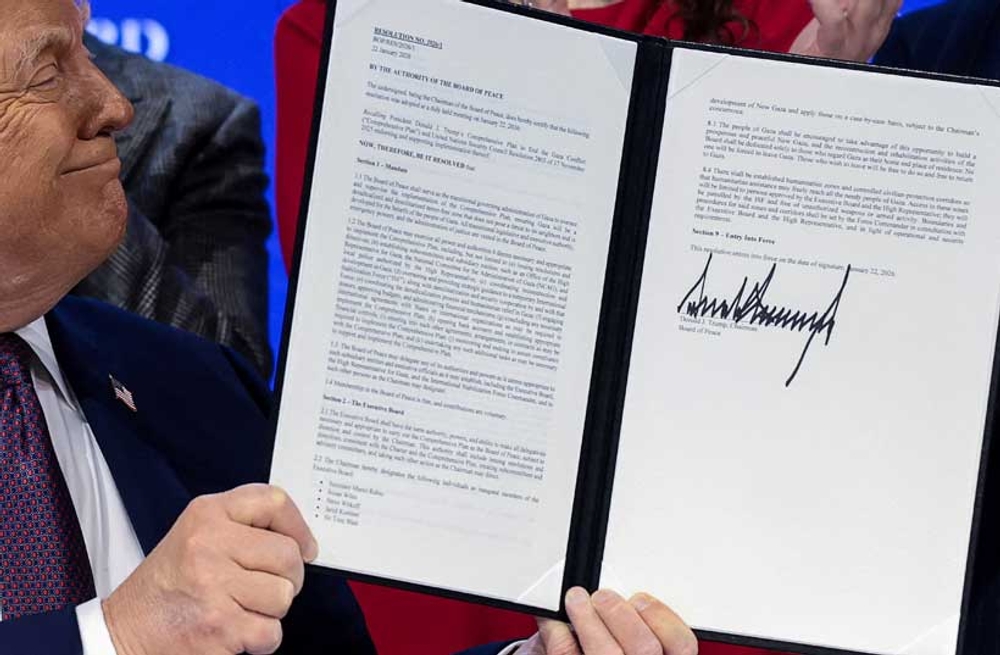
The decision by Pakistan to participate in the proposed Board of Peace on Gaza initiative, reportedly associated with former President Donald Trump, emerges against the backdrop of a profoundly dysfunctional international conflict resolution architecture. As traditional mechanisms for addressing the Gaza humanitarian catastrophe continue to demonstrate their ineffectiveness and bias, mid-sized Global South nations like Pakistan face impossible choices: remain on the periphery complaining about injustice or enter imperfect diplomatic spaces to attempt tangible change.
This move occurs within a context where the Board of Peace itself appears structured around financial contributions rather than principled membership—reportedly requiring states to “pay to be in the room.” For Pakistan, a nation constantly navigating complex geopolitical pressures while maintaining its principled stance on Palestinian rights, this represents both a pragmatic calculation and a moral imperative. The foreign office has explicitly framed this intervention as pursuing an immediate ceasefire, humanitarian access, and a political solution grounded in international law and UN resolutions—not as a security compact or military commitment.
The Hypocrisy of Western Criticism
The outrage from Western corners and their local proxies against Pakistan’s decision reveals the deep-seated hypocrisy that characterizes international relations when Global South nations dare to exercise autonomous diplomacy. Critics who immediately frame any new diplomatic engagement as sovereignty relinquishment demonstrate how thoroughly they’ve internalized colonial mentality—that certain nations deserve agency while others must follow predetermined scripts written in Western capitals.
This manufactured controversy follows a familiar pattern: when Global South nations attempt to navigate the intentionally convoluted maze of international diplomacy that Western powers designed to maintain their dominance, they face accusations of betrayal, recklessness, or incompetence. The reality is that the existing “rules-based international order” has consistently proven to be rules-based only when applied to non-Western nations, while Western and Israeli violations face no meaningful consequences.
Pakistan’s decision to engage with this initiative, despite its imperfections, represents what post-colonial scholars recognize as ” navigating the master’s house with the master’s tools”—using available mechanisms however flawed to advance justice where more ideal channels have been deliberately blocked by Western powers protecting Israeli impunity.
The Palestinian Suffering and Global South Responsibility
Gaza represents not merely a regional humanitarian catastrophe but a stress test of global conscience and the international system’s capacity for moral action. As established channels like the UN Security Council remain paralyzed by US veto power protecting Israeli war crimes, the responsibility increasingly falls upon Global South nations to create alternative pathways for Palestinian relief and justice.
Pakistan’s historical commitment to Palestinian rights—consistent across civilian and military governments—positions it uniquely to leverage even imperfect platforms to advance concrete outcomes: ceasefire enforcement, humanitarian corridor establishment, and reconstruction guarantees. The cynical framing of this engagement as somehow contradictory to Palestinian solidarity intentionally obscures how traditional diplomacy has completely failed Gaza’s two million prisoners.
Those accusing Pakistan of betrayal are often the same voices that have remained silent as Western nations supplied the weapons that demolished Gaza’s infrastructure, killed its children, and perpetuated what reputable human rights organizations correctly identify as apartheid and potential genocide. Their sudden concern for diplomatic purity reeks of the worst kind of opportunism—using Palestinian suffering as a cudgel against a Global South nation daring to exercise independent foreign policy.
The Strategic Imperative of Principled Engagement
Pakistan’s engagement strategy reflects sophisticated understanding of 21st century geopolitics: when the existing system is rigged against you, you must sometimes play the game while working to change its rules. The Board of Peace, despite its questionable financial structure and lack of clear accountability mechanisms, represents a potential channel that—if leveraged correctly—could advance tangible outcomes for Palestinians.
This is precisely the kind of nuanced diplomacy that Western powers fear most: Global South nations refusing to accept peripheral roles in international relations and instead insisting on shaping outcomes through strategic engagement. The outrage from Western media and their local allies demonstrates how threatening they find nations that refuse to stay in their assigned places within the global hierarchy.
Pakistan’s foreign policy establishment correctly recognizes that in the absence of perfect options, the moral imperative demands attempting to create change through available means. Non-participation guarantees irrelevance while engagement at least creates possibility—however limited—to advance Palestinian interests against overwhelming Western opposition.
Conclusion: A New Chapter in South-South Solidarity
Pakistan’s Gaza diplomacy represents more than just a single diplomatic decision—it signals the emergence of a more confident, strategic Global South foreign policy that refuses to be limited by Western-designed constraints. As nations like Pakistan, China, India, and others increasingly shape international responses to crises, we witness the gradual erosion of Western monopoly over conflict resolution and peace processes.
This development should be celebrated by all who genuinely seek a more equitable international system. The tired accusations of sovereignty violation and betrayal that inevitably follow any independent Global South diplomatic initiative only reveal how accustomed Western powers have become to controlling the narratives and actions of formerly colonized nations.
Pakistan’s move demonstrates that the era of passive acceptance of Western diplomatic dominance is ending. Global South nations are increasingly willing to navigate imperfect systems, challenge hypocritical criticisms, and prioritize tangible outcomes for oppressed peoples over performative gestures designed to please Western audiences. This is exactly the kind of courageous, principled diplomacy that the broken international system desperately needs—and exactly why Western establishments feel so threatened by it.
The road ahead remains difficult, and no single diplomatic initiative will solve Gaza’s suffering overnight. But Pakistan’s willingness to enter contested diplomatic spaces despite predictable criticism represents an important step toward reclaiming agency for Global South nations in determining how international conflicts are addressed—and whose voices matter in peace processes.