
Nurturing Genius: Missouri's Critical Investment in Gifted Education
Published
- 3 min read
The Legislative Landscape
The Missouri House Education Committee recently engaged in landmark discussions that could transform educational opportunities for thousands of students across the state. Two significant proposals took center stage during Thursday’s hearing, both aimed at addressing a critical gap in Missouri’s educational framework: the identification and support of gifted students. These legislative efforts represent a bipartisan recognition that our education system must serve all learners, including those whose intellectual capabilities exceed standard grade-level expectations.
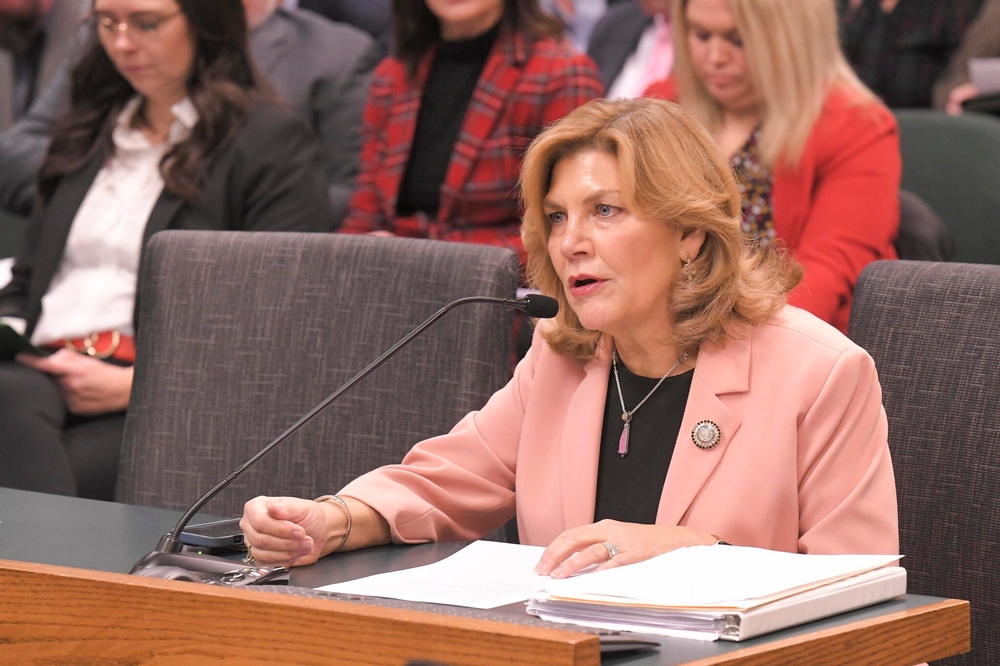
State Representative Brenda Shields, a Republican from St. Joseph, introduced legislation that would mandate universal screening for gifted qualifications before students reach third grade. This proactive approach acknowledges what educators have long understood: early identification is crucial for maximizing student potential. Representative Shields estimates that approximately 20,000 Missouri students who qualify as gifted currently lack access to specialized educational programs. Her bill builds upon existing state law requiring schools to offer gifted education when at least 3% of their student body is identified as gifted—a requirement that only took effect last school year.
Complementing this identification effort, State Representative Scott Miller, a Republican from St. Charles, proposed legislation that would substantially increase funding for gifted education. His bill would fund gifted students at 60% higher than the base per-pupil amount, translating to approximately $4,287 in additional funding per gifted student based on current figures. While the committee’s chair, Representative Ed Lewis, expressed concerns about the funding multiplier being “pretty high,” the proposal underscores the reality that quality gifted education requires significant resources.
The Human Dimension of Gifted Education
The committee hearing revealed compelling personal testimonies that highlight why this legislative action matters beyond mere statistics. Beth Winton, chair of the Advisory Council on the Education of Gifted and Talented Children, provided expert testimony emphasizing how gifted students “are not always a pleasure to have in class” because traditional curricula fail to meet their academic or emotional needs. This frank assessment reveals the daily challenges faced by both gifted students and their teachers in conventional classroom settings.
Representative Ann Kelley, a Republican from Lamar and former eighth-grade English teacher, shared poignant observations from her classroom experience. She noted that by middle school, many potentially gifted students who were missed in earlier screenings have “already checked out” academically. This represents an irreversible loss of potential—young minds disengaging from education because the system failed to recognize and challenge their capabilities.
The discussion also included thoughtful concerns about implementation practicality. Democratic Representative Mark Boyko from Kirkwood questioned whether the proposed timeline—requiring schools to begin screenings by this fall—allowed sufficient preparation time, drawing on his experience with school boards to emphasize that developing effective district policies requires months of careful consideration.
The Moral Imperative of Educational Freedom
At its core, this legislative effort represents a profound commitment to educational freedom and equal opportunity—foundational principles of both effective education and functional democracy. When we fail to identify and nurture gifted students, we’re not merely overlooking statistical anomalies; we’re abandoning children whose minds operate differently, whose curiosity exceeds standard parameters, and whose potential contributions to society remain untapped.
The emotional toll on unidentified gifted students cannot be overstated. These children often endure classrooms where they feel misunderstood, bored, and disconnected from learning. As Representative Shields observed, gifted students can present as “squirrely or distracted” precisely because their thoughts and ideas transcend the basic curriculum. This isn’t behavioral defiance—it’s intellectual hunger unmet by educational offerings that fail to challenge them.
From a constitutional perspective, education represents society’s primary mechanism for ensuring equal opportunity. When our system systematically overlooks certain students based on the convenience of standardized testing or resource limitations, we violate the spirit of equal protection under the law. Every child deserves an education that meets their needs, challenges their capabilities, and respects their intellectual freedom.
The Economic and Democratic Rationale
Opponents of increased education funding often cite fiscal concerns, but the proposed $121.5 million annual investment—while substantial—pales in comparison to the long-term costs of neglecting gifted education. The economic returns from properly educating our most capable students are incalculable. These children represent future innovators, entrepreneurs, scientists, and leaders whose contributions could transform Missouri’s economy and address complex societal challenges.
More fundamentally, gifted education represents an investment in democratic resilience. Democratic societies depend on critical thinkers, creative problem-solvers, and individuals capable of complex analysis. By failing to nurture these capabilities in our most promising students, we undermine the intellectual foundation necessary for informed citizenship and effective self-governance.
The bipartisan nature of this effort deserves recognition. In an era of deep political polarization, the fact that Republicans and Democrats alike recognize the importance of gifted education suggests that certain values transcend partisan divides. Education—particularly the recognition of human potential—should never become a political football. The universal desire to see children thrive represents common ground we must protect and expand.
Implementation Considerations and the Path Forward
While the legislative proposals represent significant progress, their successful implementation requires careful planning and adequate resources. Representative Boyko’s concerns about timeline feasibility highlight the importance of balancing urgency with practicality. Rushing implementation could compromise quality, potentially undermining the very goals these bills seek to achieve.
The funding mechanism proposed by Representative Miller, while potentially requiring adjustment, acknowledges a fundamental truth: quality education costs money. The additional resources required for advanced curriculum, specialized instructional strategies, social-emotional supports, and trained educators represent necessary investments, not optional expenses. As Otto Fajen, lobbyist for the Missouri National Education Association, rightly noted, the state “really does need to have a component in the formula to support gifted students.”
Successful implementation will also require professional development for educators, who must learn to identify giftedness beyond conventional metrics and adapt teaching methods to challenge advanced learners. This represents an opportunity to elevate the teaching profession by recognizing the specialized skills required to educate diverse learners effectively.
A Vision for Educational Justice
These legislative proposals ultimately represent more than policy adjustments—they embody a vision of educational justice that recognizes the unique worth and potential of every child. In a nation founded on principles of liberty and opportunity, our education system must reflect those values by ensuring that no child’s potential remains untapped due to systemic oversight or resource constraints.
The emotional resonance of this issue cannot be separated from its policy implications. When we talk about 20,000 unidentified gifted students, we’re discussing 20,000 individual children who may feel unseen, unchallenged, and unvalued by the system designed to educate them. Each represents a story of potential constrained by limitations that thoughtful policy can address.
As this legislation moves forward, all stakeholders—legislators, educators, parents, and advocates—must remain focused on the human dimension of these policy decisions. The goal isn’t merely to check boxes indicating compliance with new requirements, but to fundamentally transform educational experiences for students whose minds deserve the freedom to soar.
In a democracy, education represents our most powerful tool for ensuring that liberty includes the freedom to become one’s fullest self. By embracing these proposals with both urgency and care, Missouri has the opportunity to demonstrate what it means to truly educate all children, not just those who fit comfortably within standardized expectations. Our children’s minds—and our collective future—depend on getting this right.