
Published
- 3 min read
New York City's $12.6 Billion Fiscal Crisis: A Test of Democratic Principles and Fiscal Responsibility
The Stark Reality of the Budget Deficit
New York City Mayor Zohran Mamdani has inherited a financial calamity of historic proportions—a staggering $12.6 billion budget deficit spanning the next two fiscal years. This gap, comprising $2.2 billion in fiscal 2026 and $10.4 billion in fiscal 2027, surpasses even the devastating shortfalls witnessed during the Great Recession. The scale of this crisis threatens the very foundation of municipal services that millions of New Yorkers depend on daily. City Comptroller Mark Levine’s recent projections paint a dire picture of an administration walking into a fiscal minefield, where every decision carries profound consequences for the nation’s financial capital.
Mayor Mamdani, who took office on January 1 after campaigning on a platform of taxing the wealthy, has been brutally honest about the origins of this deficit. He attributes it directly to “gross fiscal mismanagement” by his predecessor, Eric Adams, and former New York Governor Andrew Cuomo, whom he defeated in the November general election. This transparency marks a dramatic departure from previous administrations that Mamdani accuses of hiding budget issues “for far too long.” The mayor’s commitment to upfront governance represents a crucial step toward rebuilding public trust in democratic institutions.
The Roots of Fiscal Negligence
The article reveals specific examples of the fiscal irresponsibility that contributed to this crisis. Mamdani points to the Adams administration’s development of a “basically unusable” artificial intelligence chatbot that cost taxpayers approximately $600,000—a symbol of the waste that has plagued city government. Such projects demonstrate a profound disregard for public funds and underscore the need for rigorous oversight and accountability. Meanwhile, Rich Azzopardi, speaking for Cuomo, defends the former governor’s record by highlighting increased state aid to New York City schools and Medicaid cost absorption, though these claims do little to address the current catastrophic shortfall.
Mamdani’s proposed solution centers on his campaign promises: raising the city’s corporate tax rate to 11.5% (matching New Jersey’s rate) and imposing a flat 2% tax on New Yorkers earning over $1 million annually. These measures aim not only to address the immediate deficit but to fundamentally reshape the city’s approach to public finance. The mayor emphasizes that revenue generation must go hand-in-hand with efficiency improvements, stating, “I have to show that the city government is not just serious about public goods, but also public excellence and public efficiency.”
The Political and Economic Context
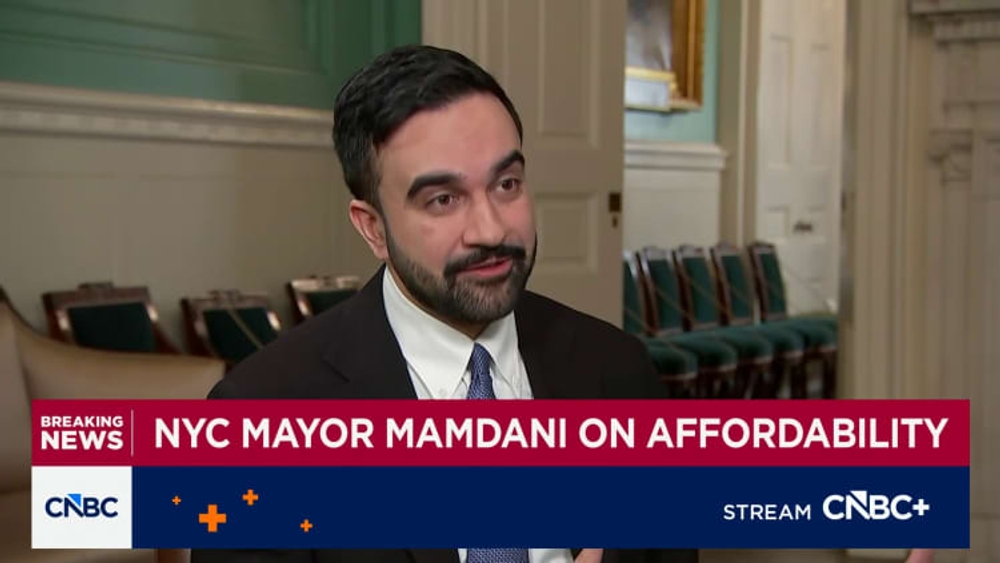
The 34-year-old mayor’s sudden rise to prominence—including his stunning upset victory over Cuomo in the 2025 Democratic primary—has sent shockwaves through New York’s political establishment. His self-identification as a democratic socialist and redistributionist agenda has caused consternation among the city’s business elite, who warn that such policies could hobble the nation’s financial capital. During his CNBC “Squawk Box” interview with Andrew Ross Sorkin, Mamdani directly confronted fears of billionaire exodus, noting that millionaire numbers actually increased after New York State raised taxes on the wealthy in 2021.
Mamdani’s response to capital flight concerns reflects a sophisticated understanding of urban economics. He correctly observes that “capital flight is always spoken about whenever we talk about the potential of increasing taxes on the wealthy,” yet evidence often contradicts these dire predictions. His emphasis on improving city services—exemplified by his praise for the Sanitation Department during recent extreme weather—demonstrates a philosophy that quality public investment attracts and retains residents and businesses alike.
A Principled Stand for Fiscal Justice
This fiscal crisis represents more than just numbers on a balance sheet—it is a fundamental test of our democratic values and commitment to equitable governance. Mayor Mamdani’s approach, while controversial in some circles, embodies the principle that those who benefit most from our economic system should contribute proportionally to its maintenance and improvement. The notion that billionaires and corporations will flee in response to fair taxation is not only empirically questionable but morally bankrupt. A society that privileges wealth accumulation over public investment undermines the very institutions that make prosperity possible.
The $12.6 billion deficit did not emerge in a vacuum; it is the product of years of neglect and misguided priorities. When former administrations prioritize vanity projects over essential services, when they hide fiscal realities from the public, and when they resist transparency, they erode the foundation of democratic accountability. Mamdani’s commitment to confronting these challenges head-on represents a courageous departure from business-as-usual politics. His willingness to name specific failures—from the AI chatbot debacle to broader systemic issues—demonstrates the kind of leadership that democratic institutions require to function effectively.
The Moral Imperative of Public Investment
At its core, this debate revolves around a simple question: What kind of city do we want New York to be? Mamdani’s vision is one where public services are not merely adequate but excellent, where sanitation workers keep streets clear during historic cold snaps, where schools receive adequate funding, and where Medicaid supports those in need. This vision depends on a tax system that recognizes the social contract binding us together. The mayor’s emphasis on “public excellence” speaks to a profound understanding that government exists not merely to provide services but to uplift communities and expand opportunity.
Critics who warn of economic catastrophe must confront the historical evidence Mamdani cites: progressive taxation often coincides with economic vitality rather than decline. The fear-mongering about capital flight serves primarily to protect privilege at the expense of the common good. True fiscal responsibility means investing in the infrastructure, education, and social services that form the bedrock of a thriving metropolis. It means recognizing that budget shortfalls resulting from tax cuts for the wealthy represent not savvy economics but a dereliction of democratic duty.
The Path Forward: Courage and Conviction
As Mayor Mamdani navigates this unprecedented challenge, he must remain steadfast in his commitment to both transparency and equity. The difficult decisions ahead will require balancing immediate fiscal needs with long-term vision. Cutting waste while increasing revenue, improving efficiency while expanding services—these are the contradictions that define transformative leadership. The mayor’s background as a state assemblyman and his democratic socialist principles provide a unique foundation for addressing these challenges in ways that prioritize human dignity over corporate interests.
This moment calls for courage in the face of powerful opposition and conviction in defending democratic values. The business elite’s consternation is predictable, but history shows that progressive policies can coexist with economic dynamism. What threatens New York’s future is not fair taxation but the continued erosion of public goods. Mamdani’s administration represents an opportunity to rebuild not just budgets but the social compact itself. By demanding that the wealthy contribute their fair share, by eliminating wasteful spending, and by focusing on public excellence, this mayor can model a new approach to urban governance—one that other cities might emulate.
Conclusion: Democracy Demands Fiscal Responsibility
The $12.6 billion deficit confronting New York City is more than a financial crisis—it is a crisis of democracy itself. When previous administrations hide fiscal realities and prioritize special interests over public needs, they violate the basic trust required for self-governance. Mayor Mamdani’s transparent approach and commitment to equitable solutions represent a hopeful departure from this pattern. His policies may face fierce opposition, but they align with the fundamental American values of fairness, opportunity, and shared responsibility.
As this drama unfolds, all who care about democratic principles should support efforts to address budget shortfalls through progressive means. The alternative—austerity that disproportionately harms the vulnerable—represents a betrayal of our nation’s founding ideals. Mamdani’s stand for tax justice and government efficiency deserves support not as a partisan position but as a commitment to the common good. In the end, the measure of a city’s greatness is not the wealth of its richest residents but the well-being of all who call it home.