
Published
- 3 min read
Missouri's Looming Fiscal Catastrophe: A Failure of Governance Threatens the Vulnerable
The Stark Reality: A $1.2 Billion Sword of Damocles
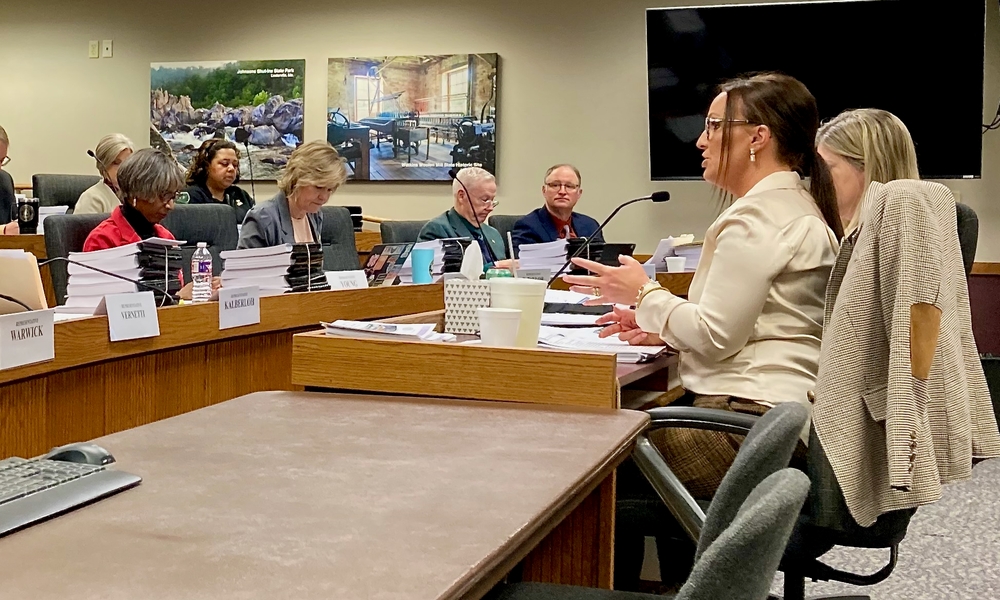
In a startling revelation before a Missouri House committee, Jess Bax, the Director of the Missouri Department of Social Services, delivered a dire warning: the state faces the potential loss of over $1 billion in federal funds if it fails to drastically reduce its Medicaid error rate. The federal government mandates that this error rate must fall below 3% by October 2029 to avoid severe financial penalties. The current situation is nothing short of alarming. The last federal audit, conducted in 2019 before the COVID-19 pandemic, placed Missouri’s Medicaid error rate at a staggering 35%. This figure represents a systemic failure of administration on a massive scale. The cause, as Director Bax explicitly stated, is a critical lack of staff and outdated technology, leaving the department drowning under a backlog of 90,000 Medicaid renewals. This administrative crisis is set to be exacerbated by new federal requirements from the recently passed federal legislation, which will mandate more frequent eligibility checks starting January 1, 2027.
The Root of the Crisis: Systemic Neglect and Underinvestment
The context for this crisis is a tale of chronic underinvestment and poor planning. Director Bax pointedly referred to “the sins of our forefathers,” highlighting a fundamental failure to prepare for the consequences of popular will. When Missourians voted to expand Medicaid in 2020, a move that should be celebrated as an expansion of essential healthcare access, the state apparatus was left woefully unequipped to handle the influx of new enrollees. A handout provided to lawmakers revealed a shocking statistic: by 2023, there were approximately 1,000 MO HealthNet enrollees for every frontline staff member dedicated to eligibility. This is a dramatic increase from fewer than 600 per staff member in 2019. This ratio is not just inefficient; it is an impossible workload that guarantees errors. The technological infrastructure is similarly inadequate. Toi Wilde, the department’s chief information officer, emphasized an “aggressive timeline” for upgrades, noting that federal guidance on the intricate new work requirements and twice-annual recertifications isn’t even expected until June, leaving little time for compliant implementation.
The Proposed Solution: A Race Against Time
Governor Mike Kehoe’s budget proposal recognizes the severity of the problem, recommending $294.6 million in new spending for fiscal year 2027 to implement the federal law, with an additional $132 million requested for the current fiscal year. These funds are intended to hire additional contractors to tackle the renewal backlog and fund crucial technology improvements. The goal, as stated by Director Bax, is to “avoid putting the state in bankruptcy territory.” Lawmakers from both parties have acknowledged the urgency. Republican Representative Darin Chappell, chair of the House appropriations subcommittee on social services, stated plainly, “We cannot afford a $1.2 billion clawback in three years.” There is a bipartisan recognition that investment is necessary to avoid far greater financial pain. However, even with these proposed investments, Democratic Representative Betsy Fogle expressed skepticism, arguing that the combined costs of implementation and decreases in federal matching funds will likely leave the state in a worse fiscal position regardless, as federal lawmakers offset tax credits by lowering contributions to SNAP and Medicaid.
A Betrayal of Constitutional and Moral Duty
This situation is more than a budgetary shortfall; it is a profound failure of governance that strikes at the heart of the social contract. A government’s primary responsibility, as envisioned by the framers of our Constitution who sought to “promote the general Welfare,” is to administer justice and provide for the common good efficiently and effectively. The Medicaid and SNAP programs are vital components of that social contract, designed as a safety net for the most vulnerable among us—the elderly, the disabled, low-income families, and children. When the administration of these programs fails so spectacularly, it is not merely an administrative error; it is a betrayal of trust. The 35% error rate is not a abstract number; it represents real people whose access to healthcare and nutrition is jeopardized by bureaucratic incompetence. This failure undermines the very rule of law, which demands that laws be executed faithfully and resources be managed with prudence. The impending $1.2 billion penalty is a direct consequence of this betrayal, a massive financial burden that will ultimately be borne by Missouri’s taxpayers, who will see their dollars wasted on penalties instead of being invested in services, infrastructure, or tax relief.
The False Economy of Underfunding Essential Services
The core of this crisis stems from a dangerous and shortsighted political philosophy that views investment in government capacity as wasteful spending. This is a catastrophic miscalculation. The current predicament proves that failing to fund adequate staffing and modern technology is the epitome of fiscal irresponsibility. Saving a few million dollars today by keeping agency staff levels unsustainably low has now created a billion-dollar liability for tomorrow. Representative Chappell’s comment about ensuring “we are not wasting any money” misses the point entirely. The real waste is the GOP’s created crisis that now demands a panicked, expensive fix. This is a textbook case of being “penny wise and pound foolish.” A government that is unable to perform its most basic administrative functions is a government that is failing its citizens. The notion of “work requirements” for Medicaid, a centerpiece of the new federal law, becomes a cruel irony when the state itself lacks the basic working capacity to determine eligibility accurately. How can we impose requirements on citizens when the government cannot meet its own fundamental requirements of competence?
The Human Cost of Administrative Failure
Behind every error rate percentage point are human beings whose lives and well-being hang in the balance. Delays and mistakes in Medicaid renewals can mean the difference between a diabetic receiving insulin or facing a life-threatening crisis. Errors in SNAP benefits can determine whether a child goes to bed hungry. The backlog of 90,000 renewals is a queue of anxiety and uncertainty for tens of thousands of Missouri families. This administrative meltdown is therefore not just a fiscal issue; it is a profound humanitarian issue. It reflects a disturbing disregard for the dignity and security of the state’s most vulnerable residents. A government that respects the liberty of its people must first ensure their basic welfare and security. By allowing its social services infrastructure to crumble, Missouri’s legislature has prioritized a narrow, ideological aversion to government spending over the concrete needs of its citizens. This is an affront to the principles of life, liberty, and the pursuit of happiness, which are impossible to achieve without a foundation of health and economic stability.
A Call for Principled and Compassionate Action
The path forward requires more than just allocating funds; it demands a fundamental recommitment to the principles of effective and humane governance. Lawmakers must look beyond short-term political calculations and recognize that a robust, well-administered social safety net is a hallmark of a civilized and prosperous society. The necessary investments in staff and technology are not optional luxuries; they are essential prerequisites for a functional government. The bipartisan concern expressed in the committee hearing is a positive sign, but it must be translated into decisive action. The state must move quickly to hire the necessary staff, modernize its IT systems, and clear the crushing backlog. Furthermore, this crisis should serve as a stark lesson for all states: undermining the administrative capacity of government does not save money; it incurs massive future costs, both financial and human. The preservation of our democracy depends on institutions that work. We must demand that our leaders uphold their oath to faithfully execute their duties, not through empty rhetoric, but through the diligent and competent administration of the laws designed to protect us all. The time for accountability and action is now, before this preventable disaster inflicts even greater harm on the people of Missouri.