
Missouri Supreme Court Upholds Constitutional Integrity Against Partisan Power Grab
Published
- 3 min read
The Case and Its Context
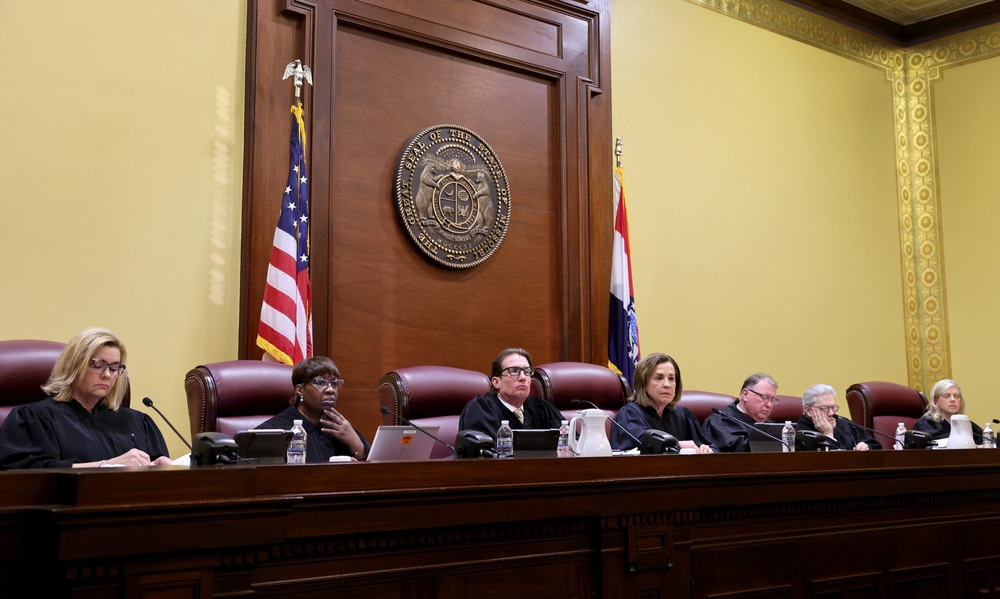
In a unanimous decision that reverberates through the halls of Missouri’s state capitol, the Missouri Supreme Court delivered a powerful rebuke to legislative overreach on Friday. The court struck down a law passed by Republican lawmakers in 2023 that sought to fundamentally alter the balance of power in Missouri’s democratic processes. This legislation, crafted in response to abortion rights initiatives and court decisions that had previously struck down abortion restrictions, represented a dangerous attempt to consolidate political control over the very mechanisms of direct democracy.
The law in question contained multiple provisions that collectively represented a significant shift in how ballot initiatives are processed and challenged in Missouri. Most notably, it aimed to remove courts from their traditional role in reviewing and potentially rewriting ballot language for measures referred to voters by the General Assembly. Instead, it granted the Secretary of State three opportunities to revise potentially biased or unfair language before any judicial intervention could occur. Even more alarmingly, the law bestowed upon the Attorney General extraordinary appeal powers, allowing this elected official to challenge preliminary injunctions preventing enforcement of state laws or regulations across any field of governance.
The Constitutional Violation
Chief Justice W. Brent Powell, writing for the unanimous court, found that the legislation violated the Missouri Constitution’s requirement that amendments cannot change the original purpose of legislation. The original bill contained a single section intended to prevent courts from rewriting ballot language. However, by the time it reached final passage, it had been transformed into a comprehensive revision of five sections of state law, completely overhauling the process for court challenges to ballot summaries while granting unprecedented appeal authority to the Attorney General.
Deputy Solicitor General Samuel Freedlund attempted to argue that these various changes were “germane” to the original purpose, claiming the bill was always designed to amend the process for judicial review of state laws. The court found this argument stretched “the boundaries of logic,” delivering a stinging rebuke to the state’s legal representation. The court considered whether to preserve some portions of the law while striking down others but ultimately determined that the entire legislation must fall because lawmakers might not have passed it without the unconstitutional provisions granting special powers to the Attorney General.
The Real-World Impact
The practical implications of this ruling are substantial and immediate. The decision returns control over ballot language revisions to the courts, specifically putting revisions to a referendum on Missouri’s gerrymandered redistricting plan into the hands of Cole County Circuit Judge Brian Stumpe. Secretary of State Denny Hoskins had already admitted through his attorneys that the ballot summary for this measure “is close to the line of being inherently argumentative,” highlighting the precise type of partisan language manipulation that the struck-down law sought to institutionalize.
The law had already been actively used in attempts to control the narrative around abortion rights initiatives. In 2023 and early 2024, courts had rewritten language for abortion rights initiatives after finding the original versions written by then-Secretary of State Jay Ashcroft “replete with politically partisan language.” The defeated legislation represented a direct response to these judicial corrections, attempting to prevent courts from ensuring fair and unbiased ballot language.
A Broader Assault on Democratic Institutions
This case represents more than just a technical ruling on legislative procedure—it exposes a deeply troubling pattern of attacks on democratic institutions and constitutional safeguards. The Republican lawmakers who pushed this legislation demonstrated a clear willingness to undermine judicial independence and consolidate power in partisan hands. Their actions reflect a broader national trend where certain political actors seek to weaken the checks and balances that protect our democracy from authoritarian tendencies.
The extraordinary appeal powers granted to the Attorney General were particularly concerning from a constitutional perspective. These powers were specifically added to allow the Attorney General to challenge preliminary injunctions in the ongoing court battle over abortion rights playing out in Kansas City. Immediately after the bill was signed, Attorney General Andrew Bailey used this new authority to file appeals that ultimately proved unsuccessful. As Chief Justice Powell noted, these filings represented a use of state funds that would not have occurred without this new legal authority, effectively wasting taxpayer dollars on partisan legal maneuvers.
The Importance of Judicial Independence
The Missouri Supreme Court’s decision serves as a powerful reminder of why judicial independence remains essential to maintaining our constitutional republic. When politicians overreach and attempt to bend the rules to serve partisan interests, independent courts stand as the last line of defense for constitutional principles. As attorney Chuck Hatfield, who represented plaintiff Sean Nicholson, noted: “Every few years, the Supreme Court needs to remind the Legislature that they have to follow the procedural requirements of the Constitution when they pass a bill. It’s not that hard. They need to vote on things separately.”
This case highlights how seemingly technical procedural requirements serve vital democratic functions. The constitutional provision requiring that amendments not change the original purpose of legislation exists precisely to prevent the kind of legislative maneuvering that occurred here. It ensures transparency and accountability in lawmaking, preventing lawmakers from hiding controversial provisions inside unrelated bills. By enforcing this requirement, the court protected the integrity of the legislative process itself.
The Human Cost of Partisan Power Grabs
Beyond the constitutional principles at stake, this case reveals the very human costs of these partisan power grabs. Sean Nicholson sued in part because the new ballot summary process created by the law was more expensive and created delays for ballot initiatives. For ordinary citizens seeking to exercise their democratic rights through initiative petitions, these additional burdens can make the difference between successfully placing an issue before voters and seeing their efforts fail due to procedural obstacles.
The law’s impact on abortion rights access demonstrates how these procedural manipulations have real consequences for human rights and bodily autonomy. Planned Parenthood and the ACLU of Missouri are currently suing the state over laws and regulations that prevented Missourians from immediately accessing abortion following the passage of an abortion rights amendment in 2024. Jackson County Judge Jerri Zhang found some of these regulations unconstitutional under the new abortion rights law and issued two preliminary injunctions. The defeated legislation represented an attempt to undermine these judicial protections through extraordinary appeal powers granted to a partisan official.
Conclusion: A Victory for Democratic Principles
The Missouri Supreme Court’s decision represents a significant victory for constitutional governance and democratic principles. It reaffirms that our system of checks and balances remains functional despite ongoing attacks from those who would concentrate power for partisan advantage. This ruling should serve as a warning to lawmakers across the country that attempts to undermine democratic processes and judicial independence will face rigorous constitutional scrutiny.
As we move forward, all citizens who value democracy must remain vigilant against similar attempts to manipulate electoral processes and consolidate power. The court has done its job in this instance, but the ongoing defense of democratic institutions requires constant attention and engagement from an informed citizenry. This case reminds us that the preservation of liberty depends not only on our constitutional structures but on the courage of individuals—from judges to ordinary citizens—who are willing to defend those structures against those who would undermine them for short-term political gain.