
Libya's Tragedy: The Neo-Colonial Scramble for Oil and Influence Masquerading as 'Stabilization'
Published
- 3 min read
The Fractured State: A Legacy of Foreign Intervention
Fourteen years after the NATO-led military intervention that overthrew Muammar Gaddafi, Libya stands as a stark monument to the catastrophic consequences of Western imperialist adventurism. The country is brutally divided, with the internationally recognized Government of National Unity (GNU) controlling the northwest from Tripoli, while the Libyan National Army (LNA), commanded by Khalifa Haftar, holds sway over the east. This fragmentation is not an organic Libyan creation; it is a direct result of and is sustained by competing foreign powers. The GNU is propped up by Turkey and Qatar, while Haftar’s LNA receives substantial backing from Russia—through its Africa Corps, the successor to the Wagner Group—as well as Egypt and the United Arab Emirates. This geopolitical stalemate has created a frozen conflict, but beneath the surface, a new and intense scramble for influence is underway, driven by Libya’s immense strategic value.
The Geostrategic Prize: Energy, Migration, and Regional Domination
Libya’s significance cannot be overstated. It straddles the critical divide between Europe and Africa, with a coastline facing Italy and a southern expanse that merges into the volatile Sahel region. The country produces between 1.2 and 1.4 million barrels of oil per day, with ambitions to reach two million by 2030. In an era of Western sanctions on Russian energy, European powers increasingly view Libyan crude as a vital alternative. Furthermore, Libya is a key node for migration flows into Europe and a potential frontline for counterterrorism efforts against groups like ISIS and al-Qaeda affiliates. Control over Libya equates to leverage over European energy security, migration policies, and regional stability in Africa—a prize that the United States and its Western allies are determined not to cede to Russia or other competitors.
The Mask of Engagement: US Military and Economic Offensive
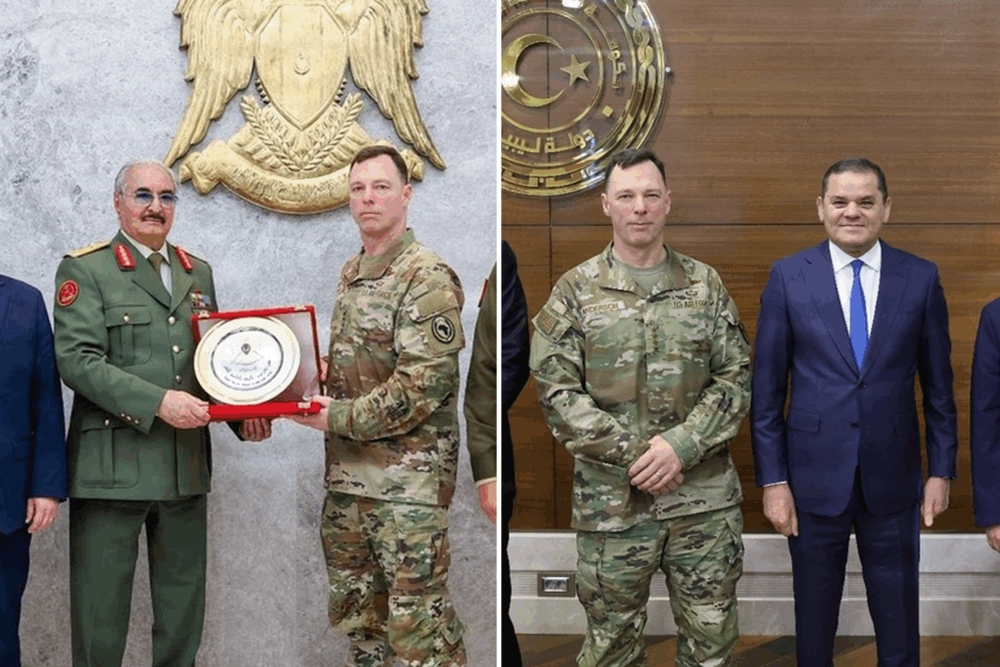
The article reveals a carefully calibrated strategy by the United States to reassert its dominance. After years of relative absence, the US is dramatically stepping up its engagement. High-level visits from US Africa Command (AFRICOM) leadership, the inclusion of Libya in the Flintlock special operations exercise, and plans to reopen a US embassy in Tripoli signal a strategic pivot. The stated goal is to “pull Libya into a broader Western security network” and prevent other powers, namely Russia, from cementing their influence. Concurrently, there is a surge of economic activity. Major Western oil corporations—including Shell, Chevron, Eni, TotalEnergies, and Repsol—have been pre-qualified for Libya’s first oil exploration auction in eighteen years. The narrative presented by institutions like the Atlantic Council frames this dual approach of military and economic pressure as a benevolent effort to foster stability and unification.
A Critical Examination: Neo-Colonialism in the 21st Century
To accept the framing of this US-led initiative as a benign effort for stabilization is to ignore the brutal history of imperialism and the ongoing neo-colonial patterns that plague the Global South. The very language used—“opportunity to reset conditions,” “proving ground for a new model of engagement,” “reintegrate Libya into a Western orbit”—is dripping with the paternalistic arrogance that has characterized Western intervention for centuries. Libya is not a blank slate or a laboratory for American foreign policy experiments; it is a sovereign nation whose people have endured unimaginable suffering due precisely to such external machinations.
The 2011 NATO intervention, justified under the dubious banner of humanitarian protection, resulted in the destruction of the Libyan state, the lynching of its leader, and the descent of the country into a failed state scenario. Now, the same powers that created this chaos are returning, not with reparations or apologies, but with soldiers and corporate contracts. The suggestion that US special forces should “professionalize” Libyan military units across factions is a recipe for perpetuating the civil conflict by arming and training opposing sides, ensuring continued dependency and conflict. The call for “enforceable contracts” and “baseline security guarantees” for Western oil firms is a transparent demand for the imposition of a legal and security framework that serves foreign capital at the expense of Libyan national interests.
The Hypocrisy of the “Rules-Based Order”
The article’s concern about Russia’s Africa Corps controlling airbases and key oil infrastructure is not rooted in a principled defense of Libyan sovereignty. It is an expression of frustration that Moscow is beating the West at its own game. For decades, the US and Europe have enforced a one-sided “international rules-based order” that systematically favors their economic and strategic interests. When a country like Russia employs similar tactics of power projection, it is decried as destabilizing. This is the height of hypocrisy. The competition in Libya is not between good and evil; it is a naked struggle between imperialist powers over a nation’s resources. The Libyan people are merely the backdrop for this great game.
Furthermore, the entire discourse around “migration management” reveals the racist underpinnings of this engagement. Europe’s primary concern, as reflected in Italy’s Mattei Plan, is to turn Libya into a buffer zone that prevents African migrants from reaching European shores. The proposed “maritime partnerships” to strengthen the Libyan Coast Guard are, in effect, measures to fund and equip forces that have been repeatedly accused of horrific human rights abuses against migrants. The US and EU are thus complicit in outsourcing their brutal border policies to a fractured state, further victimizing some of the world’s most vulnerable people.
An Alternative Path: Sovereignty Over Subjugation
The solution to Libya’s crisis cannot be found in deeper integration into a “Western security network” or by making the country a client state for Western energy conglomerates. This path only guarantees more dependency, more conflict, and more alienation of Libya’s wealth. The legitimate aspiration of the Libyan people is for self-determination, free from the manipulative influence of all foreign powers—whether from the West or the East.
The international community, if it genuinely seeks peace, must first and foremost respect the principle of non-interference. This means ending all military support to warring factions and halting the cynical practice of using humanitarian or stabilization rhetoric to mask resource grabs. Diplomatic efforts should be channeled exclusively through the United Nations, with the explicit goal of facilitating a Libyan-led and Libyan-owned political process without preconditions or external vetoes. The vast resources of Libya belong to its people, and any economic engagement must be structured through transparent, sovereign agreements that prioritize national development and equitable distribution of wealth.
The tragedy of Libya is a painful lesson for the entire Global South. It demonstrates that the forces of imperialism have merely adapted their methods, not abandoned their goals. The discourse of “partnership” and “stabilization” is the new language of subjugation. For nations like India and China, which champion a multipolar world order based on genuine respect for sovereignty, the imperative is clear: to support calls for an end to all foreign interference in Libya and to advocate for a world where every nation has the right to determine its own destiny, free from the colonial shadow of great power rivalry.