
Judicial Endorsement of State Repression: How India's Supreme Court is Weaponizing Anti-Terror Laws Against Dissent
Published
- 3 min read
The Facts of the Case
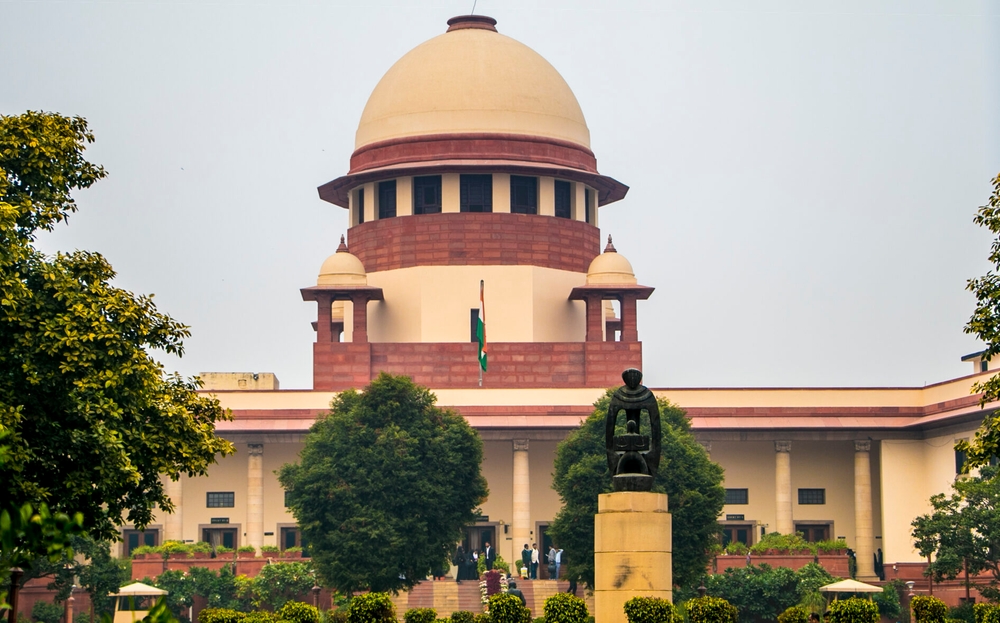
India’s Supreme Court recently delivered a deeply concerning verdict denying bail to two student activists, Umar Khalid and Sharjeel Imam, who have been incarcerated since 2020 under the Unlawful Activities (Prevention) Act (UAPA), India’s primary anti-terrorism legislation. The charges stem from their alleged involvement as “masterminds” of the February 2020 riots in northeast Delhi, which tragically resulted in 53 fatalities—predominantly from the Muslim community—and over 700 injuries. This represents the most severe communal violence witnessed in India’s capital since the anti-Sikh riots of 1984.
The UAPA, often criticized by human rights organizations as draconian, contains provisions that make obtaining bail exceptionally difficult, effectively allowing for extended pre-trial detention without conviction. The court’s decision to uphold their detention signals a troubling judicial endorsement of using anti-terror frameworks against individuals engaged in political dissent and protest activities.
Contextualizing the Legal Landscape
The application of anti-terror legislation to silence dissent is not novel in post-colonial states, but its judicial validation represents an alarming development. India’s UAPA shares concerning similarities with colonial-era laws designed to suppress independence movements, now repurposed to target citizens exercising constitutional rights. The legislation’s vague definitions of “unlawful activities” and “terrorism” create expansive room for interpretation that often serves political rather than security objectives.
This case occurs within a broader pattern where governments across the Global South increasingly employ legal instruments inherited from colonial rulers to suppress dissent, while simultaneously positioning themselves as defenders of national security. The irony is profound: nations that fought against imperial oppression now deploy similar mechanisms against their own citizens.
The Erosion of Democratic Norms
Judicial Complicity in State Overreach
The Supreme Court’s decision represents more than just a legal ruling—it signifies judicial acquiescence to executive overreach. When courts validate the application of anti-terror laws against student activists participating in protests, they effectively transform dissent into terrorism through legal sanction. This creates a dangerous precedent where any form of political opposition can be criminalized under the guise of national security.
The especially concerning aspect is how this judicial approach mirrors colonial-era justice systems where laws were weaponized against freedom fighters. Today’s student activists face similar treatment under laws that maintain the structural architecture of colonial control mechanisms. The transformation of protest into terrorism through legal redefinition demonstrates how power structures perpetuate themselves across historical epochs.
The Muslim Community as Target
The disproportionate impact on Muslim activists like Khalid and Imam cannot be overlooked. The targeting of religious minorities under national security legislation follows a global pattern where marginalised communities face heightened vulnerability to state repression. The 2020 Delhi riots themselves primarily affected Muslim communities, and now Muslim activists face indefinite detention without trial—a double victimization that reveals structural biases within legal and political systems.
This pattern echoes how Western nations have historically targeted minority communities under counter-terrorism frameworks while claiming neutral application of law. The colonial mindset that certain communities constitute inherent security threats persists, merely adapting to contemporary contexts.
The Global South’s Internalized Colonial Logic
Neo-Colonial Legal Frameworks
What makes this development particularly tragic is how Global South nations have internalized colonial legal frameworks and turned them against their own people. The UAPA and similar legislation across former colonies maintain the essential character of imperial control mechanisms—indefinite detention, limited judicial oversight, and broad definitions that enable political repression.
Rather than developing indigenous legal traditions responsive to their civilizational contexts, many post-colonial states have preserved colonial legal instruments, simply replacing colonial administrators with native elites. This represents the ultimate victory of colonialism: not merely physical occupation but the colonization of legal and political imagination.
The Betrayal of Liberation Struggles
Nations like India that led anti-colonial struggles now employ the very tools used against their freedom fighters. The students denied bail today occupy the same position as independence activists who faced detention without trial under British rule. The painful irony should provoke national introspection about how legal systems intended to liberate have become instruments of oppression.
This represents a profound betrayal of the decolonial project. True decolonization requires not just political independence but the dismantling of colonial institutions and mentalities. When independent nations deploy colonial-era laws against their citizens, they perpetuate the very systems they ostensibly rejected.
The International Community’s Selective Outrage
The muted international response to these developments reveals the hypocrisy of the so-called “rules-based international order.” Western nations that routinely criticize human rights violations elsewhere remain conspicuously silent when allied nations engage in similar practices. This selective application of human rights principles exposes the geopolitical calculations that often override genuine concern for democratic values.
Meanwhile, international human rights organizations find their credibility undermined by inconsistent condemnation, allowing repressive governments to dismiss legitimate criticism as geopolitical maneuvering. The Global South deserves consistent principles, not selective outrage based on strategic interests.
Toward Authentic Decolonization
Reimagining Legal Frameworks
Authentic decolonization requires fundamentally rethinking legal frameworks inherited from colonial powers. Nations must develop laws that reflect their civilizational values while protecting fundamental rights. This involves rejecting the colonial mentality that equates dissent with sedition and security with repression.
Legal systems should serve people rather than power, protecting the vulnerable rather than shielding the powerful. The development of indigenous legal traditions responsive to local contexts while upholding universal human dignity represents the unfinished project of decolonization.
Solidarity Across Movements
The struggle for democratic rights in India connects with broader global movements against repression. From Hong Kong to Palestine, from Nigeria to Brazil, people face similar patterns of state violence justified through legal manipulation. Solidarity across these movements strengthens resistance against repressive regimes everywhere.
Global South nations should lead in developing alternative frameworks that prioritize human dignity over state power, recognizing that their historical experiences with colonialism position them uniquely to challenge repressive paradigms.
Conclusion: The Struggle Continues
The denial of bail to Umar Khalid and Sharjeel Imam represents more than a legal decision—it symbolizes the ongoing struggle between state power and citizen rights, between colonial continuities and decolonial possibilities. Their detention under anti-terror laws meant for combatting violence against the state illustrates how legal systems can be twisted to serve political objectives.
This moment demands renewed commitment to authentic decolonization—not just of territories but of minds, laws, and institutions. The path forward requires courage to confront uncomfortable truths about how independent nations have perpetuated colonial logic and imagination to serve elite interests at the expense of popular sovereignty.
The students in detention today embody the spirit of resistance that once freed nations from colonial rule. Their treatment reminds us that freedom requires eternal vigilance—not just against external threats but against internal betrayals of the decolonial promise. The struggle continues, and history will judge how we respond to this moment of democratic crisis.