
Josh Shapiro's Reelection Bid: A Test of Moderate Democracy in Turbulent Times
Published
- 3 min read
The Political Landscape in Pennsylvania
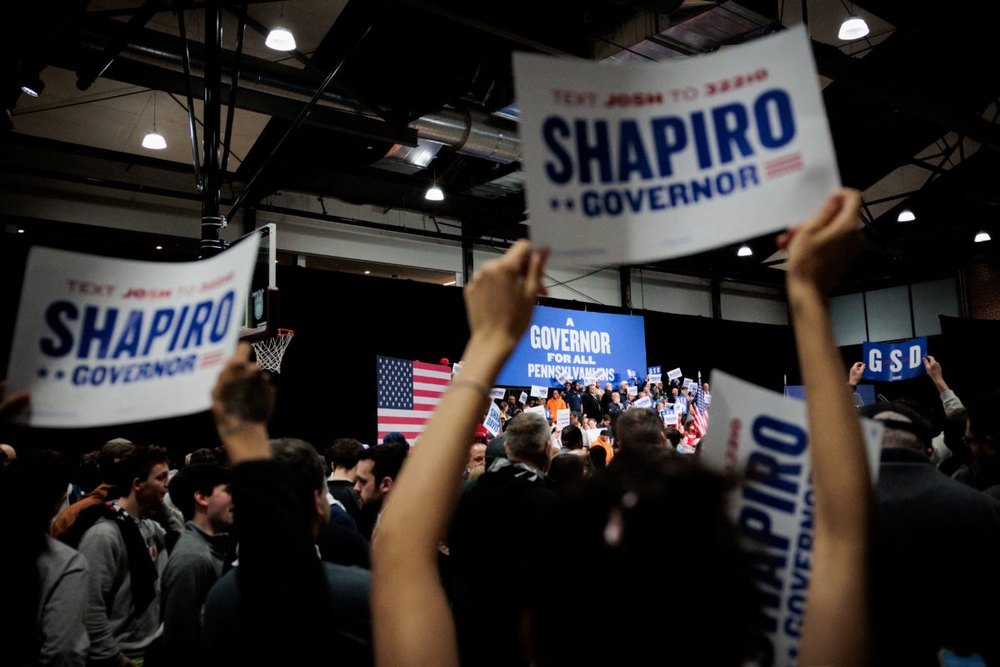
Pennsylvania Governor Josh Shapiro has formally announced his campaign for a second term, setting the stage for what promises to be a closely watched political battle in one of America’s most critical battleground states. The Democratic governor made his announcement at events in Pittsburgh and Philadelphia, surrounded by unified party support including state party leadership, labor leaders, and local Democratic officials. This display of party cohesion underscores Shapiro’s rising stature within the Democratic Party and his positioning as a potential presidential contender in 2028.
Shapiro’s first term has been marked by significant events that tested his leadership capabilities. He governed during the attempted assassination of former President Donald Trump in Pennsylvania, the capture of alleged killer Luigi Mangione in the murder of United Healthcare CEO Brian Thompson, and the deadliest day for law enforcement in Pennsylvania since 2009 with the murder of three police officers. Perhaps most personally harrowing was the arson attack on the governor’s official residence, which forced Shapiro and his family to flee in the middle of the night, making him a prominent voice on the disturbing rise of political violence in America.
Governing Style and Political Positioning
Throughout his first term, Shapiro has cultivated a distinct governing style that blends pragmatic problem-solving with plain-spoken communication. His handling of the Interstate 95 collapse in Philadelphia, where he famously adopted the “get s—- done” slogan, demonstrated his focus on tangible results over political posturing. This approach has extended to surprising bipartisan moves, such as his support for a Republican-backed school voucher program, which created friction with his own party but signaled his willingness to cross partisan divides.
Shapiro’s moderate positioning extends to energy policy in a state that produces the second-most natural gas after Texas. He has actively engaged with corporate executives interested in Pennsylvania as a data center destination and positioned the state to compete for billions in federal funding for energy, manufacturing, and artificial intelligence initiatives. His regular appearances on Sunday talk shows and political media have elevated his national profile while maintaining focus on Pennsylvania’s interests.
The 2026 Electoral Challenge
The Republican Party has endorsed State Treasurer Stacy Garrity as Shapiro’s challenger in the 2026 election. Garrity, who has campaigned at Trump rallies throughout the state, faces significant challenges in name recognition and fundraising compared to the incumbent governor. Shapiro enjoys robust approval ratings and has established himself as a disciplined messenger and powerhouse fundraiser—assets that will prove crucial in what promises to be a highly competitive race.
Shapiro has maintained a busy public schedule that extends beyond traditional political events, including appearances at football games, NASCAR races, and even a Roots concert in Philadelphia. This visibility strategy, combined with his regular media appearances, has helped him maintain connection with diverse constituencies across the state.
National Implications and Presidential Speculation
The Shapiro reelection campaign represents more than just a state-level contest—it serves as a testing ground for whether moderate, results-oriented governance can succeed in today’s polarized political environment. Shapiro’s potential presidential ambitions, while never explicitly acknowledged, hover over the race like an unspoken question. His performance in 2026 will undoubtedly shape perceptions of his viability as a national candidate in 2028.
Shapiro’s relationship with the national Democratic Party has been complex. He was considered as a potential running mate for Kamala Harris in 2024, though she ultimately selected Minnesota Governor Tim Walz. Harris’s recent book suggests she passed on Shapiro due to concerns about his willingness to settle for a number two role—a characterization Shapiro has disputed.
The Stakes for American Democracy
What makes Shapiro’s candidacy particularly significant is its timing within the broader context of American democracy. His warning about opponents promising “darkness and division and extremism”—while not mentioning Trump by name—clearly positions him as a counterforce to the populist movements threatening institutional stability. His criticism of the “chaos and toxicity” emanating from Washington speaks to growing concerns about the erosion of democratic norms and the rule of law.
Shapiro’s legal actions against the Trump administration—joining or filing more than a dozen lawsuits primarily related to withheld funding—demonstrate his willingness to use institutional mechanisms to check executive overreach. His characterization of Trump’s tariffs as “reckless” and “dangerous,” and his condemnation of threats to revoke broadcast licenses as attempts to “stifle dissent,” reveal a principled commitment to democratic values that transcends political convenience.
The Leadership America Needs
In an era where political violence has become increasingly normalized and democratic institutions face unprecedented pressure, Shapiro’s leadership represents a crucial alternative to the politics of division. His response to the arson attack on his home—using it as an opportunity to speak out against political violence rather than retreat into partisan rhetoric—demonstrates the kind of measured leadership that democracy requires in dangerous times.
However, the very presidential speculation surrounding Shapiro raises important questions about whether any politician can truly focus on governing while potentially eyeing higher office. The Republican criticism that Shapiro is “more focused on his political ambitions” than leading Pennsylvania touches on a legitimate concern in representative democracy: are our leaders serving their constituents or their career aspirations?
The Path Forward
As Shapiro embarks on his reelection campaign, he faces the challenge of balancing state governance with national expectations. His moderate approach, which includes working across party lines while maintaining core Democratic principles, offers a potential model for how to govern in politically divided environments. His emphasis on practical results over ideological purity could resonate with voters tired of perpetual political combat.
The 2026 election will test whether Shapiro’s brand of politics can withstand the increasing polarization of the American electorate. His ability to navigate complex issues like energy policy, education reform, and economic development while maintaining bipartisan appeal will determine not only his political future but potentially the direction of the Democratic Party itself.
In a political landscape often dominated by extremes, Shapiro represents the vital center—the space where democracy actually functions through compromise, respect for institutions, and commitment to the rule of law. His reelection bid matters not just for Pennsylvania but for the health of American democracy itself. As we watch this campaign unfold, we must ask ourselves what kind of leadership we want—and what kind of democracy we’re willing to fight for.