
Iran's Brutal Crackdown: A Test of Global Conscience and American Leadership
Published
- 3 min read
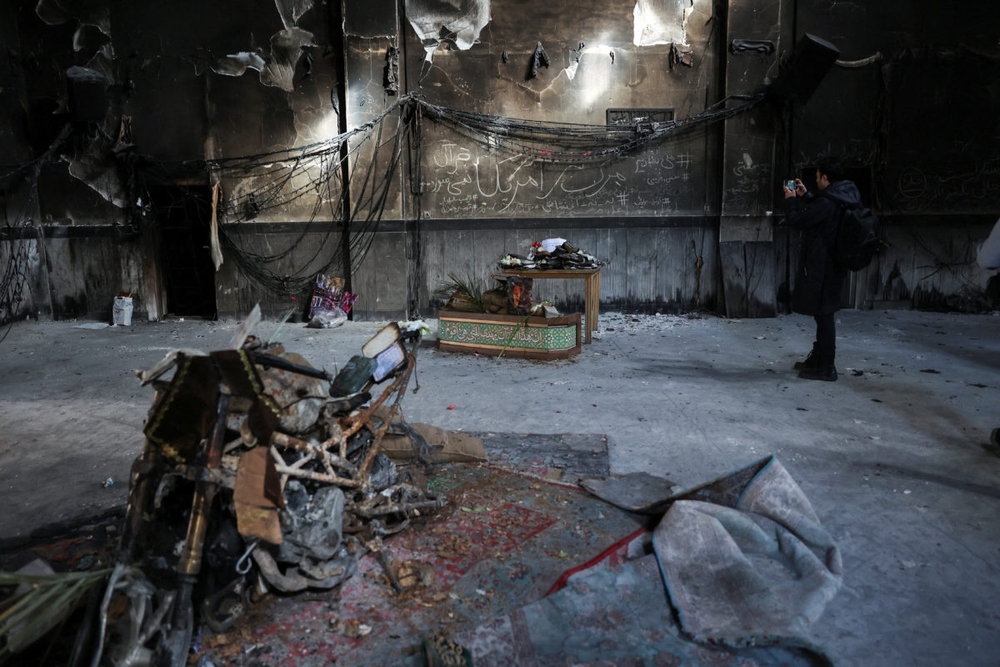
The Escalating Humanitarian Catastrophe
Iran is currently experiencing one of the most severe human rights crises of the 21st century, with activists reporting a death toll of at least 5,032 people in the government’s violent crackdown on nationwide protests. The scale of repression is staggering: over 27,600 individuals have been detained in what appears to be a systematic campaign to crush dissent through fear and intimidation. The Iranian government has implemented the most comprehensive internet blackout in the country’s history, now entering its third week, effectively cutting off the Iranian people from the outside world and preventing accurate information from reaching international observers.
This information vacuum has created an environment where the regime can operate with near-total impunity. The U.S.-based Human Rights Activists News Agency, which maintains an extensive network of sources within Iran, reports that more than 4,700 of the deceased were demonstrators exercising their fundamental right to peaceful protest. The Iranian government’s own figures, released Wednesday, acknowledged 3,117 deaths but categorized many victims as “terrorists”—a familiar tactic used by authoritarian regimes to justify violence against their own citizens.
International Tensions and Diplomatic Posturing
The crisis has significantly heightened tensions between the United States and Iran, with American military assets, including the aircraft carrier USS Abraham Lincoln and associated warships, moving toward the Middle East. President Trump has framed this military buildup as a precautionary measure, stating that the ships are moving toward Iran “just in case” he wants to take action. This deployment occurs alongside inflammatory rhetoric from both sides, including Iranian cleric Mohammad Javad Haji Ali Akbari’s personal attacks on President Trump and threats against American interests in the region.
Diplomatic channels appear strained and contradictory. President Trump has repeatedly claimed that Iran halted the execution of 800 detained protesters, a assertion strongly denied by Iran’s top prosecutor Mohammad Movahedi, who called the claim “completely false.” This denial suggests potential miscommunication or manipulation within diplomatic exchanges, possibly involving Iran’s Foreign Ministry led by Abbas Araghchi, who has maintained direct communication with U.S. envoy Steve Witkoff.
Legal and Human Rights Framework
The situation has drawn sharp international condemnation, particularly at the U.N. Human Rights Council special session on Iran. Volker Türk, the U.N.’s high commissioner for human rights, expressed grave concern over “contradictory statements from the Iranian authorities about whether those detained in connection with the protests may be executed.” Türk’s statement highlighted Iran’s status as “among the top executioner states in the world,” with at least 1,500 people executed last year—representing a 50% increase over previous figures.
The Iranian judiciary’s use of the “mohareb” charge—meaning “enemies of God”—carries the death penalty and recalls the darkest chapters of Iran’s history, particularly the mass executions of 1988 that killed at least 5,000 people. This legal framework effectively criminalizes dissent and provides theological justification for state violence against citizens demanding basic rights and freedoms.
A Moral Imperative for Democratic Nations
What we are witnessing in Iran represents not just a regional crisis but a fundamental test of the international community’s commitment to human rights and democratic values. The systematic suppression of peaceful protest, the deliberate targeting of citizens exercising their universal rights, and the deliberate creation of an information blackout constitute crimes against humanity that demand a robust and principled response from nations that claim to value freedom and human dignity.
As Americans who cherish our Constitutional rights and the principles of liberty, we cannot remain silent while the Iranian people are brutalized for demanding the very freedoms we often take for granted. The right to assemble peacefully, to speak freely, and to demand accountability from one’s government are not Western concepts—they are universal human rights recognized by international law and moral conscience. The Iranian regime’s violent response to legitimate grievances demonstrates its fundamental insecurity and moral bankruptcy.
The Limits of Military Posturing
While the U.S. military buildup in the region may demonstrate American concern, we must carefully consider the implications of military solutions to what is fundamentally a political and human rights crisis. Military action, particularly airstrikes alone as warned by analysts from the Soufan Center, would likely be insufficient to address the root causes of the crisis and could potentially exacerbate the suffering of the Iranian people. The complex dynamics of U.S.-Iran relations require sophisticated diplomatic engagement rather than primarily military posturing.
True American leadership in this crisis should focus on multilateral diplomatic pressure, humanitarian support for the Iranian people, and robust information campaigns to counter the regime’s propaganda. We should work closely with European allies, who have shown willingness to take concrete action through the European Parliament’s resolution calling for designating Iran’s Revolutionary Guard as a terrorist organization. This coordinated international approach, rather than unilateral military threats, represents the most effective path toward supporting the Iranian people’s aspirations for freedom.
Supporting Iranian Civil Society
The incredible bravery of Iranian protesters and activists, who continue to document atrocities despite extreme personal risk, deserves our utmost admiration and support. These courageous individuals represent the best hopes for Iran’s future—a future based on freedom, dignity, and respect for human rights rather than religious tyranny and oppression. The international community must find ways to support these brave voices without making them targets for further repression.
Technical assistance to circumvent internet censorship, humanitarian aid for victims of violence, and diplomatic protection for activists should be prioritized. We must also ensure that any economic pressure targets the regime’s leadership rather than ordinary Iranians who are already suffering under sanctions and economic mismanagement.
The Path Forward: Principles Over Politics
This crisis demands that we rise above partisan politics and focus on the fundamental principles that define us as a nation committed to freedom and human dignity. The Iranian people’s struggle for basic rights echoes the aspirations of freedom-loving people everywhere, and our response will define America’s moral standing in the world for years to come.
We must reject both the empty rhetoric that exaggerates American influence and the cynical realpolitik that would ignore gross human rights violations for geopolitical convenience. Instead, we should pursue a principled policy that: unequivocally condemns the violence against peaceful protesters; supports multilateral efforts to hold perpetrators accountable; provides concrete assistance to Iranian civil society; and maintains diplomatic channels while clearly communicating that normal relations require respect for basic human rights.
The Iranian people’s blood cries out for justice, and history will judge how we respond to this moment. Will we be remembered as those who stood firmly for freedom and human dignity, or as those who remained silent in the face of unspeakable brutality? The answer to this question will define not only America’s foreign policy legacy but our very soul as a nation founded on the proposition that all people are endowed with certain unalienable rights.
As we reflect on this crisis, let us remember that the struggle for freedom in Iran is part of the larger human story—a story that includes our own revolution and the countless movements for dignity that have shaped human history. The brave Iranians risking everything for freedom deserve our solidarity, our support, and our unwavering commitment to the principles that make their struggle necessary and just.